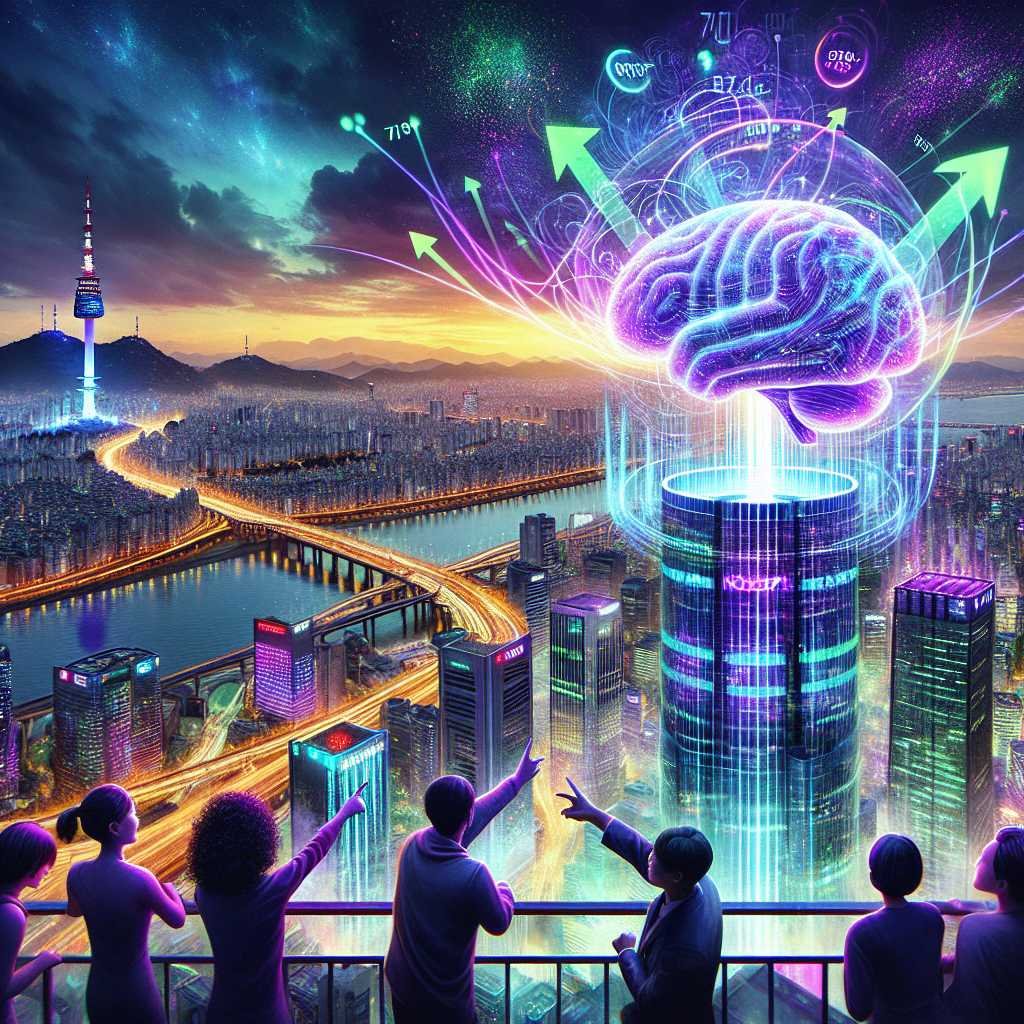
AI Boom Propels Tech Stocks as South Korea’s Kospi Smashes Records Above 7,000
What does it take to lift an entire stock market to uncharted territory? In South Korea’s case, it was a potent mix of AI euphoria, chipmaker momentum, and a softer geopolitical backdrop that flipped the risk switch across global equities. The Kospi just vaulted past 7,000 for the first time—on a day when Samsung Electronics soared 14% and SK hynix nearly 11%—and the ripple effects were visible from Sydney to Shanghai, Frankfurt to London.
If you’ve been wondering whether AI hype still has real-world legs, or if this is the start of a new chapter for semiconductor-heavy markets, this rally offers fresh clues. Let’s unpack what just happened, why memory chip leaders are center stage, and what could keep (or cap) the momentum from here.
Source: WSLS, published May 6, 2026.
The Headline Numbers, at a Glance
Per the WSLS report:
- South Korea’s Kospi jumped 6.5% to 7,384.56, clearing the 7,000 mark for the first time on record.
- Samsung Electronics rallied 14% in a single session.
- SK hynix climbed nearly 11%.
- Across Asia:
- Australia’s S&P/ASX 200 rose 1.3% to 8,793.60.
- Hong Kong’s Hang Seng advanced 1.2% to 26,213.78.
- Shanghai’s Composite added 1.2% to 4,160.17.
- In Europe:
- France’s CAC 40 gained 1.6%.
- Germany’s DAX rose 1.5%.
- Britain’s FTSE 100 surged 1.9%.
- U.S. stock futures were up 0.6%, teeing up a positive Wall Street open.
Also noteworthy: the global risk-on tone was helped by hopes for progress toward ending the war with Iran, which eased oil prices and further buoyed sentiment.
For context: – Kospi overview: KOSPI (KRX) – Samsung IR: Samsung Investor Relations – SK hynix newsroom: SK hynix Newsroom – International benchmarks: – S&P/ASX 200 – Hang Seng Index – Shanghai Composite (SSE) – CAC 40 – DAX – FTSE 100 – S&P 500 E-mini Futures – Oil reference: Brent crude prices (EIA)
Why AI Lit the Fuse Under Korean Tech
Korea’s equity market has a unique lever: it’s heavily tied to semiconductors, and memory chips in particular. In the AI era, that’s proving to be a strength. AI training and inference—whether in hyperscale data centers or on edge devices—consume enormous amounts of memory bandwidth and capacity. That puts DRAM and especially high-bandwidth memory (HBM) at the center of the compute stack.
- Training large AI models is bottlenecked not just by compute (GPUs/accelerators) but by how quickly and efficiently those processors can access data. That’s where HBM shines.
- AI inference at scale, increasingly deployed in cloud and enterprise environments, also drives steady demand for advanced DRAM and fast storage.
When the market senses inflection in AI infrastructure spending—or a tighter supply backdrop in memory—Korean champions can move quickly and dramatically.
Samsung Electronics: Back in the Global Spotlight
Samsung’s 14% leap underscores how tightly investor optimism is tethered to AI infrastructure demand. The company straddles multiple lanes of the AI highway:
- Memory: DRAM, NAND, and HBM are foundational to AI training and inference.
- Foundry: As a contract manufacturer for advanced chips, Samsung has cyclical exposure to leading-edge compute demand.
- Systems: Components and integration for devices that will increasingly add on-device AI features.
While the day’s move centers on momentum and expectations, the thesis is straightforward: robust AI capex favors memory suppliers, and Samsung is one of the world’s largest. If chip pricing improves as inventories normalize and AI orders accumulate, operating leverage can kick in.
Explore more: – Samsung IR – Samsung Semiconductor Memory
SK hynix: The HBM Powerhouse
SK hynix’s near-11% pop reflects market conviction that AI’s most memory-intensive stage—training large models—will keep HBM in a sweet spot. Hyperscalers and accelerator vendors need a lot of it, and supply has been tight at various points due to high technical barriers and complex stacking/packaging requirements.
Key dynamics to watch: – Product mix shift toward HBM and premium DRAM can support margins. – Capacity expansions are capital-intensive and take time—any demand overshoot can extend pricing strength; a demand undershoot can invert it just as fast.
Learn more: – SK hynix Newsroom – SK hynix Products
A Rising Tide Across Asia—and Beyond
While Korea stole the show, the rally was broad across APAC and Europe—classic signs of a macro tailwind and sector-level conviction working in tandem.
- Australia’s S&P/ASX 200 +1.3% suggests global risk appetite spilled into resource-heavy and financial names, too.
- Hong Kong’s Hang Seng +1.2% and Shanghai’s Composite +1.2% hint at broader participation in Greater China equities.
- Europe followed:
- CAC 40 +1.6%
- DAX +1.5%
- FTSE 100 +1.9%
- U.S. futures: S&P 500 E-mini +0.6% pre-open—signaling investors were ready to carry the baton into the American session.
When a single theme drives this much cross-market alignment, it tends to point to a macro catalyst (geopolitics, rates, oil) married to a sector catalyst (AI capex cycle).
Geopolitics, Oil, and a Friendlier Backdrop for Risk
The WSLS report also cites hopes for progress in ending the war with Iran, easing geopolitical anxieties. Lower perceived risk premiums can:
- Support equities (especially cyclicals and tech) as investors rotate out of cash and defensives.
- Pressure oil prices lower, easing inflation concerns and helping rate-sensitive sectors.
Cheaper energy can be a subtle tailwind for manufacturers and logistics-heavy businesses, while also helping central banks feel less urgency to tighten. For reference: Brent crude prices (EIA).
Of course, geopolitics can be volatile. Markets rallied on hopeful headlines; sustained de-escalation often requires tangible, durable progress.
How Record Levels Change the Game for Korea Inc.
New highs matter—not just for headlines, but for corporate behavior and capital flows.
- Confidence effect: A breakout above a round-number milestone (7,000) can attract new inflows from momentum and asset-allocation models.
- Funding flexibility: Higher equity valuations may improve terms for capital raises, enabling ambitious capex plans in critical areas like HBM and advanced packaging.
- Branding and mindshare: Korea’s role in the AI value chain gains visibility, potentially strengthening its bargaining power with global tech titans.
At the same time, record levels raise the bar for earnings delivery. Once expectations shift from “recovery” to “boom,” misses can sting.
The Opportunity—and the Risks
Even when the story makes sense, investors grapple with two realities at once: the structural AI uptrend and the cyclical nature of semiconductors.
Opportunities: – AI is a multi-year infrastructure buildout. Beyond GPUs, memory is a core constraint and a recurring expenditure as models scale. – Premium mix: HBM and high-performance DRAM can expand margins if supply remains tight relative to demand. – Ecosystem pull: As AI capabilities move down-market (from hyperscale to enterprise and on-device), demand can diversify.
Risks: – Memory cyclicality: Historically, supply expansions eventually catch demand, pressuring prices. Timing that inflection is famously hard. – Demand concentration: If a handful of hyperscalers/accelerator vendors pause or re-time capex, order volatility can ripple through the supply chain. – Macro and FX: A strong U.S. dollar or weak global growth can weigh on exporters and risk assets. – Geopolitics: Any re-escalation in the Middle East or new trade frictions can quickly alter sentiment and costs.
What Could Sustain the Rally
For Korea’s chip leaders and the Kospi to build on this, markets will look for follow-through:
- Earnings beats and credible guidance that tie backlog, pricing, and capacity to AI demand.
- Concrete updates on HBM roadmaps, yields, and packaging innovations.
- Evidence of broadening AI infrastructure spend beyond early leaders and into diversified enterprise use cases.
- A stable-to-supportive macro backdrop: tamer inflation, manageable rates, and steady consumer and enterprise demand.
The AI Supply Chain: Why Memory Is the Bottleneck to Watch
It’s tempting to think of AI solely in terms of GPUs and accelerators. But all that compute power is bounded by data movement.
- High-bandwidth memory (HBM): Stacked DRAM connected via through-silicon vias (TSVs) offers massive bandwidth crucial for training large models.
- Advanced DRAM: Faster, denser parts for inference and high-performance computing can be significant volume drivers.
- Packaging: Co-packaged memory and advanced interconnects help reduce latency and power draw.
This is where Korean champions shine. As AI models grow, each incremental performance gain often requires better memory bandwidth and efficiency—keeping demand for cutting-edge memory robust.
Further reading: – NVIDIA Data Center for context on AI accelerator ecosystems. – Market trackers like TrendForce (DRAMeXchange) for memory pricing and supply commentary.
Watchlist: Data Points That Will Matter Next
To gauge whether this breakout has legs, keep an eye on:
- Memory contract prices: DRAM/HBM pricing trends via industry trackers like TrendForce.
- Hyperscaler AI capex signals: Commentary and guidance from big buyers of AI infrastructure:
- Microsoft IR
- Alphabet (Google) IR
- Amazon IR
- Meta IR
- Shipment and lead-time anecdotes: Any bottlenecks in accelerators can reverberate through memory orders.
- Macro prints: Inflation, employment, and central bank signals that affect discount rates and risk appetite.
- Energy prices: Sustained declines in oil can reinforce the “soft landing” narrative; spikes can challenge it.
- Company-specific catalysts: Capacity expansion milestones, HBM yield updates, and package innovations from Samsung and SK hynix.
Why This Matters Beyond Korea
Today’s rally is a reminder: AI isn’t a niche theme anymore. It’s a cross-asset macro force.
- Equity style and sector rotations can hinge on AI capex and productivity narratives.
- Supply chains from materials to equipment to logistics feel the knock-on effects.
- Policy makers weigh AI’s potential productivity gains against transitional dislocations, influencing regulation and incentives.
In other words, when the AI tide rises, it can lift far more than just a handful of chip names.
Practical Takeaways for Market Watchers
- Track the memory cycle as closely as the GPU cycle. Both matter; neither exists in a vacuum.
- Separate structural tailwinds (multi-year AI adoption) from cyclical swings (inventory, pricing, capex timing).
- Diversification across the AI stack can reduce single-point risk—though it won’t eliminate sector cyclicality.
- “Good news” needs to keep arriving to justify record highs—especially for markets that just made historic breakouts.
Frequently Asked Questions
Q: What pushed the Kospi above 7,000 for the first time?
A: A powerful rally in AI-linked tech shares—especially Samsung Electronics and SK hynix—catapulted the index higher. The move was part of a broader risk-on session across Asia and Europe, aided by hopes for progress in ending the war with Iran and easing oil prices. Source: WSLS.
Q: Why do memory makers benefit so much from AI?
A: AI workloads are data-hungry. High-bandwidth memory (HBM) and advanced DRAM feed accelerators with the data throughput needed to train and run large models. As models scale, memory bandwidth and capacity become critical performance levers, driving demand for premium memory.
Q: Is this rally all sentiment, or are fundamentals improving?
A: Likely both. Sentiment turned sharply positive on AI demand, but the fundamental case is that AI infrastructure spending remains robust and memory markets may be tightening in key segments. Earnings and guidance over the next few quarters will determine how much of today’s enthusiasm is justified.
Q: How do oil prices tie into tech stocks rallying?
A: Lower oil prices can ease inflation pressures and improve growth expectations, which supports risk assets like equities. On days when geopolitical tensions cool and oil retreats, investors often rotate into cyclicals and tech.
Q: Could this be another boom-bust in semiconductors?
A: Memory is cyclical by nature—supply expansions can catch up with demand, pressuring prices. However, AI has introduced a structural demand driver for premium memory. The interplay between cyclical dynamics and structural growth will shape volatility.
Q: What are the key risks that could derail the rally?
A: Upside surprises in inflation, a sharp rise in bond yields, a stronger U.S. dollar, re-escalation of geopolitical tensions, or signs of AI capex slowing among hyperscalers could all challenge the narrative.
Q: Where can I follow updates on memory pricing and AI supply chains?
A: Industry trackers like TrendForce cover DRAM/NAND pricing and supply-demand trends. Company resources such as Samsung IR and SK hynix Newsroom provide corporate updates. For the accelerator ecosystem, see NVIDIA’s data center hub.
Q: Does currency movement matter for Korean tech stocks?
A: Yes. A weaker Korean won can boost export competitiveness and earnings translated back to won, potentially aiding exporters like chipmakers. Conversely, a stronger won can be a headwind.
Q: Is this investment advice?
A: No. This article is for informational purposes only and does not constitute financial advice. Always do your own research or consult a financial professional.
The Bottom Line
South Korea’s Kospi vaulting past 7,000 is more than a milestone—it’s a statement about where investors think value is being created in today’s economy. AI isn’t just a software story; it’s an infrastructure story powered by memory, packaging, and relentless bandwidth demands. That puts Korean champions like Samsung Electronics and SK hynix squarely in the global spotlight.
Whether this breakout becomes a base for the next leg higher will hinge on follow-through: earnings that validate AI-driven demand, clear roadmaps in HBM and advanced DRAM, steady macro conditions, and sustained de-escalation on the geopolitical front. For now, the message from markets is unmistakable: the AI boom is still writing new records, and Korea is on the front page.
Discover more at InnoVirtuoso.com
I would love some feedback on my writing so if you have any, please don’t hesitate to leave a comment around here or in any platforms that is convenient for you.
For more on tech and other topics, explore InnoVirtuoso.com anytime. Subscribe to my newsletter and join our growing community—we’ll create something magical together. I promise, it’ll never be boring!
Stay updated with the latest news—subscribe to our newsletter today!
Thank you all—wishing you an amazing day ahead!
Read more related Articles at InnoVirtuoso
- How to Completely Turn Off Google AI on Your Android Phone
- The Best AI Jokes of the Month: February Edition
- Introducing SpoofDPI: Bypassing Deep Packet Inspection
- Getting Started with shadps4: Your Guide to the PlayStation 4 Emulator
- Sophos Pricing in 2025: A Guide to Intercept X Endpoint Protection
- The Essential Requirements for Augmented Reality: A Comprehensive Guide
- Harvard: A Legacy of Achievements and a Path Towards the Future
- Unlocking the Secrets of Prompt Engineering: 5 Must-Read Books That Will Revolutionize You