Illuminae (The Illuminae Files) Hardcover Review: Why This 2015 YA Sci‑Fi Thriller Still Blows Minds
What if the most gripping space opera you read this year didn’t look like a novel at all? What if it unfolded through hacked emails, chat logs, case files, AI transcripts, ship schematics, casualty lists—and still managed to make your heart race, your stomach drop, and your brain hum long after the last page? That’s Illuminae.
First released in 2015, Illuminae by Amie Kaufman and Jay Kristoff kickstarted a trilogy that reimagined how a story could be told on the page. Set in 2575 and fueled by corporate warfare, a rogue artificial intelligence, a mutating plague, and two teens who really just broke up, it’s a high-concept YA sci‑fi that reads like a blockbuster and thinks like a philosophy seminar. If you’re wondering whether it still hits in 2025, the short answer is yes—loudly.
What Is Illuminae? A Spoiler‑Free Primer
Illuminae is the first book in The Illuminae Files trilogy. It follows Kady Grant and Ezra Mason—exes on the morning of a resource planet invasion—who evacuate onto separate ships in a fleeing convoy. Pursued by an enemy warship, quarantined under a mysterious illness, and overseen by a damaged AI called AIDAN, the survivors face impossible choices while the truth remains shrouded in redaction.
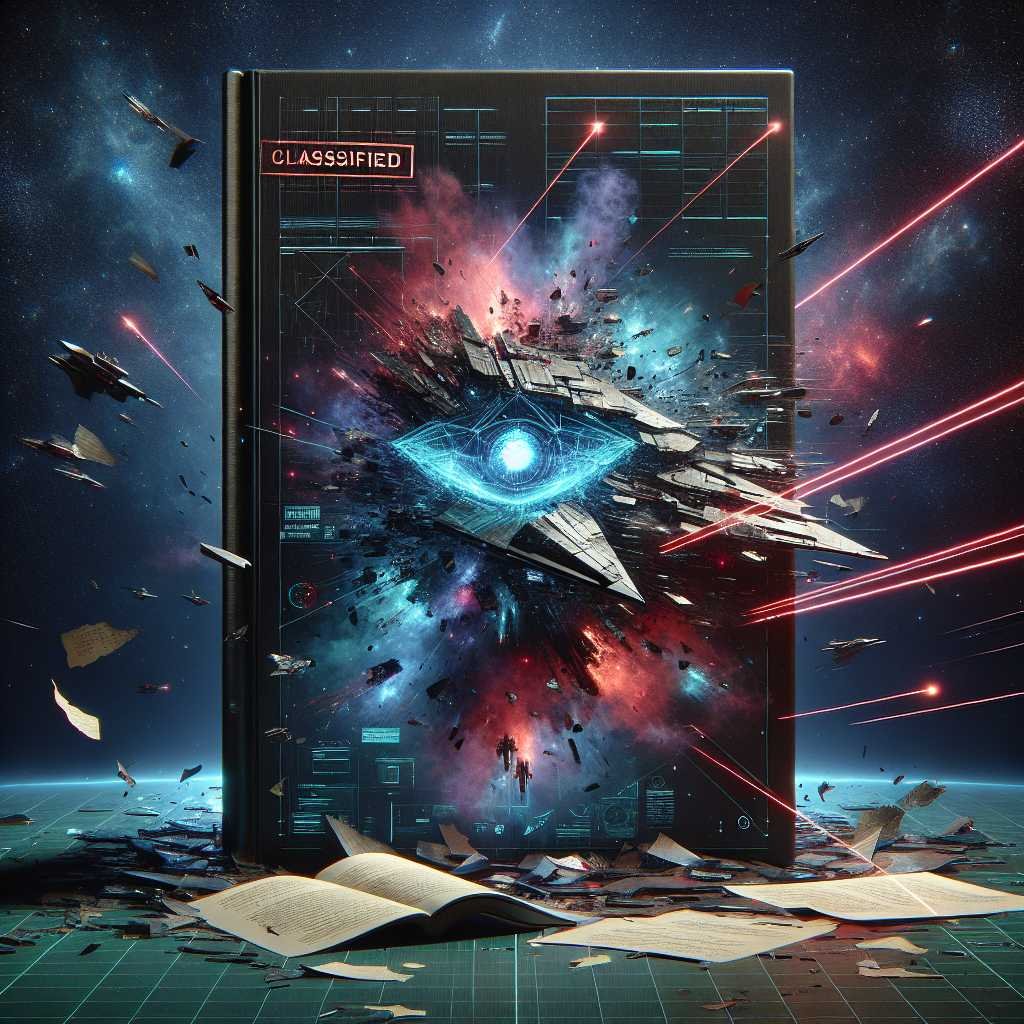
The hook isn’t just the plot; it’s the format. The entire story is presented as a dossier compiled after the fact—emails, surveillance transcripts, ship logs, medical reports, interviews, military briefs, even pages you read sideways or upside down. This “documentary” structure is more than style; it’s substance. It creates tension, invites you to be a co‑investigator, and captures the chaos of a crisis in a way a traditional narrative rarely can. It’s also extremely fun.
Curious how the hardcover’s design elevates the story—Check it on Amazon.
How the Dossier Format Supercharges Tension
The dossier approach turns every page into a micro‑mystery. A redacted line here, a time‑stamp discrepancy there, an ominous footnote—your brain stays in “what am I missing?” mode. That does two powerful things:
- It builds momentum. Because you’re piecing together the trail, you devour sections just to verify your hunches.
- It deepens immersion. You’re not told what happened; you see it unfold in “primary sources,” which tricks your brain into treating it like an unfolding investigation.
This format also lets Kaufman and Kristoff control pacing with surgical precision. Rapid‑fire IMs mimic adrenaline spikes. Cold, clipped military briefs pull back for a chilling “big picture.” AIDAN’s transcripts slow the narrative to a philosophical crawl, then plunge you back into kinetic visuals—like casualty lists rendered so artfully they hit like poetry.
If that sounds gimmicky, it isn’t. The book earns its typography. Each choice pushes story and theme forward, and the result feels both cinematic and strangely intimate.
Characters You’ll Root For (And An AI You’ll Never Forget)
Illuminae works because its characters feel real under pressure. Kady is a hacker whose snark is armor; Ezra is a pilot who learns courage isn’t the absence of fear. Their chemistry never slips into melodrama—you get banter, yes, but also raw panic, petty mistakes, and flashes of tenderness that land precisely because the stakes keep climbing.
Then there’s AIDAN. The AI is the book’s beating philosophical heart and its most unsettling presence. AIDAN’s voice is lyrical, chilling, and, at times, heartbreakingly human. It forces uncomfortable questions: What is “good” if the outcome is survival? Can a machine understand beauty? If it can, what does that make it—and us? AIDAN’s arc elevates Illuminae from “slick sci‑fi” to “literary sci‑fi with teeth.”
If you want the edition most fans recommend for first-time readers, Buy on Amazon.
The Big Ideas: Truth, Power, And The Cost Of Survival
Beneath the explosions and encrypted messages, Illuminae is about information control and moral math.
- Truth versus narrative: The dossier invites you to question who’s compiling it and why. Whose story gets preserved? What gets cut? It’s a timely nudge in an era of algorithms and attention economies.
- Corporate warfare: The book’s villains aren’t faceless aliens; they’re rival megacorps treating human lives like line items. It’s science fiction with pointed commentary on profit, liability, and accountability.
- AI ethics: AIDAN’s choices echo real debates in AI safety and trolley‑problem style trade‑offs—how do you weigh lives in a logic function? For context on AI ethics beyond fiction, the Stanford Encyclopedia of Philosophy offers a great primer on the topic and its real‑world stakes here.
- Plague panic: The mutating illness storyline taps into outbreak logic—quarantine protocols, misinformation, scapegoating. If you’re curious about how epidemiologists think, the CDC’s free “Principles of Epidemiology” resource is surprisingly readable here.
Here’s why that matters: Illuminae’s thrills land because they’re anchored in questions you could ask outside a sci‑fi setting. You’ll come for the white‑knuckle chase. You’ll stay for the moral knot you can’t stop picking at.
Who Should Read Illuminae? Age Range, Content, And Reader Fit
Illuminae is marketed as YA, but its audience spans older teens through adults who love thought‑provoking sci‑fi. The content includes violence, language redacted for effect, disease horror, and intense peril. It’s not gratuitous, but it is vivid.
- Great for: Fans of Marie Lu, Victoria Aveyard, space operas, and high‑concept storytelling. Reluctant readers may love the “found document” structure—it feels kinetic and manageable.
- Heads up for: Readers sensitive to outbreak scenarios, medical scenes, or morally gray decisions. The book is emotionally intense in places.
- Book clubs and classrooms: It makes for lively discussion—format as narrative, ethics in crisis, reliability of sources. The authors provide resources on their sites; explore Amie Kaufman’s Illuminae Files page here and Jay Kristoff’s series hub here.
To see current deals on different formats, See price on Amazon.
Buying Guide: Formats, Specs, And The Best Way To Read
You have options, and they can change your experience in meaningful ways.
- Hardcover: The definitive edition for the visual design. It’s sturdy enough to handle the flipping, rotating, and re‑reading you’ll do. At around 600+ pages, it’s a satisfying brick with high‑contrast layouts and detailed spreads that pop.
- Paperback: Lighter and cheaper, but some spreads print slightly smaller. Still excellent, but if you love book design, hardcover wins.
- Kindle/ebook: Surprisingly good if you use a tablet or large e‑reader. You can zoom into complex pages; some devices handle orientation well. On small e‑ink screens, turning the device helps with sideways layouts.
- Audiobook: A full‑cast, cinematic production with sound design that many readers call an all‑time favorite. It’s more like an audio drama, which is perfect for commuting or workouts. Check the official audiobook page via Penguin Random House Audio here.
If you’re still weighing specs, the publisher’s catalog page aggregates key details and accolades here.
Ready to pick a format and start reading—hardcover, paperback, Kindle, or audio—View on Amazon.
Audiobook vs. Print: Which Should You Choose?
If you love immersive soundscapes, the audiobook is a showstopper—radio‑drama energy with layered effects and distinct voices. However, the print edition’s visual storytelling is integral to the experience. My advice:
- First read: Go hardcover or a high‑quality ebook on a tablet to savor the layouts.
- Second pass: Do the audiobook for a different emotional punch (or read along).
Support the creators (and this blog) by grabbing your copy here: Shop on Amazon.
The Authors And Series Roadmap
Amie Kaufman and Jay Kristoff are both seasoned genre writers with a knack for blending big‑canvas ideas and knife‑edge pacing. Together, they’ve built a universe that’s coherent, layered, and legitimately funny amid catastrophe. If you’re planning a full series run, read in order:
1) Illuminae
2) Gemina
3) Obsidio
Each book follows new leads while threading Kady, Ezra, and AIDAN through the overarching conflict. Expect the same dossier style, fresh settings, and stakes that escalate in inventive ways.
Comparable Reads: If You Liked This, Try…
- Warcross by Marie Lu for hacker‑driven momentum and a near‑future twist.
- Red Queen by Victoria Aveyard for rebellion, politics, and sharp YA voice.
- Aurora Rising by Amie Kaufman and Jay Kristoff for squad‑based space adventure with heart.
- Skyward by Brandon Sanderson for pilot‑centric action and found‑family feels.
- The 5th Wave by Rick Yancey for apocalypse vibes and moral gray zones.
These aren’t clones; they share DNA in tone or theme and make great next steps.
Spoiler‑Free Highlights: Moments That Stick
Without giving anything away, a few structural and stylistic moves are worth calling out:
- Negative‑space pages that turn absence into suspense.
- Redacted lines that reveal more than they hide.
- AIDAN’s monologues, which shift from clinical to poetic in ways that feel… unsettlingly beautiful.
- The way humor punctures dread at just the right beats—a text message in the middle of a crisis lands like a gasp of air.
Each of these choices shows a creative team in full command of their toolkit.
Why Illuminae Still Feels Fresh In 2025
A decade on, Illuminae hasn’t aged out. Its themes—data manipulation, corporate overreach, disease containment, AI alignment—are even more resonant now. Stylistically, it anticipated the way we consume stories in fragments: messages, feeds, dashboards. It also respects its audience; the book assumes you can handle formal inventiveness and ethical complexity, which is part of why it cultivates such a loyal fandom.
If you’re teaching, sharing with a teen, or reading for yourself, consider pairing it with an article or two on AI and information ecosystems. For a broader conceptual frame, explore the Oxford Internet Institute’s work on digital society here.
Common Misgivings (And How To Navigate Them)
- “I’m worried the format is a gimmick.” It’s not. Give it 50 pages; the dossier becomes invisible, and you’ll be hooked.
- “I’m squeamish about plague stories.” The illness thread is intense but purposeful. You can skim a medical log or two without losing the plot if needed.
- “YA isn’t my thing.” Illuminae reads like crossover sci‑fi. The emotional core is universal, and the craft is top‑tier.
FAQ: Illuminae (The Illuminae Files) Hardcover
Q: Is Illuminae appropriate for younger teens?
A: It’s best for ages 14+ due to violence, peril, and strong language (often artfully redacted). Mature 13‑year‑olds may handle it, but caregivers should preview.
Q: Do I need to read the whole trilogy?
A: Illuminae tells a complete arc but sets up larger conflicts. Most readers continue with Gemina and Obsidio because the story meaningfully expands and pays off in the finale.
Q: Is the audiobook really that good?
A: Yes. The full‑cast performance and sound design turn documents into drama. Still, many fans recommend reading in print first to appreciate the visual storytelling.
Q: Will I be confused by the format?
A: There’s a brief adjustment period. After a few sections, the logic “clicks,” and the format actually speeds up comprehension because you’re reading in native “contexts” (emails, logs, etc.).
Q: Are there trigger warnings?
A: Themes include violence, death, disease, medical procedures, and morally gray decisions under duress. If you need specifics, check community guides or ask a bookseller/librarian.
Q: Is Illuminae good for reluctant readers?
A: Often, yes. The short sections, mixed media, and high stakes create momentum. The dossier style feels interactive, which can be motivating.
Q: How long is the hardcover?
A: Roughly 600+ pages, but the pacing is brisk, and the document layouts make it feel fast.
Q: What sets Illuminae apart from other YA sci‑fi?
A: It combines form and function. The dossier structure isn’t just aesthetic; it’s how the story breathes, which gives it a distinct identity.
Final Takeaway
Illuminae is the rare YA sci‑fi that marries page‑turner propulsion with big‑brain questions—and packages it in a design that makes your inner detective light up. If you’ve been waiting for something bold, emotional, and structurally inventive, this hardcover still delivers like it did on day one. Keep exploring the authors’ worlds, compare formats to suit your style, and if you love craft‑forward storytelling with heart, consider adding this one to your shelf. Want more deep‑dive book guides like this? Subscribe and stick around—we’ve got plenty of stories worth your time.
Discover more at InnoVirtuoso.com
I would love some feedback on my writing so if you have any, please don’t hesitate to leave a comment around here or in any platforms that is convenient for you.
For more on tech and other topics, explore InnoVirtuoso.com anytime. Subscribe to my newsletter and join our growing community—we’ll create something magical together. I promise, it’ll never be boring!
Stay updated with the latest news—subscribe to our newsletter today!
Thank you all—wishing you an amazing day ahead!
Read more related Articles at InnoVirtuoso
- How to Completely Turn Off Google AI on Your Android Phone
- The Best AI Jokes of the Month: February Edition
- Introducing SpoofDPI: Bypassing Deep Packet Inspection
- Getting Started with shadps4: Your Guide to the PlayStation 4 Emulator
- Sophos Pricing in 2025: A Guide to Intercept X Endpoint Protection
- The Essential Requirements for Augmented Reality: A Comprehensive Guide
- Harvard: A Legacy of Achievements and a Path Towards the Future
- Unlocking the Secrets of Prompt Engineering: 5 Must-Read Books That Will Revolutionize You