
Perplexity’s $750M Azure Pact: How a Cloud Power Play Could Redefine AI Search, Multimodal Answers, and Agentic Experiences
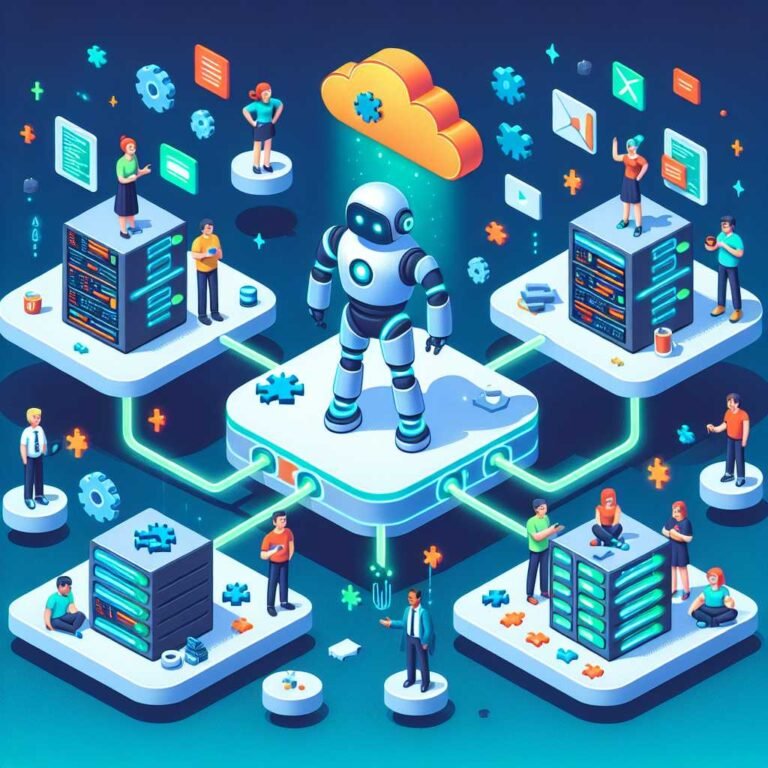
What does $750 million buy you in AI in 2026? Not just raw compute. It buys speed, reliability, and the right to play—and win—at the frontier. That’s the subtext behind Perplexity’s three-year, $750 million cloud deal with Microsoft Azure, a partnership designed to supercharge a real-time search and answer engine that’s quickly becoming a household name among AI power users.
If you’ve wondered how smaller AI startups keep pace with hyperscalers during a global GPU crunch, or how “agentic” systems will actually show up in your daily search and research workflows, this deal is a giant clue. It isn’t merely about servers and storage; it’s about locking in time-to-market, model diversity, and enterprise-grade reliability when the stakes and the traffic are both exploding.
Below, we unpack what this agreement likely means for Perplexity, Microsoft, and—most importantly—for the future of search, multimodal AI, and the businesses building atop these tools.
Source: The AI Advantage (published Feb 3, 2026)
The Deal at a Glance
- Amount and term: $750 million over three years
- Partner: Microsoft Azure
- Mission: Power Perplexity’s expanding, real-time search and answer engine with hyperscale training and inference capacity
- Model strategy: Integrate advanced models from OpenAI (via Azure), plus leading external models from Anthropic and xAI
- Strategic context: A GPU-constrained market, intensifying competition with incumbents like Google, and a maturing AI ecosystem where compute partnerships are now foundational
Useful links: – Azure AI solutions: Microsoft Azure AI – Perplexity: perplexity.ai – Azure OpenAI Service: Azure OpenAI Service – Anthropic: anthropic.com – xAI: x.ai – NVIDIA GPUs on Azure: Azure GPU VM sizes
Why This Deal Matters Now
There are three forces converging in AI right now:
1) Compute scarcity is real. Demand for high-end GPUs to train and run frontier models has dramatically outpaced short-term supply. If you don’t have reliable access to top-tier accelerators, you feel it in latency, capacity caps, and slower iteration cycles.
2) Product differentiation takes compute. Real-time retrieval, strong citations, multimodal inputs/outputs, and agentic tool use are all resource-intensive. To do them at consumer scale with low latency, you need both horsepower and orchestration excellence.
3) The model ecosystem is diversifying. There’s no single “best” model for all tasks. Leaders increasingly route queries across multiple models and modalities to maximize quality, speed, and cost-efficiency.
Perplexity’s Azure commitment addresses all three. It secures capacity when it’s tight, doubles down on speed and reliability as a product differentiator, and gives Perplexity a stable, enterprise-grade platform to orchestrate multiple frontier models at scale.
What Perplexity Gets: Hyperscale Muscle Without the Heavy Lifting
1) Guaranteed Access to High-End Accelerators
Azure’s GPU portfolio gives Perplexity access to cutting-edge accelerators for both training and inference. For latency-sensitive search and answer generation, this isn’t a nice-to-have. It’s table stakes. By anchoring on Azure, Perplexity reduces the risk of “burst” outages, queue delays, or unpredictable capacity during traffic spikes.
- Azure GPU infrastructure overview: GPU VM sizes on Azure
- NVIDIA H100 reference: NVIDIA H100
2) Enterprise-Grade Reliability, Security, and Compliance
As Perplexity expands into enterprise workflows, it will need to satisfy security reviews, data governance requirements, and regional compliance needs. Azure checks these boxes with mature identity, networking, and compliance tooling.
- Compliance resources: Azure compliance offerings
- Responsible AI approach: Microsoft Responsible AI
3) A Full-Stack Platform for Fast Iteration
Shipping at the pace of AI means rapid training and evaluation, continuous deployment, telemetry-rich observability, and fine-grained cost control. Azure’s managed services stack—containers, orchestration, ML ops, and model hosting—helps Perplexity move fast without reinventing infrastructure.
- Orchestration and ML ops:
- Azure Kubernetes Service (AKS)
- Azure Machine Learning
4) A Model-Integrated Strategy
Perplexity’s approach doesn’t center on one monolithic model. It integrates: – OpenAI models via Azure OpenAI Service – State-of-the-art models from Anthropic and xAI via their APIs – Internal components for retrieval, search, citations, and tool use
In practice, this lets Perplexity route queries to the best model for the job. For code-heavy tasks, it might prefer one model; for multimodal Q&A or complex reasoning, another. This flexibility is a product advantage, especially as new models leapfrog benchmarks every few months.
What Microsoft Gets: More Workloads, More Models, More Mindshare
Microsoft’s bet on AI is twofold: own the best-in-class productivity and copilot experiences, and be the cloud where AI happens. The Perplexity deal advances the latter.
- It pulls a fast-growing AI workload onto Azure, boosting utilization of its most in-demand infrastructure.
- It showcases Azure as a neutral platform for multiple leading models, not just OpenAI—key for customers who want model choice and portability.
- It fuels the flywheel: more AI workloads → more feedback to the platform → improved services and cost curves → even more AI workloads.
For Microsoft, this is as much a strategic signal as it is a revenue stream: Azure is where real-time, AI-native products go to scale.
The Technical Angle: Building a Real-Time, Multimodal, Agentic Engine
Search is being reimagined in three linked dimensions: retrieval fidelity, multimodality, and agency.
Retrieval Fidelity and Real-Time Updates
Perplexity’s core promise is live, cited answers. That requires: – Fresh indexing of the public web and trusted sources – Smart retrieval pipelines (ranking, deduping, conflict resolution) – Tight loops between retrieval and generation (verify before you claim)
The compute requirement here is twofold: running retrieval at scale and combining it with models that can reason about conflicting or uncertain evidence without hallucinations. Azure’s capacity helps Perplexity keep answers timely without punishing latency.
Multimodality: Beyond Text
Multimodal search is shifting from novelty to necessity. Users want to: – Ask questions with images, audio, or snippets of video – Get answers that include charts, annotated images, or summarized clips – Seamlessly move from “describe this” to “plan next steps” to “generate assets”
Expect Perplexity to lean into richer input/output pipelines—pairing text reasoning with image understanding and, potentially, video summarization. Frontier multimodal models (e.g., those from OpenAI and xAI) plus purpose-built perception modules will be orchestrated behind the scenes.
Agentic Capabilities: Tool Use, Planning, and Actions
“Agentic” AI means systems that plan multi-step tasks and call tools to complete them. In a search context, that could look like: – Browsing multiple sources, extracting structured data, and synthesizing a conclusion – Checking claims across citations, highlighting divergences, and scoring reliability – Triggering follow-on actions: drafting emails, generating briefs, creating slides, or populating spreadsheets—all with source-traceable provenance
This is where compute intensity spikes—especially if the agent runs multiple models, calls APIs, and generates multimodal outputs. Azure’s throughput and Perplexity’s orchestration stack together matter here.
The Multi-Model Play: How Perplexity Can Win on Quality, Cost, and Speed
Perplexity’s model-agnostic strategy is a pragmatic response to a fast-moving landscape. Here’s what it enables:
- Quality routing: Use model A for complex reasoning, model B for fast summaries, model C for code-heavy tasks.
- Cost-aware optimization: Push routine or high-volume tasks to more cost-efficient models without compromising UX.
- Latency-aware fallbacks: If a preferred model is busy, route to alternates with comparable performance.
- Continuous evaluation: A/B test models and prompts on live or shadow traffic to track accuracy, hallucination rates, and user satisfaction.
By avoiding single-model dependence, Perplexity can adopt the best of OpenAI, Anthropic, xAI, and future entrants—giving users better answers and the business better margins.
- Learn more about model providers:
- Azure OpenAI Service
- Anthropic Claude
- xAI Grok
The Economics: How $750M Translates Into Better User Experiences
On paper, $750M is a big number. In practice, it’s fuel for four levers that directly improve the product:
1) Reserved capacity: Guarantees compute when demand surges, so users experience consistent speed. 2) Unit cost efficiency: Committed spend can bring better pricing, letting Perplexity serve more tokens, more context, and more modalities without hiking prices. 3) Cache and retrieval economics: Investing in smarter caching, deduplication, and RAG pipelines reduces redundant model calls while boosting accuracy. 4) Experimentation at scale: With headroom, Perplexity can test more prompts, agents, and model mixes—finding improvements that compound.
The result users feel: faster answers, richer context windows, more reliable citations, and new features that don’t lag under load.
Risk, Lock-In, and How Perplexity Can Hedge
No big cloud deal is free from trade-offs.
- Vendor lock-in: Deep integration with Azure services can increase switching costs. To hedge, Perplexity can architect for portability—containerized inference stacks, abstracted model routing, and multi-provider APIs.
- Cost volatility: GPU pricing and egress can surprise. Careful workload placement and data locality strategies help control run rates.
- Regulatory shifts: As AI governance matures, data residency, provenance, and safety constraints will tighten. Azure’s compliance breadth helps, but Perplexity must maintain auditable pipelines for retrieval, citations, and agent actions.
- Model risk: Frontier models change fast. Continuous evaluation, human-in-the-loop review for sensitive tasks, and robust guardrails are key.
The upside: an enterprise-grade foundation gives Perplexity room to optimize in the open, rather than fighting fires on raw infrastructure.
Competitive Landscape: The New Rules of AI Search
Search is no longer a single index plus ten blue links. It’s: – Live retrieval + generative synthesis – Multimodal input and output – Agentic workflows that do more than summarize
Incumbents like Google have vast indexes and distribution, but challengers like Perplexity have advantages in speed, model flexibility, and UX experimentation. The Azure deal narrows the “infrastructure gap” that historically favored hyperscalers. The race now tilts toward orchestration quality, product taste, and the ability to ship improvements every week—not every quarter.
What This Means for Enterprises and Builders
Whether you’re a research team, media company, SaaS startup, or enterprise IT leader, here’s how to translate this news into action:
- Expect faster, richer answers: Perplexity’s latency and feature velocity should improve. This matters if you rely on it for research, market scans, or competitive intel.
- Plan for multimodal workflows: Start collecting and labeling images, PDFs, audio, and video assets you’ll want to query. Multimodality will move from “beta” to “baseline.”
- Adopt agentic patterns cautiously: Let agents do the heavy lifting—draft, summarize, plan—but keep human approvals for high-risk actions (purchases, code merges, policy updates).
- Standardize on citations and provenance: Make source linking and evidence tracking a default requirement in AI-assisted outputs. It reduces risk and builds trust internally.
- Look for enterprise options: As Perplexity matures on Azure, expect stronger enterprise offerings—admin controls, SSO, audit logs, and data residency features that pass procurement checks.
Signals to Watch Next
- Latency improvements: Do responses feel faster during peak hours?
- Multimodal depth: Does Perplexity move beyond image Q&A to richer visualizations and video understanding?
- Agentic features: Are there new “do this for me” flows—like creating briefs, spreadsheets, or slide outlines with sources attached?
- Model disclosures: More transparency about when and why different models are used
- Enterprise SKUs: Admin features, data controls, and SLAs signaling a bigger B2B push
- Partnerships: Tighter integrations with productivity suites and data providers (journals, financial data, scientific corpora)
Bottom Line: A Maturing Market Where Compute Is Strategy
This deal is more than a capacity boost—it’s a statement about what modern AI products require to win: – Model diversity over model monogamy – Fast, reliable retrieval with rigorous citations – Multimodal fluency as a default, not an add-on – Agents that plan and act, not just summarize
By securing Azure as a foundation, Perplexity buys itself the right to iterate relentlessly on those dimensions. And for Microsoft, it’s a validation that Azure is the platform where ambitious AI-native companies can grow up fast.
Useful references: – Perplexity: perplexity.ai – Source of this news: The AI Advantage – Azure AI: Microsoft Azure AI – Azure OpenAI: Azure OpenAI Service – Anthropic: anthropic.com – xAI: x.ai
FAQs
Q: What exactly did Perplexity announce? A: A three-year, $750 million cloud computing agreement with Microsoft Azure to power Perplexity’s growing real-time search and answer engine, with a multi-model approach spanning OpenAI (via Azure) and external providers like Anthropic and xAI. Source: The AI Advantage.
Q: Why Azure and not another cloud? A: Azure combines top-tier GPU capacity, enterprise-grade compliance and security, and first-party access to OpenAI models via Azure OpenAI Service. For a product that depends on real-time reliability and rapid iteration, those factors matter.
Q: Does this mean Perplexity will only use OpenAI models? A: No. The strategy explicitly includes model diversity—OpenAI via Azure plus third-party models from Anthropic and xAI. This multi-model approach allows better routing by task, latency, and cost.
Q: How does this affect end users? A: Expect faster responses, stronger citations, and expanded features—especially around multimodal inputs/outputs and agentic workflows. You should see steadier performance during peak times as capacity constraints ease.
Q: Will this raise subscription prices? A: Not necessarily. Committed cloud spend can lower unit costs, which can offset feature expansion. Pricing decisions depend on product strategy, but the economics of a large commit often favor more value per dollar.
Q: Is vendor lock-in a risk? A: Any deep cloud integration carries switching costs. The common hedge is portable architecture—containerized services, abstracted model routing, and multi-cloud-capable data layers. The multi-model design itself reduces reliance on any single provider’s model roadmap.
Q: What are “agentic capabilities” in this context? A: Agentic systems can plan and take multi-step actions, including browsing, calling tools/APIs, and producing structured outputs (briefs, reports, spreadsheets). In search, that means moving from “answer my question” to “do the research and assemble the deliverable.”
Q: How does Perplexity compare to Google now? A: Google has unmatched index depth and distribution, but Perplexity competes on speed, UX, live citations, and model agility. The Azure deal helps close the infrastructure gap, putting the emphasis on orchestration and product innovation.
Q: Will enterprise customers benefit? A: Yes. Azure’s security, identity, and compliance features make it easier for Perplexity to meet enterprise procurement standards. Expect more admin controls, data governance options, and SLAs over time.
Q: When will users notice changes? A: Capacity deals tend to have immediate and compounding effects—lower latency during peaks, more stable uptime, and faster feature rollouts. Multimodal and agentic upgrades will likely ship iteratively.
The Clear Takeaway
Perplexity’s $750 million Azure deal is a blueprint for how AI-native products will scale in a maturing market: secure compute, route across the best models, and invest the savings into speed, reliability, and breakthrough features. If you care about trustworthy, real-time answers—and the shift from search to do—the next wave of improvements is already on the way.
Discover more at InnoVirtuoso.com
I would love some feedback on my writing so if you have any, please don’t hesitate to leave a comment around here or in any platforms that is convenient for you.
For more on tech and other topics, explore InnoVirtuoso.com anytime. Subscribe to my newsletter and join our growing community—we’ll create something magical together. I promise, it’ll never be boring!
Stay updated with the latest news—subscribe to our newsletter today!
Thank you all—wishing you an amazing day ahead!
Read more related Articles at InnoVirtuoso
- How to Completely Turn Off Google AI on Your Android Phone
- The Best AI Jokes of the Month: February Edition
- Introducing SpoofDPI: Bypassing Deep Packet Inspection
- Getting Started with shadps4: Your Guide to the PlayStation 4 Emulator
- Sophos Pricing in 2025: A Guide to Intercept X Endpoint Protection
- The Essential Requirements for Augmented Reality: A Comprehensive Guide
- Harvard: A Legacy of Achievements and a Path Towards the Future
- Unlocking the Secrets of Prompt Engineering: 5 Must-Read Books That Will Revolutionize You