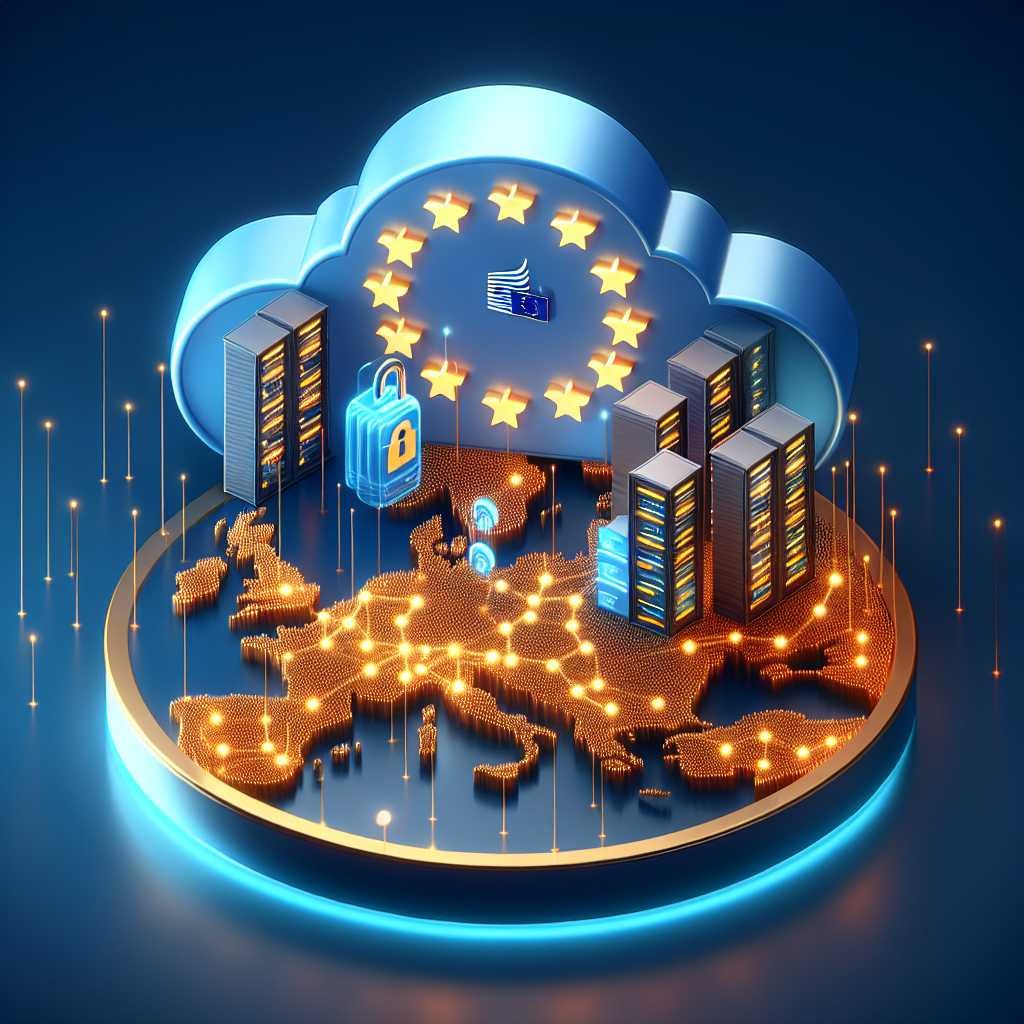
Scaling Sovereign-Ready Cloud and AI in Europe: How Capgemini and AWS Sovereign Cloud Unlock Compliant Innovation
What if your most advanced AI never left your country—and still ran at hyperscale speed? What if you could fine-tune LLMs on sensitive data, modernize legacy apps, and automate decisions across your enterprise, without sovereignty risks or regulatory drag? That’s the promise Capgemini is bringing to European organizations by launching sovereign-ready solutions on AWS Sovereign Cloud—announced on February 9, 2026—built to accelerate AI innovation while meeting Europe’s toughest compliance and data residency demands.
In this deep dive, we’ll unpack what “sovereign-ready” really means, why it’s become mission-critical in Europe, and how Capgemini’s solutions on AWS Sovereign Cloud create a secure, scalable foundation for AI—from responsible governance and hybrid cloud strategies to low-latency LLM inference and analytics at scale.
If your teams are asking how to deploy AI at enterprise speed without crossing borders or crossing compliance lines, read on.
Why Sovereign Cloud Matters Now in Europe
The urgency behind digital sovereignty has never been higher. Organizations in finance, healthcare, public sector, energy, and critical infrastructure face mounting pressure to:
- Keep sensitive data within national or EU borders, under the control of local entities
- Prove compliance with data protection, cybersecurity, and operational resilience regulations
- Deploy AI responsibly, transparently, and accountably—fast enough to compete
Key drivers include:
- GDPR and data residency: Europe’s flagship data protection framework requires lawful processing, strong security, and accountability—amplified by Schrems II and strict safeguards around data transfers. Learn more about GDPR from the European Commission: https://commission.europa.eu/law/law-topic/data-protection_en
- The EU AI Act: New, risk-based obligations for AI systems are phasing in, requiring governance, transparency, human oversight, and documentation. See the European Parliament’s explainer: https://www.europarl.europa.eu/topics/en/article/20240306STO19007/artificial-intelligence-act-eu-rules-explained
- Sector-specific rules: Financial services face DORA for operational resilience; critical sectors must meet NIS2 for cybersecurity; public authorities are doubling down on data localization and auditability.
- DORA: https://finance.ec.europa.eu/regulation-and-supervision/financial-services-digital-resilience/digital-operational-resilience-act-dora_en
- NIS2: https://digital-strategy.ec.europa.eu/en/policies/nis2-directive
The bottom line: Every European executive wants the speed of hyperscale AI—and the certainty of European control. Sovereign cloud is the bridge.
Meet AWS Sovereign Cloud—And Why It Matters
AWS Sovereign Cloud is designed to help European customers run sensitive workloads with stricter data location, access control, and operational requirements—without sacrificing the elasticity and breadth of the AWS ecosystem. For background and context from AWS, see: https://aws.amazon.com/blogs/aws/introducing-the-aws-european-sovereign-cloud/
At a high level, the sovereign model focuses on:
- Data residency and locality: Keeping data stored and processed within designated geographic boundaries
- Sovereign operational controls: Enabling governance models and access restrictions aligned with local oversight
- Isolation and encryption: Enforcing strong tenant isolation (e.g., via AWS Nitro System hardware isolation: https://aws.amazon.com/ec2/nitro/) and pervasive encryption, with options for customer-managed keys and external key stores (XKS: https://aws.amazon.com/kms/features/#External_key_store)
- Private connectivity: Building architectures that avoid exposure to the public internet using services like AWS PrivateLink (https://aws.amazon.com/privatelink/) and tightly controlled VPC boundaries
For regulated entities and public sector organizations, these controls are pivotal—not just to meet the letter of the law, but to win stakeholder trust and accelerate responsible AI at scale.
Capgemini’s Sovereign-Ready Solutions on AWS: Built for Scale, Built for Europe
Capgemini’s newly announced portfolio brings proven transformation patterns—migration, AI platforms, and operations—into a sovereign-ready blueprint for European enterprises. Read the announcement: https://www.capgemini.com/news/press-releases/sovereignready-cloud-and-ai-innovation-set-to-scale-for-european-enterprises-with-capgemini-solutions-on-the-aws-sovereign-cloud/
What makes it different:
- Tailored migrations and modernization: Accelerators to assess sovereignty requirements, re-platform sensitive workloads, and build cloud-native foundations—without disrupting core operations.
- Secure AI and data foundation: Data platforms, feature stores, and MLOps built to run inside sovereign boundaries—supporting everything from RAG and fine-tuning to predictive analytics and streaming insight.
- AI governance frameworks: Policy, risk, and control libraries mapped to EU law and sector guidance, with practical workflows for model documentation, testing, bias monitoring, and audit trails. For a perspective on responsible AI, see Capgemini’s thought leadership: https://www.capgemini.com/insights/expert-perspectives/ai-ethics/
- Hybrid cloud strategies: Blueprints that blend sovereign and public clouds—keeping sensitive data in-region while tapping broader ecosystems where appropriate.
- Ethical AI and bias mitigation: Guardrails, explainability, and human-in-the-loop patterns tailored to EU expectations.
- Sustainability at the core: GreenOps patterns to cut cost and carbon without sacrificing performance. Explore AWS’s sustainability resources: https://sustainability.aboutamazon.com/
Capgemini’s propositions are geared for low-latency AI applications to run where data lives—supporting use cases from LLM-based assistants to fraud detection and industrial analytics.
A Reference Architecture for Sovereign AI on AWS
Below is a pragmatic way to assemble a sovereign-ready stack for AI/ML, analytics, and applications—built on AWS primitives available within the sovereign environment and shaped by Capgemini’s delivery accelerators.
1) Data and Analytics Foundation
- In-region storage for raw, curated, and trusted data zones, with immutability options and fine-grained access control
- ETL/ELT orchestration inside the sovereign boundary, with lineage and data quality checks
- Tokenization or pseudonymization for sensitive attributes, backed by customer-managed keys (including HSM-backed and XKS options)
- Data catalog and governance services running locally to enforce residency and policy decisions
2) Model Development and MLOps
- In-region compute for training, fine-tuning, and evaluation—using managed Kubernetes or container services for portability
- Feature store maintained in the same region as training data to avoid data egress
- Secured model registry with versioning, approvals, and automated validation gates
- Pipelines for bias testing, red-teaming, and stress testing prior to promotion to production
3) LLM and Generative AI Patterns
- Retrieval-Augmented Generation (RAG) with sovereign vector stores and in-region embeddings
- Policy filtering, PII detection, and prompt security middleware layered into the inference stack
- Options for model choices: open-source models curated and hardened for enterprise use, or regionally hosted foundation models that meet sovereignty constraints
4) Network and Identity
- Strictly private networking with no inbound public exposure; connectivity via PrivateLink, VPC endpoints, and bastionless access patterns
- Strong IAM boundaries, workload identity federation, and short-lived credentials
- Service control policies (SCPs) restricting operations that could lead to data egress
5) Observability and Audit
- Centralized logging, metrics, and traces within the sovereign boundary
- Model and data lineage tracking for explainability and audit
- Immutable audit trails retained per regulatory retention windows
High-Impact Use Cases You Can Run Today
Here’s how European organizations are turning sovereignty constraints into AI-fueled advantage:
- Banking and payments:
- LLM agents for compliance teams (classifying regulations, summarizing obligations) with redaction and role-based retrieval
- AML and fraud analytics on in-region streaming data, with low-latency feature serving
- Credit decisioning models with documented governance for DORA audits
- Public sector and government:
- Document understanding for case files, grants, and procurement—fully processed in-country
- Citizen-facing chat assistants grounded in authoritative knowledge bases, with verifiable citations
- Healthcare and life sciences:
- Clinical summarization and coding aids for care teams, with strict de-identification workflows
- Real-world evidence analytics, secure cohort selection, and explainable model outputs for regulators
- Energy and utilities:
- Predictive maintenance on grid assets, anomaly detection from sensor streams
- Demand forecasting with weather and market data, governed for auditability
- Manufacturing and automotive:
- Computer vision for quality control with edge-to-cloud governance
- Engineering knowledge assistants trained on proprietary documents within the sovereign boundary
Each use case benefits from Capgemini’s governance patterns (model cards, risk registers, human-in-the-loop checkpoints) and AWS’s isolation and encryption controls—ensuring speed without sovereignty trade-offs.
Compliance by Design: From GDPR to the EU AI Act
Compliance isn’t a binder on a shelf—it’s a living blueprint in your platform. Capgemini’s sovereign-ready approach bakes controls into your delivery pipelines:
- GDPR alignment:
- Lawful basis mapping and records of processing
- Data minimization and privacy-by-design checkpoints embedded in CI/CD
- Data Protection Impact Assessments (DPIAs) automated where feasible
- Strong encryption key lifecycle and rotation policies
- EU AI Act readiness:
- Risk classification workflows (minimal/limited/high/Prohibited) integrated in model intake
- Documentation and technical file generation for high-risk systems
- Human oversight, robustness/stress tests, and logging mapped to obligations
- Sectoral frameworks:
- DORA controls mapped to operational processes (resilience testing, incident reporting)
- NIS2-aligned cybersecurity measures and supply chain diligence for critical entities
For cloud and cybersecurity guidance, European authorities offer helpful resources: – ENISA cloud security guidance: https://www.enisa.europa.eu/topics/cloud-and-big-data/cloud-security – CNIL cloud computing guidelines: https://www.cnil.fr/en/cloud-computing – BSI C5 cloud controls catalogue: https://www.bsi.bund.de/EN/Topics/Cloud-Computing/Compliance_Controls_Catalogue/Compliance_Controls_Catalogue_node.html
Security and Trust: A Deep Dive into Sovereign Guardrails
Security underpins sovereignty. Key building blocks include:
- Zero-trust architecture: Strong identity for users and workloads, least-privilege policies, continuous verification, and micro-segmentation inside VPCs
- Encryption everywhere:
- At-rest with customer-managed keys; external key store (XKS) where needed for key sovereignty
- In-transit TLS with mutual authentication for service-to-service calls
- In-use protections leveraging confidential computing patterns where available
- Isolation by design: Dedicated VPCs, subnets, and strict egress controls; no public IPs; PrivateLink for service integrations; service control policies to prevent data movement or misconfiguration
- Secrets and supply chain security: Secret rotation, SBOMs for container images, signed artifacts, and policy-as-code to block untrusted components
- Continuous compliance: Automated controls, drift detection, and real-time alerts—all within the sovereign boundary
Tip: For teams modernizing from on-prem, start by mapping your current controls to cloud-native equivalents, then raise the security bar with prescriptive guardrails and automated remediation.
Hybrid Sovereignty: Blending Sovereign and Public Cloud Without the Risk
Many enterprises don’t need everything in the sovereign cloud all the time. The art is to keep sensitive data and regulated workloads sovereign—while leveraging broader cloud ecosystems where allowed.
Architectural patterns that make this safe and effective:
- Split-plane design: Keep the data plane (data, models, inference) sovereign, while allowing non-sensitive control planes (e.g., project management, documentation) in mainstream environments—subject to policy
- Federated learning and split learning: Train across data silos without moving raw data; exchange gradients or model weights instead of PII
- Synthetic data generation: Build high-fidelity, privacy-preserving datasets for experimentation and early-stage model development outside of sensitive zones
- Pattern-based exceptions: Tokenization, hashing, or aggregation for cross-border analytics, backed by DPIA and legal sign-off
This hybrid approach supports agility without compromising compliance—and avoids lock-in by preserving portability and standardized interfaces.
Sustainability and FinOps: Cost, Carbon, and Control
Sovereignty doesn’t have to cost more. In fact, the discipline it demands can lower spend and carbon:
- Right-size and right-time: Choose the right instance families, autoscale aggressively, and schedule non-peak jobs
- Accelerate pipelines: Cache intermediate results, minimize I/O, and leverage event-driven designs
- Optimize data layout: Compress, partition, and tier storage; age out or archive data per retention rules
- Measure to manage: Track cost and carbon per product team; use AWS’s carbon footprint tools: https://aws.amazon.com/aws-cost-management/aws-carbon-footprint-tool/
GreenOps becomes a competitive advantage when linked to product KPIs—particularly for public tenders and ESG reporting.
Operating Model: How to Run Sovereign AI at Enterprise Scale
Technology is half the battle; operating model is the other half. Capgemini’s approach emphasizes:
- A platform team owning the sovereign landing zone, data/AI platform, and shared services (security, observability, MLOps)
- Product-aligned teams consuming platform capabilities via self-service portals, with golden paths and templates
- A federated governance board covering data protection, security, AI ethics, and compliance—with clear RACI and escalation
- SRE and model ops practices with SLOs for both application uptime and model quality/drift
- A continuous enablement program: role-based training for developers, data scientists, and risk/compliance teams
Document what “good” looks like: reference architectures, policy-as-code libraries, runbooks, and audit packs. Then automate everything possible.
A Pragmatic 90/180/365-Day Roadmap
- Days 0–90: Assess and lay foundations
- Sovereignty assessment (data mapping, residency constraints, legal inputs)
- Target operating model and responsibility matrices
- Sovereign landing zone with identity, network, encryption, and guardrails
- Quick-win MVP use case scoped and funded (e.g., a RAG assistant for a regulated process)
- Days 90–180: Prove value and harden
- Data platform and feature store live with lineage and quality controls
- MLOps pipelines with bias and robustness testing integrated
- MVP in production with human-in-the-loop and audit logging
- FinOps and GreenOps baselines established; cost and carbon dashboards live
- Days 180–365: Scale and industrialize
- 3–5 production use cases across functions (risk, operations, CX, finance)
- Hybrid sovereignty patterns rolled out; federated learning or synthetic data where appropriate
- Compliance automation (DPIA templates, AI technical files, continuous controls)
- Executive-level KPIs and governance cadence; external audit readiness
Business Outcomes to Expect
- Faster time-to-value: Weeks to first MVP, months to portfolio of AI services
- Lower risk exposure: Data and access confined to EU or national boundaries with enforceable controls
- Operational efficiency: Automated pipelines, self-service platforms, and standardized guardrails
- Better decisions and customer experiences: AI you can actually ship—with explainability and oversight
- Competitive differentiation: Compliant innovation at speed, aligned with Europe’s digital autonomy goals
How to Get Started
- Read the announcement and assess fit: Capgemini’s press release
- Align stakeholders: CIO, CISO, CDO, Chief Risk/Compliance Officer, and business sponsors
- Run a sovereignty discovery workshop: Inventory sensitive datasets, residency constraints, AI ambitions, and regulatory obligations
- Choose a lighthouse use case: Tangible ROI, clear governance needs, and measurable compliance value
- Stand up the sovereign landing zone: Identity, network, encryption, logging, and policy-as-code
- Build fast, govern faster: Integrate DPIA, AI risk classification, and quality gates from day one
Capgemini and AWS can help you de-risk the journey—tailoring architecture, governance, and delivery to your sector’s needs.
FAQs
Q1: What is a sovereign cloud, in practical terms?
A sovereign cloud enforces data location, access, and operational controls to keep sensitive information within specified jurisdictions and under local oversight—while still delivering cloud scalability and services. It’s about technical, legal, and organizational guarantees working together.
Q2: How does AWS Sovereign Cloud differ from standard AWS regions?
AWS Sovereign Cloud is designed with additional controls for data residency, access restrictions, and operational sovereignty. Customers can architect workloads to remain in-region, leverage customer-managed encryption keys (including external key stores), and isolate networks to minimize exposure.
Q3: Can we run LLMs and generative AI inside a sovereign boundary?
Yes—Capgemini’s solutions enable RAG, fine-tuning of suitable models, secure vector stores, and low-latency inference inside the sovereign environment, using services available there. The approach emphasizes privacy safeguards, content safety filters, and auditability.
Q4: Will sovereign cloud slow us down or make AI more expensive?
Not if you architect for efficiency. Autoscaling, right-sizing, caching, storage tiering, and event-driven designs keep costs in check. Many organizations find that the discipline of sovereignty actually accelerates delivery by enforcing clarity on data flows and governance.
Q5: How does this help with GDPR and the EU AI Act?
The platform bakes in privacy-by-design and AI governance—DPIA workflows, data minimization, encryption, model documentation, bias testing, human oversight, and logging—making compliance demonstrable and auditable.
Q6: We’re a financial institution. How does this address DORA?
DORA requires operational resilience, testing, incident reporting, and ICT third-party risk controls. The sovereign landing zone plus standardized ops (SRE, backup/restore, chaos testing, observability) and supplier governance helps align to DORA expectations.
Q7: Can we blend sovereign and non-sovereign clouds safely?
Yes. Use split-plane designs, tokenization, aggregation, and federated or synthetic data approaches. Clear policies and automated controls ensure that sensitive data never leaves where it shouldn’t.
Q8: What about sustainability and ESG reporting?
GreenOps practices—right-sizing, efficient data layouts, workload scheduling—reduce cost and carbon. Track and report your cloud carbon footprint with AWS tooling and integrate these metrics into ESG dashboards.
The Takeaway
European enterprises don’t have to choose between AI speed and regulatory certainty. With Capgemini’s sovereign-ready solutions on AWS Sovereign Cloud, you can build, train, and run AI where your data lives—scaling innovation while honoring Europe’s data protection and sovereignty ambitions. Start with a lighthouse use case, anchor it in a sovereign landing zone with strong governance, and expand confidently. The future of compliant AI at hyperscale is here—and it’s sovereign by design.
External resources referenced: – Capgemini announcement: https://www.capgemini.com/news/press-releases/sovereignready-cloud-and-ai-innovation-set-to-scale-for-european-enterprises-with-capgemini-solutions-on-the-aws-sovereign-cloud/ – AWS European Sovereign Cloud overview: https://aws.amazon.com/blogs/aws/introducing-the-aws-european-sovereign-cloud/ – GDPR (European Commission): https://commission.europa.eu/law/law-topic/data-protection_en – EU AI Act (European Parliament explainer): https://www.europarl.europa.eu/topics/en/article/20240306STO19007/artificial-intelligence-act-eu-rules-explained – NIS2: https://digital-strategy.ec.europa.eu/en/policies/nis2-directive – DORA: https://finance.ec.europa.eu/regulation-and-supervision/financial-services-digital-resilience/digital-operational-resilience-act-dora_en – ENISA cloud security: https://www.enisa.europa.eu/topics/cloud-and-big-data/cloud-security – CNIL cloud guidance: https://www.cnil.fr/en/cloud-computing – BSI C5 controls: https://www.bsi.bund.de/EN/Topics/Cloud-Computing/Compliance_Controls_Catalogue/Compliance_Controls_Catalogue_node.html – AWS Nitro System: https://aws.amazon.com/ec2/nitro/ – AWS KMS XKS: https://aws.amazon.com/kms/features/#External_key_store – AWS PrivateLink: https://aws.amazon.com/privatelink/
Discover more at InnoVirtuoso.com
I would love some feedback on my writing so if you have any, please don’t hesitate to leave a comment around here or in any platforms that is convenient for you.
For more on tech and other topics, explore InnoVirtuoso.com anytime. Subscribe to my newsletter and join our growing community—we’ll create something magical together. I promise, it’ll never be boring!
Stay updated with the latest news—subscribe to our newsletter today!
Thank you all—wishing you an amazing day ahead!
Read more related Articles at InnoVirtuoso
- How to Completely Turn Off Google AI on Your Android Phone
- The Best AI Jokes of the Month: February Edition
- Introducing SpoofDPI: Bypassing Deep Packet Inspection
- Getting Started with shadps4: Your Guide to the PlayStation 4 Emulator
- Sophos Pricing in 2025: A Guide to Intercept X Endpoint Protection
- The Essential Requirements for Augmented Reality: A Comprehensive Guide
- Harvard: A Legacy of Achievements and a Path Towards the Future
- Unlocking the Secrets of Prompt Engineering: 5 Must-Read Books That Will Revolutionize You