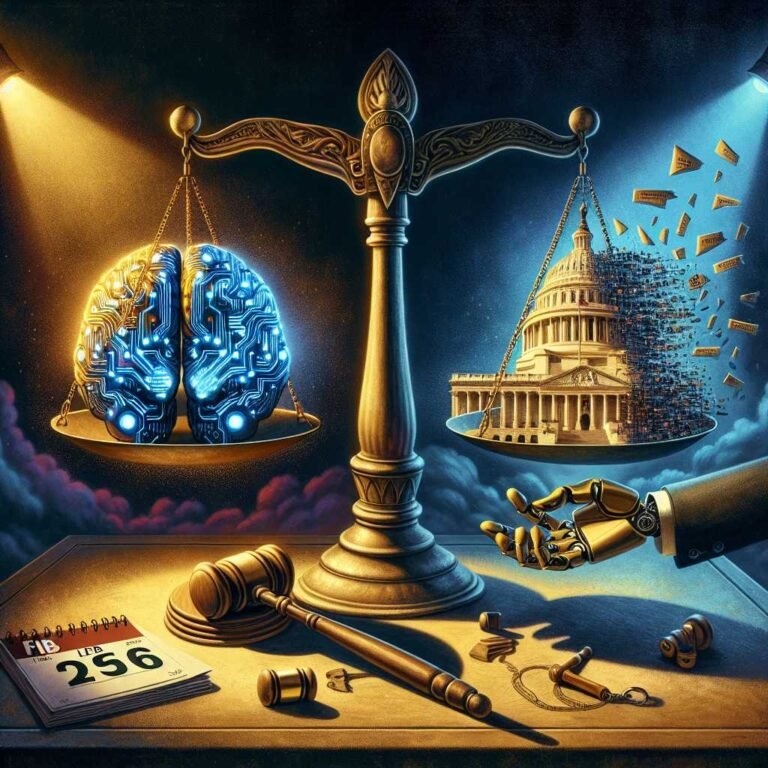
United States AI Tug-of-War: How Trump’s New Executive Order Rewrites Biden’s AI Playbook
What happens when a nation’s AI strategy does a 180 overnight? In January 2025, the United States saw exactly that. After a year of sprinting toward stricter AI oversight, the federal government abruptly pivoted toward deregulation, industry-led standards, and a very different posture on synthetic content. Whether you build AI, buy AI, or simply worry about deepfakes, the new direction will change what “responsible AI” looks like in practice—fast.
In this post, we unpack what changed, why it matters, and how to adapt without losing trust, agility, or competitive edge.
The quick version
- On January 23, 2025, President Trump issued an Executive Order titled “Removing Barriers to American Leadership in Artificial Intelligence,” signaling a pullback from several Biden-era AI initiatives, especially around content authentication and centralized safety governance.
- The shift moves from federal mandates toward lighter-touch, industry-led approaches on synthetic media detection/labeling and AI model testing.
- The Biden administration’s AI architecture—most notably the US Artificial Intelligence Safety Institute (AISI) within the Department of Commerce—faces recalibration, with practical effects on federal AI guidance, model evaluation, and national security coordination.
- The gap left by looser federal direction will likely be filled by states, standards bodies, private sector coalitions, and global regimes (think EU AI Act)—raising the stakes for multi-framework compliance.
Source and further reading: Global Compliance News coverage (Feb. 15, 2025)
A policy about-face in two acts
Act I: The Biden-era foundation
Throughout 2023–2024, the Biden administration laid out a layered approach to AI safety and accountability. That included:
- An expansive Executive Order on AI (Oct. 30, 2023) focusing on safety, security, civil rights, and innovation
- Direction to the Commerce Department to explore standards for content authentication and detection of synthetic content (to combat deepfakes, fraud, and deception)
- Launch and scaling of the US Artificial Intelligence Safety Institute (AISI) within the Department of Commerce to coordinate model evaluation, testing, and risk guidance
- Strong agency signals encouraging the use of frameworks like the NIST AI Risk Management Framework and the AI Bill of Rights Blueprint
The throughline: set guardrails early, standardize the “how” of AI risk management, and build trust via authentication of content and transparent evaluations of advanced models—especially where national security risks may emerge.
Act II: The Trump-era pivot
On January 23, 2025, the Trump administration’s Executive Order—“Removing Barriers to American Leadership in Artificial Intelligence”—recasts that approach. According to the reporting and early analysis, this reset includes:
- Reconsidering or scaling back federal pushes for mandatory labeling/detection of synthetic content
- Rebalancing the federal government’s role in model testing and AI safety coordination—potentially reframing AISI’s remit, outputs, or level of influence
- Emphasizing reduced regulatory friction and encouraging market- and industry-driven solutions
The result: less top-down direction, more reliance on voluntary standards, and new ambiguity for organizations that had aligned their roadmaps to federal guidance on watermarking, provenance, and safety testing.
For detail and context on the pivot, see Global Compliance News.
The biggest flashpoint: Labeling and detection of synthetic content
What Biden pushed for
- Encourage or require content authentication tools (e.g., watermarking, provenance metadata) to help people and platforms identify AI-generated media.
- Move toward consistent mechanisms for labeling synthetic content, particularly in high-risk contexts like elections, fraud prevention, and public safety.
- Advance standards development with the Department of Commerce and public-private partners to normalize content provenance tech.
Why it mattered: Deepfakes are already straining trust in digital content and harming individuals and institutions. Agencies like CISA have explicitly warned about synthetic media’s role in phishing, disinformation, and social engineering.
What Trump’s order signals
- A departure from prescriptive federal mandates around content authentication and detection
- More freedom for industry to decide when and how to label content, and which technical standards to adopt
- A stronger emphasis on innovation speed over compliance overhead
The operational impact
- Short term: Less federal pressure to adopt specific watermarking/provenance systems. Procurement and regulatory expectations may soften.
- Medium term: Platforms, coalitions, and states fill the vacuum. Voluntary standards like C2PA content credentials and Content Authenticity Initiative likely become even more important as market signals of trust. States may legislate targeted deepfake disclosures (especially around elections, impersonation, and consumer protection).
- Long term: Global interoperability matters. If the EU AI Act and other jurisdictions require stronger content authentication, US multinationals may adopt stricter global baselines irrespective of lighter federal direction.
Bottom line: The business case for content authenticity persists—even if the federal stick weakens—because customers, partners, and regulators elsewhere will still expect it.
The AISI question: What happens to federal AI safety coordination?
The Biden administration’s AISI sought to become a federal hub for AI model testing, evaluation resources, and safety research, including through a broad public-private consortium. In its final months under Biden, AISI reportedly established a government task force focused on research and testing of advanced models to manage national security capabilities and risks.
With Trump’s Executive Order, that centralized push is in flux. Possibilities include:
- Re-scoping AISI’s priorities toward innovation enablement and away from prescriptive testing frameworks
- Slowing or pausing some cross-agency coordination on model evaluations
- Relying more on voluntary benchmarks and third-party evaluations rather than formal federal guidance
What won’t change: Enterprises and critical infrastructure operators still need robust model governance to manage real-world risks—security, safety, privacy, bias, and compliance. Even without a strong federal hand, legal exposure (FTC enforcement, product liability theories, securities disclosures, employment law, discrimination claims) remains.
Cybersecurity, authenticity, and national security: The real risk picture
AI safety isn’t just philosophy—it’s incident response, fraud losses, and mission risk.
- Cybersecurity: AI systems expand attack surfaces. Model supply chains, data pipelines, AI-enabled phishing, and prompt injection vulnerabilities demand structured controls. See CISA’s guidance on deepfakes and synthetic media and NIST’s AI RMF.
- Authenticity and fraud: Without clear labeling norms, organizations face higher brand and consumer-risk exposure from impersonation and manipulated content. Provenance metadata (e.g., C2PA) can protect both brand assets and evidence chains.
- National security: Advanced models can intersect with dual-use concerns, information operations, and critical infrastructure dependencies. Even if federal coordination shifts, defense and intelligence stakeholders will continue demanding testing rigor for models touching sensitive domains.
Translation: Lighter federal oversight doesn’t lighten your duty of care.
Compliance without the compass: How to adapt your AI program now
Think of this moment as a stress test for your internal AI governance. Can you stay trustworthy without being told exactly how?
Here’s a practical playbook.
1) Keep your content authenticity roadmap—make it market-driven
- Adopt provenance where it counts: Implement C2PA-compliant metadata for images, video, and audio you publish at scale or in sensitive channels (campaigns, investor communications, product imagery, safety-critical docs).
- Layer detection prudently: Combine automated detection with human review for inbound media that can cause fraud or safety incidents (customer support, claims, payments, platform moderation).
- Publish a clear labeling policy: Even if not mandated, tell users when and how you label AI-generated or AI-edited content. Consistency builds trust.
- Pressure test: Run red-team simulations around impersonation, deepfake-enabled fraud, and incident response.
Helpful resources: – C2PA: https://c2pa.org/ – Content Authenticity Initiative: https://contentcredentials.org/ – CISA deepfakes guidance: https://www.cisa.gov/resources-tools/resources/deepfakes-and-synthetic-media
2) Treat NIST AI RMF as your “common law” of AI risk
Even if mandates soften, the NIST AI Risk Management Framework remains the de facto lingua franca for audits, insurers, and partners. Operationalize it by:
- Inventorying AI use cases and models (first-party and third-party)
- Conducting pre-deployment risk assessments and threat modeling
- Establishing model documentation (cards), data lineage, and change control
- Defining performance, robustness, and safety thresholds by context
- Implementing monitoring, incident reporting, and kill-switches for high-risk systems
3) Keep an eye on the patchwork: states and sectors
Less federal control often means more action elsewhere.
- States: Expect targeted rules on deepfakes (election integrity, impersonation, consumer protection), biometric privacy, and algorithmic accountability. Coordinate with counsel on your operating footprint.
- Sectors: Financial services, healthcare, defense, and critical infrastructure may still face strong supervisory expectations—via regulators, procurement clauses, or safety standards.
- Global: The EU AI Act will impose binding obligations by risk tier, including transparency and documentation. If you sell in the EU, start mapping overlaps now.
4) Recalibrate model testing without waiting for Washington
- Adopt internal evaluation plans by risk: Adversarial robustness, jailbreak resistance, privacy leakage, and misuse potential.
- Leverage third-party benchmarks—but verify relevance to your domain and threat model.
- Build structured red-teaming: Target harmful capabilities, prompt injection, data exfiltration, and unsafe tool use.
- For national security-adjacent work: Align with customer requirements and contract language; anticipate stricter scrutiny even if public guidance is muted.
5) Communicate transparently with stakeholders
- Customers: Explain your labeling, provenance, and safety practices in plain English. Offer attestations or audit reports on request.
- Employees: Update acceptable use policies, training, and review boards as the rules shift.
- Investors/boards: Translate policy pivots into risk posture updates—where you tightened, where you stayed the course, where you expect new exposure.
Synthetic content without federal mandates: What “good” still looks like
Even in a lighter regulatory environment, clear patterns of best practice are emerging:
- Provenance by default for owned media: Attach C2PA metadata for official assets, especially in sensitive contexts (public announcements, regulated communications, brand media).
- Contextual labels: Where provenance isn’t feasible (e.g., text), use clear UI/UX cues to signal AI involvement to users when it materially affects understanding or risk.
- Platform partnerships: If you run a platform, coordinate with major tech providers to honor and display content credentials, and to apply tiered detection for harmful use cases.
- Policy carve-outs for risk: For elections, public health, financial advice, or safety-critical instructions, adopt stricter internal rules even if not required.
Trust is a competitive differentiator. You don’t need a mandate to earn it.
Innovation vs. oversight: Navigating the trade-offs
The Trump Order frames regulation as a brake on innovation. In reality, organizations face several trade-offs:
- Speed vs. assurance: Shipping fast is tempting, but post-incident remediation and reputational damage are expensive. Calibration beats blanket slowdown or blind acceleration.
- Central standards vs. fragmentation: Federal mandates can be heavy-handed—but they also reduce uncertainty. In their absence, align to recognizable frameworks (NIST AI RMF, ISO/IEC AI standards) to keep complexity in check.
- Global alignment vs. domestic minimalism: The more international your footprint, the more you’ll need to exceed the loosest common denominator. It’s often cheaper to meet the stricter global baseline once than to maintain divergent controls.
The geopolitical angle: The US in a world of rising AI rules
While the US pivots, other jurisdictions move steadily:
- EU AI Act: Risk-tiered obligations, transparency requirements, and heavy penalties for noncompliance. See the EU’s overview of its AI regulatory approach.
- G7 “Hiroshima Process”: Non-binding but influential guidelines for advanced AI safety and governance, pushing toward shared norms.
- UK/others: Sector-led approaches with central coordination; active in model safety evaluations with industry.
If US federal mandates ease, cross-border harmonization will increasingly be brokered by standards bodies, coalitions, and the largest platforms. Companies can’t wait for governments to sort it out—interoperable controls are a strategic necessity.
What to watch next
- AISI’s trajectory: Will it be re-scoped, paused, or re-energized with a different mandate?
- Agency signals: Even without new rules, watch guidance and enforcement from FTC, SEC, DOJ, CFPB, EEOC, HHS, and sectoral watchdogs.
- State legislation: Track deepfake laws, biometric privacy expansions, and AI accountability bills in key states.
- Procurement clauses: Federal and large enterprise buyers may quietly require provenance, testing evidence, or risk attestations regardless of regulation.
- Platform moves: Major cloud and model providers will shape de facto standards via defaults, SDKs, and trust incentives.
- Litigation trends: Product liability, false advertising, discrimination, and data protection cases will define practical boundaries.
A compliance checklist you can use this quarter
- Inventory all AI systems and vendors; classify by risk and business criticality.
- Implement or pilot content provenance (C2PA) for outbound brand and high-stakes media.
- Stand up model governance gates: pre-deployment reviews, eval protocols, and monitoring SLAs.
- Update incident response to include AI-specific playbooks (prompt injection, model drift, synthetic fraud).
- Refresh disclosures and UX for AI features: plain-language notices, opt-outs where appropriate, and clear escalation paths.
- Train teams: security on AI threats, legal on evolving patchwork, product on labeling and safety design.
- Align to NIST AI RMF and document your approach—auditors and buyers will ask.
Helpful references
- Biden Administration’s 2023 AI Executive Order: White House
- US Artificial Intelligence Safety Institute (AISI): NIST
- NIST AI Risk Management Framework: NIST
- Deepfakes and synthetic media guidance: CISA
- Content provenance standards: C2PA, Content Authenticity Initiative
- EU approach to AI regulation: European Commission
- Analysis of the 2025 US policy shift: Global Compliance News
FAQs
Q: What exactly did Trump’s Executive Order change about AI policy? A: The order signals a shift away from prescriptive federal mandates toward deregulation and industry-led standards. In particular, it pulls back on the Biden-era push for federally driven content authentication/labeling of synthetic media and recalibrates centralized AI safety coordination, including the role of AISI.
Q: Do US companies still need to label AI-generated content? A: There’s less federal pressure to do so uniformly, but expectations remain from customers, platforms, states, and global regulators. For high-stakes contexts (elections, financial communications, safety guidance), labeling or provenance remains a best practice—and may be required in certain jurisdictions.
Q: What is happening to the US Artificial Intelligence Safety Institute (AISI)? A: AISI’s role is being reassessed under the new policy direction. While specifics are evolving, organizations should not pause their own model evaluation and safety work—regulators, procurement partners, and courts will still expect robust governance.
Q: How does this affect deepfake risks? A: The risk remains high. Without strong federal mandates, organizations should self-impose authenticity safeguards—provenance metadata (C2PA), detection workflows, and playbooks for impersonation and fraud. See CISA’s guidance on synthetic media.
Q: If the federal government steps back, who sets the rules? A: Expect a patchwork: states, standards bodies (NIST, ISO/IEC), platforms, and international regimes like the EU AI Act. Many enterprises will standardize on NIST AI RMF internally and align to stricter international requirements where they operate.
Q: Should we still invest in watermarking or content credentials? A: Yes—especially for brand protection and high-stakes communications. Even if not mandated federally, provenance is fast becoming a market norm and will reduce legal, fraud, and reputational risk.
Q: How should we prioritize AI governance work over the next 6–12 months? A: Focus on inventory, risk classification, provenance for outbound media, evaluation pipelines for high-risk models, AI incident response, and clear stakeholder communication. Document alignment to NIST AI RMF to satisfy buyer and auditor expectations.
The clear takeaway
Federal AI policy just swung from centralized guardrails to lighter-touch, market-led governance. Don’t mistake that for a free pass. Deepfakes, cybersecurity threats, and regulatory patchworks aren’t going away—and your customers won’t lower their expectations just because Washington did.
The winners will be the organizations that move fastest to build trust on their own terms: adopt content provenance where it matters, operationalize NIST-style risk management, and communicate clearly about how AI is used and safeguarded. In a tug-of-war between innovation and oversight, credibility is the rope—hold it tightly.
Discover more at InnoVirtuoso.com
I would love some feedback on my writing so if you have any, please don’t hesitate to leave a comment around here or in any platforms that is convenient for you.
For more on tech and other topics, explore InnoVirtuoso.com anytime. Subscribe to my newsletter and join our growing community—we’ll create something magical together. I promise, it’ll never be boring!
Stay updated with the latest news—subscribe to our newsletter today!
Thank you all—wishing you an amazing day ahead!
Read more related Articles at InnoVirtuoso
- How to Completely Turn Off Google AI on Your Android Phone
- The Best AI Jokes of the Month: February Edition
- Introducing SpoofDPI: Bypassing Deep Packet Inspection
- Getting Started with shadps4: Your Guide to the PlayStation 4 Emulator
- Sophos Pricing in 2025: A Guide to Intercept X Endpoint Protection
- The Essential Requirements for Augmented Reality: A Comprehensive Guide
- Harvard: A Legacy of Achievements and a Path Towards the Future
- Unlocking the Secrets of Prompt Engineering: 5 Must-Read Books That Will Revolutionize You