UN Launches Independent Global AI Scientific Panel: What It Means for Governance, Safety, and Innovation
Is the world finally getting a shared playbook for AI? With artificial intelligence sprinting ahead and countries racing to catch up, the United Nations just made a move that could reshape how we govern and trust this technology.
On February 4, 2026, the UN Secretary-General announced an Independent International Scientific Panel on Artificial Intelligence—an initiative designed to help the world separate fact from hype, science from speculation, and opportunity from risk. Forty distinguished experts from every region are set to serve, and the message is unmistakable: AI’s global impact demands a global, science-driven response.
So what exactly is this panel? Why does it matter now? And how might it influence the next wave of AI governance, innovation, and safety? Let’s break it down.
What Happened: A Global Scientific Panel on AI, Backed by the UN
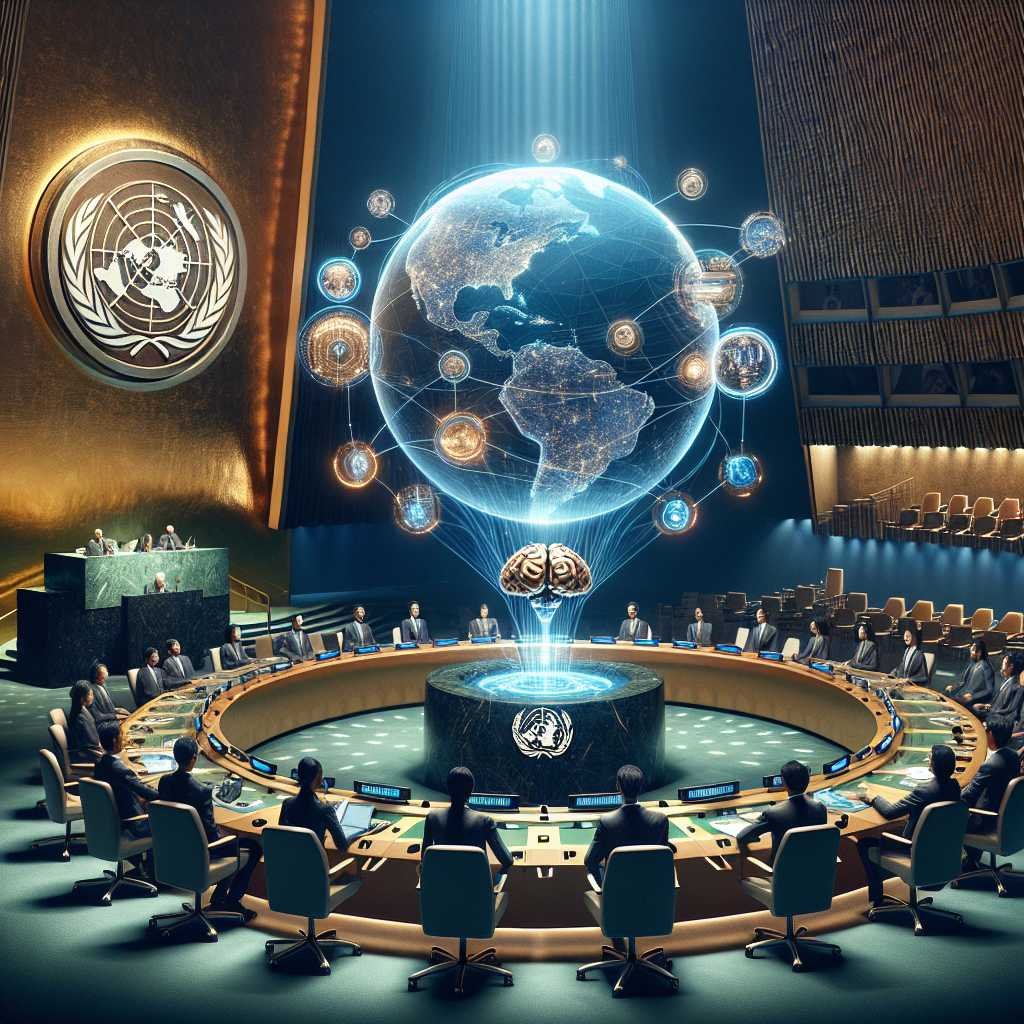
During a press conference at UN Headquarters, the Secretary-General unveiled an Independent International Scientific Panel on AI and submitted a list of 40 accomplished individuals from across regions to comprise it. The panel’s mission is clear: provide credible, unbiased assessments of AI’s state of the art and its real-world implications, free from national or corporate interests.
- The official announcement: Secretary-General’s press conference on the Independent International Scientific Panel on AI (Feb 4, 2026)
What makes this step significant?
- It centers science over politics: The panel’s independence is the point—not a regulator, not a negotiator, but a trusted source of scientific understanding and synthesis.
- It’s explicitly global: AI is borderless. The panel’s composition across regions aims to ground recommendations in diverse realities and needs—including in the Global South.
- It targets a pressing gap: AI is moving so fast that policymakers, businesses, and citizens often operate on assumptions, headlines, or hype. The panel aims to change that.
Why This Matters Now
The Secretary-General put it bluntly: AI is advancing at unprecedented speed, and no single country can “see the full picture” alone. Three forces make this move urgent:
- Fragmented rules risk a fractured internet and innovation gridlock.
- Exponential model capabilities raise novel risks—from misuse to systemic failures.
- Massive information asymmetry means most stakeholders cannot reliably tell what AI can and cannot do, today versus tomorrow.
The new panel seeks to:
- Build shared guardrails aligned to the common good.
- Unlock innovation by clarifying what’s safe, what’s risky, and what’s merely noise.
- Foster international cooperation—especially heading into a Dialogue in July that will explore measures to minimize risks, including the potential weaponization of AI.
What the Panel Is Likely to Do
While the panel’s detailed workplan will evolve, its mission signals several likely focus areas:
1) Independent State-of-the-Art Assessments
- Clear, sober evaluations of AI capabilities, limits, and trajectories across domains (language, vision, robotics, autonomous systems, scientific discovery).
- Distinguish what is reliably demonstrated from what is experimental or speculative.
- Communicate uncertainty ranges—what we know, don’t know, and what evidence is needed.
2) Misinformation and Hype Reduction
- Identify common myths and claims about AI and evaluate them against empirical data.
- Provide media, policymakers, and the public with accessible, vetted explanations that cut through technical jargon and marketing narratives.
3) Risk and Safety Frameworks
- Taxonomies for risks—individual, societal, national security, and systemic.
- Guidance on model evaluation, safety testing, and post-deployment monitoring.
- Best practices for transparency measures like model cards, system cards, and incident reporting.
Relevant resources: – NIST AI Risk Management Framework: NIST AI RMF 1.0 – OECD AI Principles (a key global reference): OECD AI Principles
4) Weaponization and Dual-Use Risk
- Practical, verifiable measures to limit malicious use (e.g., AI-enabled cyberattacks, autonomous weapons, deepfake-fueled disinformation, and biosecurity risks).
- Support for norms, guardrails, and evaluation standards ahead of the July Dialogue.
For broader context: – UNIDIR on lethal autonomous weapons: UNIDIR – Lethal Autonomous Weapons Systems – ICRC perspective on autonomy in weapons systems: ICRC – Autonomy, weapons, and humanitarian law
5) Horizon Scanning
- Regular briefs on emerging capabilities, research frontiers, and potential discontinuities.
- Early-warning indicators to prompt preemptive safety responses.
6) Equity and Inclusion
- Guidance to ensure AI benefits are broadly shared, with attention to language inclusion, accessibility, digital public goods, and local context.
- Address data gaps and power imbalances that sideline low-resource communities.
7) Collaboration and Standards Alignment
- Bridge efforts across governments, standard bodies, and industry.
- Highlight synergies with international frameworks and bodies.
Useful references: – UNESCO Recommendation on the Ethics of AI: UNESCO AI Ethics – OECD AI Policy Observatory: OECD.AI
How This Compares: Think IPCC, But for AI
Many observers will recognize the model: an independent, science-first panel offering authoritative assessments to support collective action. In some ways, this resembles:
- IPCC (climate): Rigorous scientific synthesis that underpins global policy debates. IPCC
- IPBES (biodiversity): Global scientific platform informing ecosystem policy. IPBES
Key differences to keep in mind:
- AI evolves far faster than climate or biodiversity indicators, so timelines for assessments may need to be shorter and more iterative.
- Measurements are trickier: Standardized benchmarks for AI are still maturing and sometimes lag behind real-world capabilities.
- Security sensitivities and proprietary systems complicate access to data and models.
The panel won’t be a regulator (like the IAEA is for nuclear) and won’t set binding law. It will, however, shape norms, inform negotiations, and equip stakeholders with a shared evidence base—and that can be transformative.
How This Fits with Existing Regulatory Efforts
The panel isn’t starting from scratch. It can help harmonize and inform a patchwork of efforts already underway:
- European Union: The EU AI Act sets a risk-based regulatory framework with obligations varying by risk category and use case. Authoritative science can support risk classification, conformity assessments, and testing methods.
- G7 Hiroshima AI Process: A forum exploring principles for advanced AI systems, including safety, governance, and transparency. G7 Hiroshima AI Process
- OECD and UNESCO: Offer widely recognized principles and ethical frameworks referenced by many countries.
- National standards and guidance: The U.S. NIST AI RMF and global ISO/IEC standards (e.g., risk management) that companies increasingly rely on.
By offering neutral, high-quality assessments, the panel can reduce duplication, spotlight convergences, and clarify where approaches diverge for legitimate reasons (e.g., values, risk tolerance).
What Success Would Look Like
How will we know this panel is making a difference? Look for:
- Regular, credible assessments grounded in transparent methodology and peer-reviewed evidence.
- Clear communication products for non-experts—executive summaries, visuals, and FAQs.
- Shared evaluation protocols and safety testing checklists that become de facto standards.
- Practical guidance that informs the July Dialogue and subsequent international processes.
- Increased alignment across jurisdictions on risk taxonomies, safety baselines, and incident reporting.
Signs of momentum might include:
- Calls for evidence and open consultations that draw broad, global participation.
- Collaboration with standards bodies and research initiatives to co-develop benchmarks.
- Publicly accessible incident databases and case studies that help practitioners learn from failures.
For example: – AI incident reporting resources: AI Incident Database – Content authenticity and provenance initiative: C2PA
Weaponization Risks: What’s on the Table
The Secretary-General highlighted weaponization as a top concern. Expect the panel to tackle questions like:
- Autonomous weapons and human control: How to preserve meaningful human oversight in targeting and use-of-force decisions.
- Cyber offense: Use of AI for large-scale vulnerability discovery, automated phishing at scale, or evading detection.
- Biosecurity: Assistance to design or disseminate harmful biological agents—requiring strict safeguards in model training and access controls.
- Information operations: Deepfakes and AI-amplified propaganda that erode trust in institutions, elections, and media.
Potential guardrails the panel could explore:
- Safety evaluations before deployment for high-risk and dual-use models.
- Use restrictions and access controls (e.g., tiered API access, secure enclaves for sensitive capabilities).
- Responsible disclosure practices for dangerous capabilities and vulnerabilities.
- Watermarking, content provenance, and authenticity verification for media.
- International norms on autonomy in weapons systems and AI-enabled targeting.
- Cooperative monitoring of compute resources used to train extreme-capability models.
- Shared incident and near-miss reporting to learn quickly and systematically.
Related reading: – ICRC guidance on ethical and legal concerns with autonomous weapons: ICRC – Autonomy, weapons, and humanitarian law – UNIDIR research on arms control and emerging technologies: UNIDIR
How the Panel Can Separate Fact from AI Hype
With dazzling demos and fast product cycles, it’s easy to confuse marketing with reality. The panel can help by:
- Defining evidence standards: What counts as a robust capability demonstration? What replication or adversarial testing is required?
- Tracking generalization: Benchmarking across distributions, contexts, languages, and modalities—not just curated test sets.
- Reporting uncertainty: Ranges, confidence levels, and known failure modes, especially for high-stakes uses like healthcare, critical infrastructure, or public services.
- Distinguishing emergent vs. engineered performance: What arises from scale versus careful fine-tuning, domain-specific tools, or human-in-the-loop systems?
- Clarifying measurement limits: Where current benchmarks fall short and what next-gen evaluations are needed (e.g., long-horizon reasoning, autonomy, tool use, and real-world robustness).
Benefits for Different Stakeholders
This isn’t just a policy story. The panel’s work can unlock practical value across the ecosystem.
- Governments
- Evidence to craft risk-proportionate laws and target enforcement where it matters.
- Common language and metrics to coordinate with allies and partners.
- Early warnings and horizon scans to anticipate challenges rather than react to them.
- Industry and Startups
- Clarity on safety expectations, reducing compliance ambiguity and costly rework.
- Shared testing methods and benchmarks that lower the burden on innovators while raising trust.
- A path to responsible scaling—especially for dual-use capabilities.
- Researchers and Standards Bodies
- A rally point for open, reproducible science and cross-institution collaboration.
- Signals on where measurement gaps are biggest and most urgent.
- Access to diverse perspectives and datasets that improve external validity.
- Civil Society and the Public
- Trusted explanations and myth-busting on AI’s true capabilities and limits.
- Inclusion of voices beyond tech hubs, with attention to local context and equity.
- Higher baseline safety and transparency in products that reach everyday life.
- Global South and Underserved Communities
- Focus on language inclusion, affordability, and infrastructure support.
- Guidance to prevent AI from widening existing digital and economic divides.
- Support for digital public goods and capacity building.
Practical Challenges the Panel Must Navigate
Ambition is one thing. Execution is another. Expect the panel to wrestle with:
- Access to proprietary systems and data: Without cooperation from model developers, assessments may rely on limited information.
- Keeping pace: Frontier capabilities evolve quickly; cycles of assessment must be agile.
- Representativeness: “Global” means more than geographic diversity; it includes disciplines, sectors, and lived experiences.
- Security and confidentiality: Balancing transparency with safeguards around dual-use findings.
- Communicating nuance: Policymakers and media need clarity without oversimplification.
- Avoiding capture: Protecting independence from political or commercial pressure.
The key? Open processes, transparent methods, and clear conflicts-of-interest policies.
What Businesses Should Do Now
You don’t need to wait for the panel’s first report to act. If you build, deploy, procure, or rely on AI, begin aligning with international best practices:
- Adopt a risk management framework:
- NIST AI RMF 1.0: NIST AI RMF
- Map to relevant ISO/IEC standards for AI risk and quality management.
- Build safety in by design:
- Red-team high-risk systems before and after deployment.
- Document model cards/system cards with intended use, limitations, and known risks.
- Establish incident and near-miss reporting with escalation pathways.
- Strengthen governance:
- Clarify accountability across the AI lifecycle—data, training, evaluation, deployment, and monitoring.
- Implement access controls for dual-use features and sensitive tools.
- Align release decisions with harm-mitigation strategies (e.g., staged rollouts, rate limits).
- Enhance transparency and trust:
- Use content provenance tools (e.g., C2PA) for synthetic media. C2PA
- Provide user-facing explanations for consequential decisions.
- Engage external auditors or community reviewers for high-stakes systems.
- Prepare for convergence:
- Track developments across regions to reduce fragmentation costs.
- Participate in consultations and standards-setting to ensure practicality and fairness.
What to Watch Next
- The July Dialogue: The Secretary-General pointed to July as a moment to discuss concrete measures to reduce risk, including weaponization concerns. Expect the panel’s early input to inform that discussion.
- Terms of Reference and Workplan: How the panel scopes its remit, handles conflicts, and prioritizes topics will shape its credibility.
- Calls for Evidence and Participation: Watch for opportunities to submit research, case studies, and evaluation results.
- Coordination with Existing Bodies: Alignment with OECD, UNESCO, standards groups, and national regulators will be crucial for impact.
- Early Publications: Scoping notes, technical briefs, and myth-busting explainers that set the tone for future reports.
The Bigger Picture: From Guardrails to Good Growth
This panel isn’t a brake on innovation—it’s a route to durable, trusted progress. Guardrails reduce reckless risk-taking and the costly cleanups that follow. By clarifying what’s safe, what works, and where the red lines are, the panel can help channel capital and talent into high-confidence opportunities: health, education, climate adaptation, scientific discovery, accessibility, and more.
In other words: Better science, better governance, better outcomes.
Frequently Asked Questions
- What is the UN’s Independent International Scientific Panel on AI?
- It’s a global, independent panel of experts tasked with providing credible, unbiased assessments of AI’s capabilities, risks, and real-world impacts. Its role is to inform policy and practice—not to regulate or enforce.
- Who serves on the panel?
- The Secretary-General submitted a list of 40 distinguished individuals from every region. The emphasis is on scientific credibility and independence from national or corporate interests.
- Is the panel a regulator? Can it set binding rules?
- No. The panel provides scientific assessments and recommendations. It can inform international negotiations and national policies but does not create binding law.
- Why now?
- AI is evolving at record speed, and misinformation, fragmented rules, and asymmetries of knowledge are growing. Shared, evidence-based guardrails can reduce risk while accelerating responsible innovation.
- How will the panel address weaponization of AI?
- Expect guidance on evaluation before deployment, access controls for dual-use capabilities, incident reporting, content provenance, and international norms around autonomy in weapons and AI-enabled targeting—supported by robust evidence.
- How can companies and researchers engage?
- Watch for calls for evidence, standards consultations, and working groups. In the meantime, align with frameworks like the NIST AI RMF, publish transparent documentation, and participate in incident reporting and benchmarking initiatives.
- Will this slow innovation?
- The goal is the opposite: clarity and consistency reduce uncertainty and cost. By identifying safe practices and effective risk controls, the panel can help innovation scale responsibly.
- When will we see outputs?
- The UN indicated that measures will be discussed in July. Expect the panel to share initial priorities and early findings ahead of or in connection with such dialogues, with fuller assessments to follow.
- How does this relate to the EU AI Act and other laws?
- The panel’s independent science can support consistent risk classification, evaluation methods, and safety baselines across jurisdictions—reducing fragmentation and compliance burden.
Final Takeaway
The UN’s Independent International Scientific Panel on Artificial Intelligence signals a new phase in global AI governance—one anchored in science, independence, and inclusion. Its mission is not to slow progress but to steer it: to separate evidence from hype, set shared expectations for safety and transparency, and build the trust that responsible innovation needs to thrive.
If you build, buy, or regulate AI, now is the time to engage. Start aligning with best practices, contribute to open evaluations and incident reporting, and prepare for a world where credible, global evidence becomes the north star of AI governance.
Discover more at InnoVirtuoso.com
I would love some feedback on my writing so if you have any, please don’t hesitate to leave a comment around here or in any platforms that is convenient for you.
For more on tech and other topics, explore InnoVirtuoso.com anytime. Subscribe to my newsletter and join our growing community—we’ll create something magical together. I promise, it’ll never be boring!
Stay updated with the latest news—subscribe to our newsletter today!
Thank you all—wishing you an amazing day ahead!
Read more related Articles at InnoVirtuoso
- How to Completely Turn Off Google AI on Your Android Phone
- The Best AI Jokes of the Month: February Edition
- Introducing SpoofDPI: Bypassing Deep Packet Inspection
- Getting Started with shadps4: Your Guide to the PlayStation 4 Emulator
- Sophos Pricing in 2025: A Guide to Intercept X Endpoint Protection
- The Essential Requirements for Augmented Reality: A Comprehensive Guide
- Harvard: A Legacy of Achievements and a Path Towards the Future
- Unlocking the Secrets of Prompt Engineering: 5 Must-Read Books That Will Revolutionize You