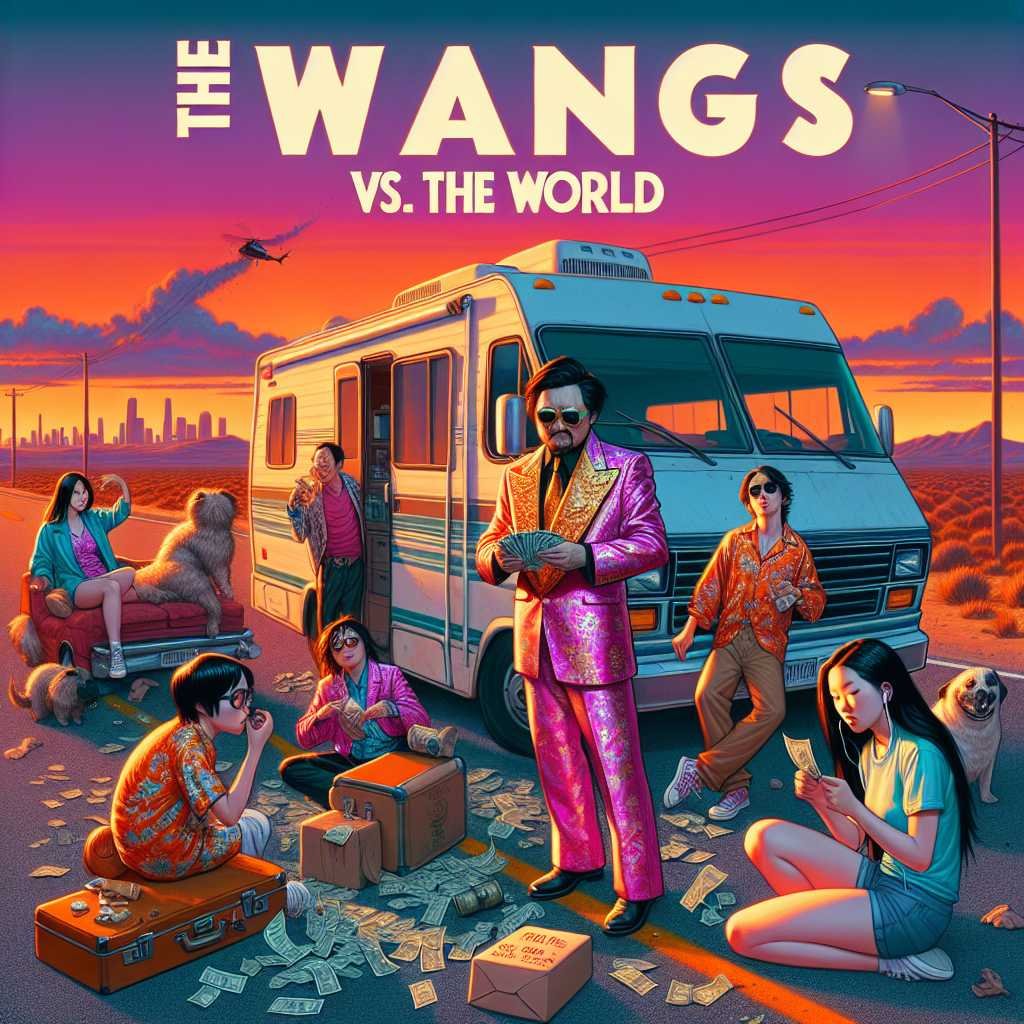
The Wangs vs. the World (Paperback) Review: A Sharp, Big‑Hearted Novel About Money, Identity, and Starting Over
If you love big, messy, laugh‑through‑the‑lump‑in‑your‑throat family stories, Jade Chang’s The Wangs vs. the World belongs on your nightstand. This is a road‑trip novel with a brain and a beating heart—equal parts satire of wealth culture and a tender portrait of what remains when the money vanishes. It’s also funny in that smirking, “oof, too real” way that makes you nudge the person next to you.
Maybe you came here because you adored Crazy Rich Asians and you’re curious about another glitzy‑gone‑gritty immigrant saga. Or maybe the premise—a Bel‑Air family loses everything in the financial crisis and drives cross‑country to regroup—hits close to home. Either way, this paperback edition (June 6, 2017) is a smart buy: portable, re‑readable, and stacked with quotable lines you’ll want to underline.
What Is The Wangs vs. the World About? (Spoiler‑Light Summary)
At its core, The Wangs vs. the World is a post‑crash American odyssey. Charles Wang, a cosmetics mogul who rode audacity and intuition to a fortune, loses it all when the financial crisis pulls the floorboards up. He gathers his two younger kids, Andrew and Grace, and his step‑wife Barbra, then points their last remaining car east. Their destination: the upstate New York home of Saina, the eldest daughter, who’s licking her own wounds after a public career implosion.
Along the way, they collide with the fallout of their past lives: prestige schools they can’t afford, brand‑name wardrobes that no longer signal power, and a social circle that disappears faster than a zero in a bank account. They also stumble into a quieter truth: family is the only asset that can’t be repossessed.
Chang keeps the plot kinetic without veering into farce. The road trip’s episodic structure lets us zoom in on each family member’s private reckonings, while the larger crash—economic, cultural, emotional—sits just offstage. If you lived through 2008, you’ll feel the sting; if you didn’t, the book makes the bruise legible.
Curious to dive in now? Check it on Amazon.
Meet the Wangs: Characters Who Refuse to Be Flat
One reason the novel works so well is that the Wangs aren’t punchlines; they’re people. Each arrives with baggage that’s both personal and distinctly American.
Charles Wang, the audacious patriarch
Charles is brash, charming, and relentlessly entrepreneurial—the kind of person who sees an empty lot and imagines an empire. He’s also haunted by a deeper loss: his family’s land in China, seized in the old days, and the sense that America is a bet he might have misread. Watching him recalibrate his pride in real time is one of the book’s quiet pleasures.
Barbra, the stepmother with a steel core
It would be easy to write Barbra as a cliché. Chang refuses. Barbra is image‑conscious, yes, but also practical, resilient, and sometimes the only adult in the room. When their Bel‑Air life evaporates, she’s the one who reads the fine print and keeps the car moving.
Saina, the disgraced star making a second act
Saina’s career as an art‑world phenom sputters after a scandal. Upstate, she’s building a new life defined less by gallery openings and more by the slow burn of self‑respect. Her story is a nuanced look at reputation economy and how women’s brilliance is policed—and reclaimed.
Andrew, the gentle dreamer
Andrew is a college student with a poet’s temperament and a comedian’s timing. He wants to be taken seriously, but he also wants to be wanted. His chapters are tender and often hilarious; they capture the ache of early twenties uncertainty without condescension.
Grace, the youngest, fiercest truth‑teller
Grace is a teenager who knows brands, knows leverage, and suspects that both are illusions. She’s the family’s sharpest observer, and her quips slice to the bone. But beneath the armor is a kid trying to understand what loyalty costs.
Together, the Wangs give us a spectrum of immigrant and second‑generation perspectives—how you hold old worlds and new, how you translate identity across currency crashes and culture wars. If this family road trip is your vibe, you can Shop on Amazon to get your copy.
Themes: Wealth, Belonging, and the American Dream Remix
The Wangs vs. the World wears many hats and looks good in all of them. Here are the themes that linger long after the last page:
- Reinventing after loss: The book asks, what do you do when the scoreboard resets to zero? Chang treats reinvention not as a montage, but as a series of gritty, unglamorous choices—calls you don’t want to make, jobs you didn’t imagine taking, apologies you owe yourself.
- The immigrant hustle—celebrated and scrutinized: Charles embodies a bootstrap ethos; Saina exposes the limits of meritocracy. The result is a nuanced, often funny interrogation of how America sells ambition.
- Family as a movable home: Strip away the civilizing surface—Michelins, mansions, and manicured lawns—and you find a family dynamic that’s the real plot engine. They exasperate each other, but they also ferry one another across humiliations big and small.
- Identity as portfolio: The book smartly shows how we “diversify” our identities—heritage, career, status—then panic when any one asset underperforms. Here’s why that matters: it’s a mirror to the way many of us live online and off.
If you want to see how critics have framed these ideas, the novel drew praise as “compassionate and bright‑eyed” from the New York Times Book Review; you can read their take here. It also drew comparisons to Little Miss Sunshine in Vanity Fair and landed on several “best of fall” lists in outlets like BuzzFeed.
Style and Voice: Why Jade Chang’s Prose Pops
Chang writes with a quicksilver wit that never feels brittle. The sentences snap, but they also breathe. She’ll set up a satirical jab at a luxury brand name and then, in the next beat, deliver a line of pure tenderness. That tonal agility keeps the book buoyant even in darker passages.
Equally notable is how Chang captures the music of multilingual lives. The characters’ interior monologues tilt between languages and cultural references without explanation or apology—a choice that feels true to experience and generous to the reader. Let me explain why that matters: when a book trusts you to keep up, you lean in, and your reward is a more vivid world.
The pacing helps too. The road‑trip structure gives the story forward momentum, but Chang knows when to pull over for a quiet exchange or a moment of scenic clarity. This balance between velocity and stillness makes the novel feel both propulsive and reflective.
Want the best deal today—new or used? See price on Amazon.
Why This Paperback Edition Still Hits
The 2017 paperback isn’t just a lower‑price reprint; it’s the most reader‑friendly way to experience this story now. Paperbacks are lighter, easier to toss in a bag, and—let’s be honest—less heartbreaking if you drop them in a bathtub. For a novel that invites re‑reading of favorite chapters, the format matters.
- Cost‑savvy: If you’re building a home library or a book club set, paperback stretches your budget.
- Annotator‑friendly: The margins are forgiving enough to host highlights, questions, and one‑liners you love.
- Durable enough for travel: This is a road‑trip book that reads beautifully on, well, road trips.
Context also makes the paperback feel current. In the aftermath of economic shocks, from 2008 to the pandemic era, the book’s questions about security, status, and resilience have only grown more relevant. If you like to pair reads with reality, this one hums.
Who Will Love This Book (and Who Might Not)
You’ll likely love The Wangs vs. the World if you’re into:
- Multigenerational family dramas with bite
- Social satires that punch up at wealth culture
- Immigrant narratives that refuse tidy binaries
- Road‑trip structures that keep the pages turning
- Books that juggle humor and heart without flopping either
This might not be your match if:
- You want a heist‑style plot or thriller‑level stakes
- You prefer single‑protagonist narratives to ensembles
- Satire about wealth makes you roll your eyes rather than grin
If you’re thinking “this is exactly my lane,” you’re the reader Chang seems to have in mind—curious, game for moral ambiguity, ready to sit with complicated people making complicated choices. If this sounds like your next pick, you can Shop on Amazon to get your copy.
Reading Guide: Book Club Questions and Discussion Ideas
Kick off your club or buddy‑read with prompts that surface the novel’s richest veins:
- Charles often frames his decisions as “bets.” Where do you see risk paying off or backfiring—for him and for the rest of the family?
- Which character arc felt most honest to you—Saina’s, Andrew’s, Grace’s, or Barbra’s—and why?
- How does the road‑trip form change the way the story lands? Which stop on the journey stuck with you?
- Where does the book mock wealth culture, and where does it empathize with it? What lines did you highlight?
- How does the novel handle the tension between belonging and authenticity—at school, at work, in love?
- If the Wangs had never lost their fortune, who might they have become? Would that version of the family be better off?
For critical context, check out NPR’s smart overview of the novel here, which frames the book’s humor and heart with care.
How It Compares: If You Liked These, You’ll Love The Wangs
- Crazy Rich Asians by Kevin Kwan: Both books mine high‑net‑worth ecosystems for comedy and critique, but Chang’s novel leans more into post‑crash recalibration and the grit of rebuilding.
- Little Miss Sunshine (film): The road‑trip‑as‑family‑therapy vibe lands here too, hence the fair comparisons in outlets like Vanity Fair.
- Pachinko by Min Jin Lee: A much grander, historical canvas, but a shared depth in exploring immigrant ambition, dignity, and the costs of survival.
- The Leavers by Lisa Ko: Another nuanced look at belonging and the sacrifices families make in pursuit of a better life.
Ready to add it to your book club lineup? Buy on Amazon.
Quotes That Stuck With Me
While I won’t spoil the best lines, expect zingers that deflate pretension and tender, precise descriptions of love in its less Instagrammable forms. Chang is especially good at the double‑edged aside—the kind of line that makes you laugh first and then wince at the truth inside it.
Practical Buying Tips: Formats, Editions, and Reading Experience
- Paperback (2017): User‑friendly, backpack‑ready, and usually the best price. If you’re annotating or passing copies around your circle, this is the sweet spot.
- Hardcover (2016): Great for collectors or gifting, with the heft and sheen hardcover fans love.
- Audiobook: Worth considering if you enjoy performance; ensemble narratives often sing in audio. Check the sample—narration style can make or break it.
- E‑book: Instant access and built‑in highlighting; nice if you read on commutes or prefer adjustable text.
Quick tip: If you’re choosing between formats, consider how you read this kind of story. Road‑trip novels are perfect for weekend travel or couch sessions, which makes paperback a smart default. Prefer paperback portability or to sample a Kindle preview first? View on Amazon.
Why The Wangs vs. the World Matters Now
Economic precarity, identity juggling, and the optics of success haven’t faded since 2016; they’ve intensified. That’s why this novel lands today. It doesn’t lecture you about inequality or assimilation. It invites you into a family minivan, cracks a joke, and then, softly, asks you to look out the window at the landscape we’ve built together.
For further reading on the book’s cultural footprint, you can dip into the New York Times’ review here and a curated fall‑books roundup from BuzzFeed where it stood out among heavy hitters.
FAQ: The Wangs vs. the World
Q: Is The Wangs vs. the World part of a series? A: No. It’s a standalone novel, which makes it a neat pick for book clubs and short‑term buddy reads.
Q: Is it similar to Crazy Rich Asians? A: If you enjoyed the social satire and opulence in Crazy Rich Asians, you’ll find overlapping pleasures here. But The Wangs vs. the World focuses more on the aftermath of losing wealth and the emotional calculus of rebuilding.
Q: How much does the 2017 paperback differ from the hardcover? A: The story is the same; the paperback offers a lighter, more budget‑friendly format. Sometimes you’ll find additional blurbs or a reading‑group guide, depending on the printing.
Q: Is there a lot of business or financial jargon? A: Not really. The economic crash is the setup, not the subject. The novel stays character‑driven and accessible.
Q: Is the book a comedy or a drama? A: Both. It’s witty and often laugh‑out‑loud funny, but it doesn’t dodge the emotional weight of loss, identity, and family responsibility.
Q: Is it appropriate for teen readers? A: It’s an adult novel with mature themes, some language, and sexual references. Older teens who read adult literary fiction will be fine, but discretion is advised.
Q: How long is it, and is it a fast read? A: It’s a mid‑length literary novel with brisk pacing and short, lively chapters. Most readers finish it quickly because the road‑trip structure keeps you turning pages.
Q: What awards or lists has it made? A: It was a New York Times Book Review Editors’ Choice and appeared on multiple “best of fall” lists from outlets like BuzzFeed and Nylon. You can find critic reactions via sources like the New York Times and NPR.
Final Takeaway
The Wangs vs. the World is a gleeful, generous novel that refuses easy answers. It skewers wealth without sneering at strivers; it celebrates reinvention without pretending it’s painless. If you’re hungry for a story that entertains while saying something true about now, this paperback is a worthy grab. Thanks for reading—if you enjoy thoughtful, voice‑driven book reviews like this, stick around for more recommendations and reading guides.
Discover more at InnoVirtuoso.com
I would love some feedback on my writing so if you have any, please don’t hesitate to leave a comment around here or in any platforms that is convenient for you.
For more on tech and other topics, explore InnoVirtuoso.com anytime. Subscribe to my newsletter and join our growing community—we’ll create something magical together. I promise, it’ll never be boring!
Stay updated with the latest news—subscribe to our newsletter today!
Thank you all—wishing you an amazing day ahead!
Read more related Articles at InnoVirtuoso
- How to Completely Turn Off Google AI on Your Android Phone
- The Best AI Jokes of the Month: February Edition
- Introducing SpoofDPI: Bypassing Deep Packet Inspection
- Getting Started with shadps4: Your Guide to the PlayStation 4 Emulator
- Sophos Pricing in 2025: A Guide to Intercept X Endpoint Protection
- The Essential Requirements for Augmented Reality: A Comprehensive Guide
- Harvard: A Legacy of Achievements and a Path Towards the Future
- Unlocking the Secrets of Prompt Engineering: 5 Must-Read Books That Will Revolutionize You