
FBI NCIC Breach: What’s Reported and What Remains Unknown
Understand the reported FBI NCIC breach, which police records could be at risk, what remains unconfirmed, and how agencies should assess exposure.
News and articles related to latest trends in cyber security and more.

Understand the reported FBI NCIC breach, which police records could be at risk, what remains unconfirmed, and how agencies should assess exposure.

Understand the Microsoft Entra Connect Health breach, what tenant data attackers accessed, and which security checks admins should prioritize to reduce risk.

Learn how BADBOX Android malware turns TV boxes into ad-fraud bots, what 40 billion daily bid requests mean, and how to choose safer streaming devices.

As advanced AI systems begin to materially influence cybersecurity—both for defense and potential offense—the way we build, evaluate, and ship models has to change. The stakes are no longer theoretical. Models that can write, audit, and execute code, orchestrate tools across networks, and optimize complex attack chains have crossed into what many leaders now call…

Cybersecurity Trends in 2026 are defined by one reality: artificial intelligence has moved from tool to teammate—for defenders and for attackers. AI agents now write phishing emails that sound like your CFO, sift your exposed SaaS footprints for weak OAuth scopes, and iterate exploits at machine speed. Meanwhile, deepfakes blur the boundary between signal and…
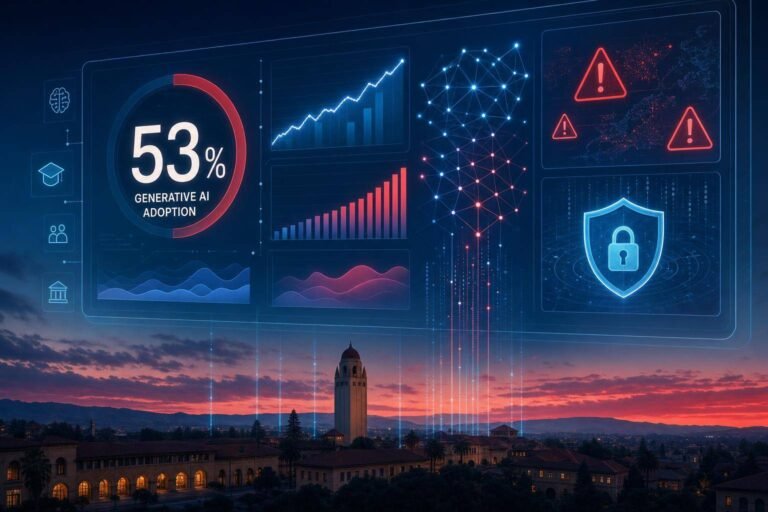
Generative AI has vaulted from early experiments to mainstream infrastructure in record time. According to Stanford HAI’s 2026 AI Index Report, an estimated 53% of the global online population now uses generative AI within just three years—among the fastest diffusion curves ever recorded for a general‑purpose technology. That pace is reshaping everything from software development…

The UK AI Safety Institute has released a technical evaluation of OpenAI’s GPT‑5.5 against 95 high‑risk security and misuse scenarios, offering a rare, independent window into how a leading frontier model behaves under adversarial pressure. The results matter beyond model rankings: they set a practical baseline for what modern AI can and cannot reliably do…

The most consequential AI story of early May wasn’t a product demo—it was a pattern. Across defense, cloud, and security, the United States signaled that frontier AI is now a strategic capability, not a curiosity. Pentagon outreach to major AI labs and hyperscalers underscored a sober reality: AI is moving into classified missions, cyber defense,…

Artificial intelligence didn’t just make headlines on May 3, 2026—it collided with the real world. Uber signaled a bold plan to turn millions of driver journeys into a sensor-rich substrate for training autonomous systems. Meta expanded deeper into embodied AI by acquiring a robotics-focused startup, betting that physical AI is the next platform. And a…

AI isn’t just augmenting cybersecurity—it’s changing its physics. The same models that help us write code, triage alerts, and hunt threats are now capable of generating working exploits, scripting lateral movement, and fabricating identities at human scale. The result is a faster, stranger, and more automated security game. This is the moment to recalibrate. The…