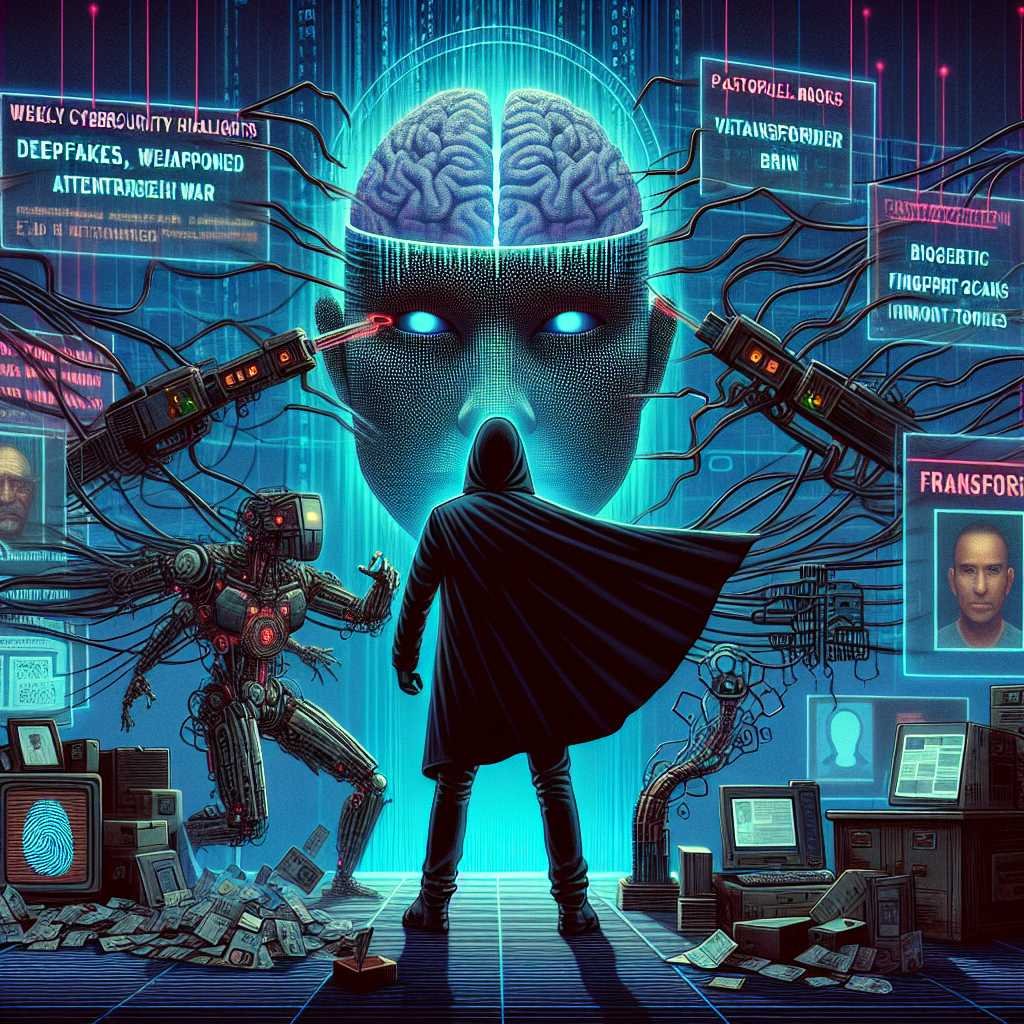
Weekly Cybersecurity Highlights – February 22, 2025: Deepfakes, Weaponized LLMs, and the New Identity War
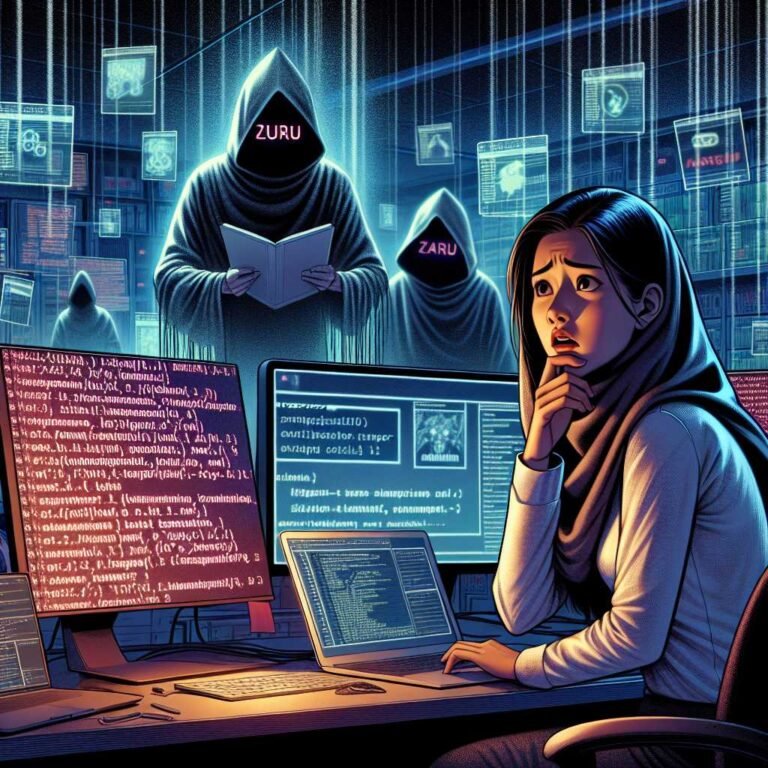
What if the next “breach” at your company doesn’t touch a single server—but still empties your accounts, reroutes your payroll, and shatters customer trust? That’s the unsettling reality surfacing in this week’s cybersecurity pulse check: attackers are no longer content to hack systems. They’re hacking people—our voices, our faces, our inboxes, our habits—and doing it at scale with generative AI.
Based on insights summarized in the latest briefing from LLRX, the threat landscape is shifting from infrastructure compromise to identity compromise—and from perimeter defense to trust defense. Deepfakes and large language models (LLMs) have become weapons of mass exploitation, enabling adversaries to manipulate confidence, bypass controls with stolen credentials, and orchestrate executive-level impersonations that look and sound painfully real.
If you’ve ever wondered, “How would we spot a synthetic CEO’s voice on a Zoom call?” or “What if a convincingly tailored AI-written email told our CFO to wire funds—backed by a live voice check that sounds exactly like the CEO?”—this is your signal to recalibrate your defenses.
For the LLRX source article, see: “Pete Recommends – Weekly highlights on cyber security issues – February 22, 2025” published February 22, 2025: – https://www.llrx.com/2025/02/pete-recommends-weekly-highlights-on-cyber-security-issues-february-22-2025/
Below, we unpack what’s changed, how deepfakes and weaponized LLMs supercharge today’s identity-centric attacks, and a practical playbook to verify trust at every step—without grinding your organization to a halt.
The Pivot: From Hacking Systems to Hacking Identities
For years, security programs optimized around keeping adversaries out of networks and servers. But as controls hardened, attackers pivoted to our softest target: humans and the trust we extend to messages, meetings, and “known” identities.
- Identity is the new perimeter. With cloud-first and hybrid work, your identity provider (IdP) and device posture now gate access far more than a traditional firewall. Compromise an identity, and the attacker inherits authorized access paths.
- Trust is the new payload. The “exploit” may not be a zero-day—it’s a believable email, a convincing voice call, or a video that passes a casual verification. If it triggers a wire transfer, data exfiltration, or approval chain breakage, the attacker has “executed payload” without touching a line of your code.
- Scale is the new force multiplier. Generative AI lets adversaries tailor social engineering to every individual, learn from failed attempts, and mass-produce deception at industrial speed.
The result: It’s not just system downtime or ransomware. It’s operational integrity, financial controls, and brand credibility on the line.
How Deepfakes and LLMs Changed the Game
Deepfakes Lower the Cost of Believability
Voice clones and face-swapped videos used to be novel, imperfect, and expensive. Today: – Minutes of publicly available audio can yield a credible voice clone capable of passing a basic “call-back” verification. – Real-time video manipulation allows attackers to appear on a live call as a known executive. – Cheap compute and open-source tooling reduce barriers for criminals.
This isn’t sci-fi. It’s business email compromise (BEC) 3.0—crossing channels (email + chat + voice + video) to break your last-ditch human verification.
LLMs Optimize Deception at Scale
Large language models help attackers: – Craft flawless, personalized phishing that weaves in company jargon, recent projects, and internal nicknames scraped from social media and previous leaks. – Iterate quickly: When an email bounces or a user hesitates, the adversary refines tone, timing, and content with A/B-tested precision. – Bypass basic defenses: Messages can mimic internal style guides, reply chains, and grammar patterns to trick both humans and filters.
Put simply, LLMs improve the attacker’s social engineering tradecraft faster than most organizations can retrain their teams.
The New Attack Patterns You Should Expect
1) Executive Impersonation and Approval Fraud
- Voice-verified directives: “I’m boarding a flight. Urgent vendor payment. Here’s the updated account.”
- Live video drop-ins: A deepfake “exec” joins a call to ask finance to expedite a payment.
- Cross-channel pressure: Email plus Slack plus a quick Teams voice call, all consistent and urgent.
2) Credential-Centric Intrusions
- Session hijacking and token theft across SaaS apps.
- MFA fatigue and social engineering to “approve” fraudulent prompts.
- Stolen OAuth tokens and app-based approvals granting persistent access without password-based logins.
3) Trust Manipulation at Scale
- Hyper-personalized spear-phishing that mirrors real emails and calendar invites.
- “Helpdesk” and IT admin impersonation requests for reset codes or device enrollments.
- Vendor and partner impersonation leveraging compromised upstream accounts.
Note: These don’t require breaking your EDR, IDS, or SIEM. They bypass all of that by being allowed—because the identity and the request looked right.
Why Perimeter-Only Security No Longer Works
Traditional controls expect “bad code” or “unusual connections.” But identity-driven attacks look like: – A legit user logging in from a plausible location on a compliant device. – A properly signed email (DKIM) from a compromised vendor domain. – A “CEO” giving instructions in a format your teams recognize.
To counter this, your defensive posture must verify identity and prove intent, continuously, across people, messages, and devices. This is the essence of Zero Trust.
For reference: – NIST SP 800-207 (Zero Trust Architecture): https://csrc.nist.gov/publications/detail/sp/800-207/final
An Identity-First, Trust-Verified Defense Blueprint
Here’s a pragmatic plan to shift from perimeter thinking to identity and trust assurance.
1) Prove Who’s Who: Strong Authentication by Default
- Move to phishing-resistant MFA: Favor FIDO2/WebAuthn hardware or platform authenticators (passkeys) over SMS or app codes.
- FIDO Alliance: https://fidoalliance.org
- Passkeys overview: https://passkeys.dev
- Enforce conditional access: Require step-up authentication for high-risk actions (e.g., new payee creation, vendor bank changes, mass data exports).
- Reduce passwords: Adopt passkeys for workforce and customers (CIAM) to cut credential stuffing risk.
For identity assurance guidance: – NIST SP 800-63 Digital Identity Guidelines: https://pages.nist.gov/800-63-3/
2) Verify the Message: Communications Trust Controls
- Lock down email identity:
- Enforce SPF, DKIM, and DMARC with quarantine/reject policies.
- DMARC resources: https://dmarc.org
- Add visual trust where supported:
- BIMI and Verified Mark Certificates (VMC) to display authenticated brand logos in inboxes.
- BIMI Group: https://bimigroup.org
- Deploy advanced email security:
- Inbound: Behavioral and content analysis, impersonation detection, account takeover (ATO) protection.
- Outbound: Prevent spoofing and misdirected sensitive data.
- Standardize external email labeling and banners—but don’t rely on banners alone.
3) Treat Identities Like Endpoints: Identity Threat Detection and Response (ITDR)
- Monitor identity signals: Impossible travel, unusual session lifetimes, OAuth consent anomalies, atypical group membership changes.
- Correlate across your XDR/SIEM: Join endpoint, network, and IdP signals for risk scoring and automated containment (e.g., session revocation).
- Limit persistence: Rotate OAuth tokens, use short-lived tokens, and block consent to risky third-party apps by default.
Explore: – MITRE ATT&CK TTPs for identity abuse: https://attack.mitre.org – MITRE D3FEND (defensive countermeasures): https://d3fend.mitre.org
4) Strengthen Biometric and Liveness Assurance Where Used
- If you use voice/face biometrics, add Presentation Attack Detection (PAD) and robust liveness checks; require multi-factor for high-value actions.
- Align to ISO/IEC 30107-3 for PAD where feasible:
- https://www.iso.org/standard/79520.html
5) Build Content Provenance into Your Media Workflows
- Adopt provenance standards to sign and verify images, audio, and video used in official channels.
- Explore C2PA and Content Credentials:
- C2PA: https://c2pa.org
- Content Credentials: https://contentcredentials.org
6) Lock Down Privilege and Workflow Risk
- Just-in-time access and just-enough privilege for admins (PAM).
- Transaction controls for finance:
- Out-of-band secondary verification for bank changes and wires.
- Dual approval with segregation of duties—never waived for “urgency.”
- Protect secrets:
- Secrets managers for API keys and service credentials.
- Rotate and scope tokens; monitor machine identity behavior.
7) People-First, AI-Aware Security Culture
- Upgrade training: Show real examples of deepfake emails, voice calls, and video. Teach “trust friction” techniques—pause, verify, escalate.
- Establish “safe words” or shared verification rituals for high-risk approvals (but rotate them—assume compromise).
- Create a fast, friendly report channel (e.g., a Slack “Report Suspicious” button). Reward report volume, not just confirmed threats.
8) Incident Response for Identity and Deepfake Scenarios
- Prebuild playbooks for:
- Executive impersonation attempts.
- OAuth app consent abuse.
- Stolen session tokens.
- Vendor ATO and third-party email compromise.
- Practice cross-channel takedowns: Email, chat, voice, video platform moderation and rapid comms to impacted teams.
- Legal and comms templates for public clarification when a deepfake targets your brand.
9) Governance and Board-Level Alignment
- Tie identity risk to revenue and regulatory obligations.
- Update risk registers: Include deepfake/BEC scenarios, identity fraud, and provenance failures.
- Map to frameworks:
- NIST SP 800-207 (Zero Trust): https://csrc.nist.gov/publications/detail/sp/800-207/final
- NIST AI Risk Management Framework (AI RMF): https://www.nist.gov/itl/ai-risk-management-framework
- MITRE ATLAS for adversarial ML: https://atlas.mitre.org
Quick Wins in 30/60/90 Days
First 30 Days
- Turn on phishing-resistant MFA for admins; start passkey pilots for targeted user groups.
- Enforce DMARC with quarantine (if not yet at reject); monitor for spoof attempts.
- Deploy high-fidelity external sender labeling; configure impersonation detection in email security.
- Establish a “verify by policy” rule for finance and HR: No bank changes or wires without out-of-band verification via a pre-approved method (not email, not the same chat thread).
Next 60 Days
- Roll out conditional access with risk-based step-up for sensitive actions.
- Implement OAuth app consent governance; block default consent to unvetted apps.
- Launch a deepfake-aware training module with interactive examples and practice verifications.
- Integrate IdP logs with SIEM/XDR; begin identity risk scoring and alerting.
By 90 Days
- Expand passkeys to all users with feasible devices; retire SMS codes for key workflows.
- Operationalize ITDR: Automated session revocation for suspicious sign-ins; enforced token lifetime limits.
- Test an incident response tabletop for executive impersonation and vendor ATO.
- Start content provenance pilots for brand-critical media (executive messages, product videos).
Metrics That Matter
- Authentication security:
- Percent of users on phishing-resistant MFA
- Passwordless/passkey adoption rate
- Reduction in authenticated suspicious sessions
- Email and comms trust:
- DMARC alignment and reject coverage across all domains
- Impersonation/BEC attempts detected vs. bypassed
- Time-to-alert for suspicious messages reported by users
- Identity and access:
- Mean time to revoke compromised sessions/tokens
- OAuth app risk reductions (unvetted app consents blocked)
- Admin privilege exposure (number of standing admin accounts)
- Human resilience:
- Reporting rate of suspected phishing/deepfake attempts
- Training completion and simulation performance
- Financial controls:
- Wire/ACH exceptions caught by out-of-band verification
- Attempted fraudulent vendor changes prevented
A Realistic Scenario: The “CEO on a Plane” Deepfake
1) The Setup: Finance lead receives a well-written email from the CEO’s known address (compromised via vendor ATO and trusted thread hijack). It requests an urgent vendor prepayment. 2) The “Proof”: A Teams call follows with the “CEO,” complete with background noise and a rushed tone. The voice matches. The video looks right—low lighting, spotty connection. 3) The Hook: The “CEO” asks to bypass the usual approval because “the board is on me about this.” A matching Slack DM arrives with a bank account number. 4) The Save: Your policy requires an out-of-band callback to a verified number stored in the HRIS, not the number provided in the email. The real CEO says: “What payment?” Incident response triggers, the messages are preserved, and security begins session/token containment.
Key lesson: Controls beat charisma. Verification beats urgency.
Using AI for Defense—Safely
AI isn’t just an attacker’s advantage. When applied responsibly: – Email and chat security can leverage LLMs to detect style shifts, suspicious tone, and role-incongruent requests. – Identity analytics can blend user and device behavior for continuous risk scoring (UEBA). – Media pipelines can embed provenance metadata and flag suspect content. – IR teams can use AI to summarize cross-channel indicators and speed containment.
Govern usage with clear policies, human-in-the-loop review for high-impact decisions, and alignment with the NIST AI RMF: – https://www.nist.gov/itl/ai-risk-management-framework
What to Tell Your Board This Quarter
- The risk: Identity attacks driven by deepfakes and LLMs are bypassing traditional controls and targeting revenue-critical workflows.
- The plan: Adopt an identity-first, trust-verified strategy—passkeys, conditional access, DMARC at reject, ITDR, and ironclad financial verification.
- The investment: Phishing-resistant MFA and comms trust controls have high ROI by cutting fraud risk and reducing password costs and helpdesk load.
- The governance: Align to NIST Zero Trust and AI RMF; run executive impersonation tabletop exercises.
Common Pitfalls to Avoid
- Overreliance on a single channel: “We verified by a quick call” won’t work if the call is the deepfake.
- MFA complacency: SMS codes and push approvals are not enough for high-risk use cases.
- Ignoring machine identities: API keys and service accounts are often the soft underbelly.
- Skipping vendor due diligence: Your partners’ compromised accounts can be the attacker’s Trojan horse.
- Neglecting user experience: If controls are too painful, users find workarounds. Focus on secure-by-default with low-friction passkeys and clear workflows.
FAQs
Q: How is BEC 3.0 different from “regular” phishing? A: Traditional phishing casts a wide net with generic lures. BEC 3.0 leverages deepfakes and LLMs to create highly tailored messages, often paired with voice or video impersonation, and may involve compromised legitimate accounts. It’s more believable, cross-channel, and built to bypass standard checks.
Q: Is MFA still effective against identity attacks? A: Yes—but type matters. Phishing-resistant MFA (FIDO2/WebAuthn passkeys, hardware keys) dramatically reduces risk. SMS codes and push prompts are vulnerable to interception and social engineering, especially during real-time attacks.
Q: Can we reliably detect deepfake audio and video today? A: Detection is improving, but it’s not perfect. Combine technical signals (liveness checks, detection tools, provenance metadata) with process controls (out-of-band verification, dual approvals). Don’t rely on a single signal; assume motivated attackers will evade basic checks.
Q: Are passkeys safe for executives and finance staff? A: Passkeys are currently one of the strongest and most user-friendly authentication options. Pair them with conditional access, device health checks, and step-up verification for high-value actions.
Q: What about small and mid-sized businesses—where should they start? A: Start with high-ROI basics: enable passkeys or hardware keys for key roles, enforce DMARC at reject, implement dual approvals and out-of-band verification for financial changes, and adopt a modern email security layer. Then add conditional access and basic ITDR analytics.
Q: Should we ban employees from using generative AI tools? A: Blanket bans often lead to shadow usage. Better is a governed approach: approved tools, data handling policies, and use-case guidelines. Train teams on prompt hygiene and prevent sensitive data exposure.
Q: How do we protect against vendor and partner account compromise? A: Enforce DMARC on your own domains, verify vendor identity changes out-of-band, require MFA for vendor portals, monitor for unusual vendor invoice behavior, and consider third-party risk monitoring. Contractually require baseline security controls where feasible.
Q: Is video conferencing safe given real-time deepfakes? A: Treat video presence as one of several signals—not definitive proof. For high-impact decisions (e.g., wire approvals), require independent verification via pre-established channels and additional authentication steps.
Q: Which standards should we align to for identity and AI risk? A: Focus on NIST SP 800-207 for Zero Trust, NIST SP 800-63 for digital identity assurance, and NIST’s AI Risk Management Framework for responsible AI. Use MITRE ATT&CK/ATLAS to understand attacker TTPs and adversarial ML risks.
Q: How do we communicate a deepfake incident to customers? A: Prepare templates that explain what happened, what’s fake vs. real, how you verified, and immediate protective steps. Share indicators and guidance on official channels. Emphasize your verification rituals and provenance indicators to rebuild trust.
The Clear Takeaway
The front line of cybersecurity has moved. Attackers are not just breaking into networks—they’re breaking into our trust. Deepfakes and weaponized LLMs make identity the new battleground and verification the new superpower. If your defenses still assume “the firewall will catch it” or “a quick call will confirm it,” you’re exposed.
Win the identity war by defaulting to phishing-resistant MFA, verifying high-risk actions out-of-band, embedding provenance into your media, and watching identities with the same rigor you apply to endpoints. When in doubt, add a little “trust friction”: pause, verify, and confirm through a separate, pre-trusted path.
Modern security isn’t about saying “no.” It’s about saying “prove it”—quietly, consistently, and at scale.
Discover more at InnoVirtuoso.com
I would love some feedback on my writing so if you have any, please don’t hesitate to leave a comment around here or in any platforms that is convenient for you.
For more on tech and other topics, explore InnoVirtuoso.com anytime. Subscribe to my newsletter and join our growing community—we’ll create something magical together. I promise, it’ll never be boring!
Stay updated with the latest news—subscribe to our newsletter today!
Thank you all—wishing you an amazing day ahead!
Read more related Articles at InnoVirtuoso
- How to Completely Turn Off Google AI on Your Android Phone
- The Best AI Jokes of the Month: February Edition
- Introducing SpoofDPI: Bypassing Deep Packet Inspection
- Getting Started with shadps4: Your Guide to the PlayStation 4 Emulator
- Sophos Pricing in 2025: A Guide to Intercept X Endpoint Protection
- The Essential Requirements for Augmented Reality: A Comprehensive Guide
- Harvard: A Legacy of Achievements and a Path Towards the Future
- Unlocking the Secrets of Prompt Engineering: 5 Must-Read Books That Will Revolutionize You