Months After the UMMC Cyberattack: What We Know About Patient Data, Medusa Ransomware, and What Comes Next
If you’re a UMMC patient, provider, or Mississippi resident, one question keeps hanging in the air: What happened to the patient data after the University of Mississippi Medical Center’s cyberattack—and how worried should we be now?
Months after a March 2026 ransomware incident disrupted Mississippi’s largest hospital system, answers remain frustratingly incomplete. The Medusa ransomware group publicly claimed responsibility nearly a month later and posted samples of allegedly stolen data on its leak site, adding fuel to public anxiety around identity theft, medical fraud, and delayed breach notifications.
In this deep dive, we’ll unpack what happened, why it matters beyond Mississippi, how double-extortion ransomware like Medusa works, what patients should do right now, and what healthcare leaders can learn to harden defenses. We’ll also map out what to watch for in the coming weeks and months as investigations continue and regulatory timelines tick on.
Source reference: Mississippi Today’s reporting offers a detailed account of the attack’s impact and lingering questions. You can read their coverage here: Months after UMMC cyberattack, questions persist about patient data.
A quick recap: What happened at UMMC in March 2026
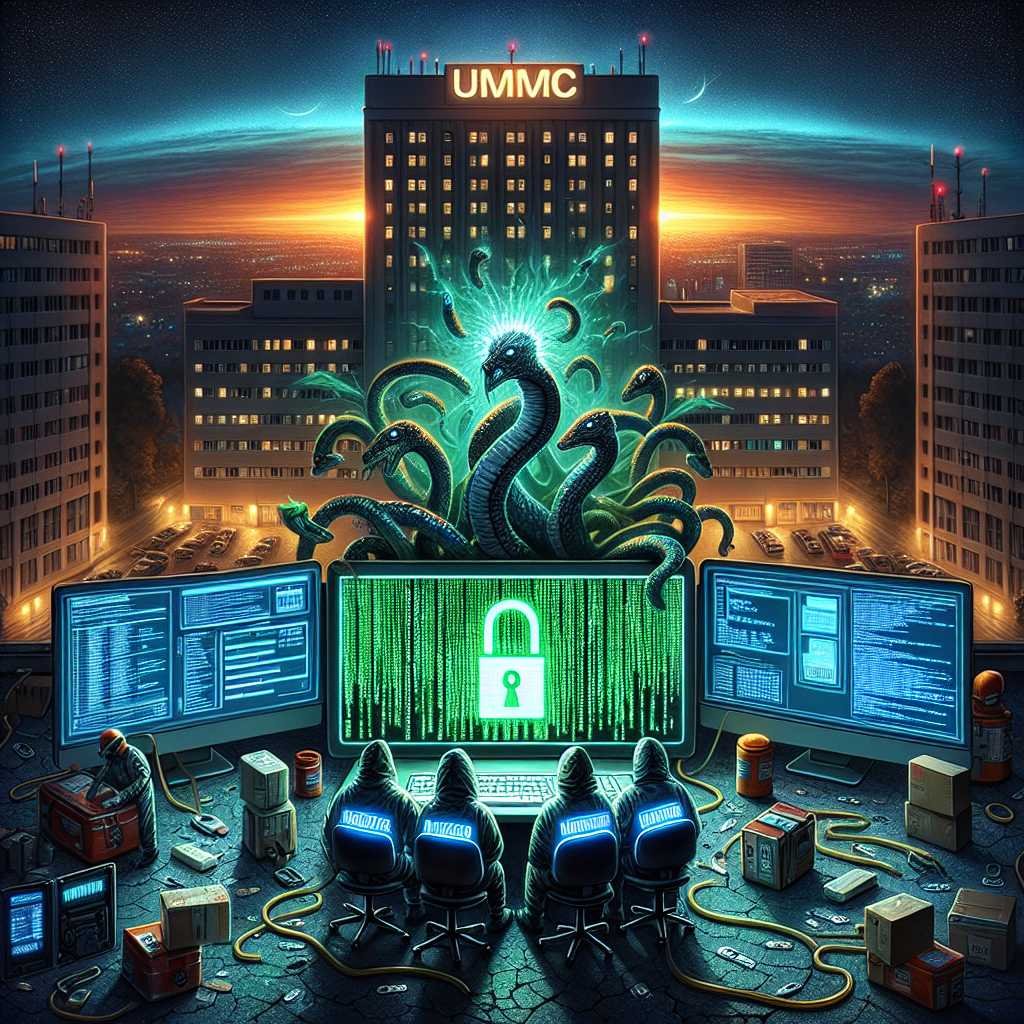
In early March 2026, the University of Mississippi Medical Center experienced a crippling ransomware attack. UMMC, a critical regional care hub with more than 800 beds, saw wide-scale outages across electronic health records (EHR), imaging, and laboratory systems. This kind of disruption is more than an IT problem—it’s a patient safety issue that can delay care, force workarounds, and ripple across a regional healthcare network.
Nearly a month after the incident, the Medusa ransomware group took credit. Consistent with modern “double-extortion” tactics, Medusa operators published samples of what they claim are stolen files, pressuring the organization to pay by threatening to leak more data. As of now, the full scope of any compromised protected health information (PHI) remains unclear publicly, and questions continue about which data was accessed, how much was taken, who is affected, and when complete breach notifications will land.
UMMC has reported restoration progress across core systems, but lingering risks remain—from follow-on phishing campaigns to malware attempts targeting confused patients and staff. Third-party incident response teams have been engaged, and preliminary leads suggest the initial foothold could have come via phishing or exposed Remote Desktop Protocol (RDP), both classic entry points for ransomware operators.
For context and continuing coverage, see the source article at Mississippi Today: Mississippi Today report on UMMC cyberattack.
Why this attack matters beyond Mississippi
- Healthcare is critical infrastructure. When hospital systems go dark, patient outcomes are at stake—not just patient privacy. Downtime strains clinical staff, disrupts care coordination, and can drive diversions and backlogs.
- Double-extortion is the norm. Ransomware groups don’t just encrypt systems anymore; they also steal data to increase leverage. Even if backups enable recovery, data exposure risks remain.
- Public institutions are high-value targets. Teaching hospitals and safety-net systems often operate with legacy tech, staffing gaps, and complex vendor ecosystems—conditions that attackers exploit.
- Ransomware-as-a-service (RaaS) lowers the barrier to entry. Affiliates can “rent” ransomware kits and playbooks, spreading attacks more broadly and quickly.
If you lead security or compliance in healthcare, the UMMC incident is a case study in how fast a regional health system can be brought to a standstill—and how long the questions about patient data can drag on.
What do we actually know about the patient data?
Public reporting indicates Medusa operators posted samples of alleged stolen data on their leak site to substantiate their claims. That’s a hallmark of double-extortion playbooks: publish a “proof pack” to apply pressure.
What’s unknown publicly: – The volume of PHI involved – Exactly which systems or datasets were accessed – How many patients or records are affected – Whether sensitive identifiers (SSNs, insurance IDs) were taken – Whether clinical notes, imaging, or lab results were exposed
It’s standard in complex healthcare breaches for detailed answers to take weeks or months. Forensics teams must reconstruct attacker activity across logs and backups, validate what the threat actors touched or exfiltrated, and corroborate data against inventories. That’s painstaking work—especially in hybrid on-prem/cloud environments with legacy systems.
The disclosure dilemma and HIPAA timelines
Under HIPAA, covered entities must notify affected individuals “without unreasonable delay” and no later than 60 days after discovery of a breach. There are nuances—especially when law enforcement requests a delay—but long gaps invite regulatory scrutiny and class-action risk.
- HIPAA breach notification rule: HHS guidance
- Breach portal (“Wall of Shame”): HHS OCR Breach Portal
For large incidents, organizations sometimes issue initial notices with limited detail, then send follow-ups as forensics sharpen the picture. That can frustrate patients, but it reflects the reality that premature specifics can be wrong—and that misstatements can compound legal exposure. That said, regulators expect reasonable speed, clarity, and completeness once facts are known.
Medusa’s playbook and the leak site clock
Medusa is part of the modern ransomware ecosystem that blends encryption, data theft, and public shaming to compel payment. Common elements include: – Initial access via phishing, credential theft, or exposed services (e.g., RDP, VPN) – Privilege escalation and lateral movement (Active Directory abuse is common) – Data staging and exfiltration prior to encryption – “Proof” leaks and countdown timers on public sites to force negotiation
The “proof pack” is often a small sample intended to validate claims; it doesn’t necessarily reveal how much was actually taken. If negotiations fail, threat actors may publish a larger tranche—or everything they copied—on their leak site or via file-sharing channels.
For a government overview of ransomware tactics and recommended defenses, see CISA’s Stop Ransomware resources: CISA StopRansomware.
Operational fallout: EHR downtime, imaging, labs, and the long tail
UMMC’s reported outages in EHR, imaging, and lab systems reflect how ransomware hits the heart of clinical operations. Even short periods of downtime can have weeks of aftershocks.
Impacts typically include: – Manual documentation and order entry (with higher error risk) – Imaging and lab backlogs as systems come back online – Pharmacy workflow interruptions and formulary delays – Care coordination challenges across affiliated facilities – Patient portal access disruptions and password resets – Heightened phishing risk as attackers spoof official updates
Restoration is rarely linear. Teams bring up core systems, validate data integrity, re-onboard devices, and monitor for reinfection or latent access. Recovery is as much a security exercise as an IT one—without tight containment, restoration can reintroduce risk.
Likely root causes and how attackers get in
While the precise initial access vector remains under investigation, healthcare ransomware intrusions frequently involve: – Phishing that harvests credentials and bypasses MFA via prompt bombing or authentication fatigue – Exposed or weak RDP/VPN services with reused passwords or missing MFA – Unpatched edge vulnerabilities (e.g., in firewalls, hypervisors, or remote access tools) – Third-party compromises that become stepping stones – Flat networks that enable rapid lateral movement once a foothold is gained
Once inside, attackers often: – Map Active Directory and target domain controllers – Dump credentials from memory (e.g., LSASS) or harvest hard-coded service creds – Disable security tooling or logging – Stage and exfiltrate data – Drop ransomware last, after they’ve ensured maximum leverage
For high-level threat technique mapping, see MITRE ATT&CK: MITRE ATT&CK.
What patients should do right now
You don’t need to wait on an official letter to reduce your risk. Take these steps immediately:
1) Watch for official notice
– Keep an eye on postal mail and your email for a breach notification from UMMC or its partners. Save all correspondence. If you move, set up mail forwarding.
2) Freeze your credit at all three bureaus
– It’s free, takes minutes, and is the strongest defense against new-account fraud.
– Equifax, Experian, and TransUnion each require a separate freeze.
– Learn how: FTC Credit Freeze
3) Pull your credit reports regularly
– You can get free reports from all three bureaus weekly: AnnualCreditReport.com
4) Consider a fraud alert if you suspect misuse
– A fraud alert makes it harder for identity thieves to open accounts in your name and is free to place. See the FTC’s guidance above.
5) Monitor Explanation of Benefits (EOBs) and bills
– Look for care you didn’t receive, unknown providers, or denial letters for services you didn’t request. Dispute anything suspicious immediately with your insurer and provider.
6) Change passwords and enable MFA
– Prioritize your patient portal, email, banking, and insurance accounts.
– Use a unique, strong passphrase for each account and enable multi-factor authentication.
7) Be vigilant about phishing
– Expect scams that reference “UMMC,” “Medusa,” or “breach verification.”
– Don’t click links or open attachments from unexpected messages. Go directly to official sites or call known numbers.
8) Use IdentityTheft.gov if your data is misused
– The FTC provides step-by-step recovery plans: IdentityTheft.gov
9) Ask about credit/identity monitoring
– If UMMC offers free monitoring or restoration services, consider enrolling. Read the terms so you know what’s covered.
10) For medical identity theft
– Request your medical records from providers and correct inaccuracies.
– Learn more: FTC on Medical Identity Theft
If you’re a caregiver, repeat these steps for dependents and seniors in your care. Children’s identities are especially valuable to criminals because misuse can go undetected for years.
What healthcare providers and CISOs can learn from UMMC
Ransomware in healthcare is no longer a “if,” but a “when.” The goal is to limit blast radius, maintain care continuity, and communicate transparently.
Priority actions and safeguards:
– Backup strategy with offline, immutable copies
– Follow a 3-2-1 approach and test restores quarterly.
– CISA guidance: StopRansomware Guide
- Segmentation and zero trust
- Break up flat networks. Restrict lateral movement with microsegmentation and least privilege.
- NIST CSF 2.0: NIST Cybersecurity Framework
- Identity hardening and MFA everywhere
- Enforce phishing-resistant MFA (FIDO2/WebAuthn) for admins and remote access.
- Implement privileged access management (PAM) and just-in-time admin.
- EDR/XDR plus strong logging
- Deploy endpoint detection and response broadly, including servers and VDI.
- Centralize logs (AD, VPN, firewalls, EDR) and retain them long enough to support forensics.
- Patch externally facing systems fast
- Track and remediate CISA KEV-listed vulnerabilities: Known Exploited Vulnerabilities Catalog
- Email and web security
- Modern secure email gateways, DMARC/DKIM/SPF, attachment detonation, and link rewriting.
- Frequent, scenario-based phishing simulations tailored to clinical staff.
- Harden RDP and remote access
- Disable public RDP. Require VPN with MFA and device posture checks.
- Monitor for brute force and anomalous geo-logins.
- AD tiering and disaster containment
- Tiered admin model; separate admin workstations; credential hygiene (no reuse, no service account sprawl).
- Practice “pull the plug” runbooks for isolating segments and rapidly revoking tokens.
- Clinical continuity planning
- Regular downtime drills for EHR, imaging, and labs.
- Pre-staged paper workflows, order sets, and device failovers.
- Third-party and medical device risk
- Assess vendors for incident response maturity and MFA.
- Isolate and monitor legacy medical devices; apply virtual patching where OEM updates lag.
- IR readiness and communication
- Tabletop with executives, legal, clinical leaders, and comms on double-extortion scenarios.
- Pre-write patient and regulator notifications to accelerate compliant disclosure.
Helpful frameworks and playbooks:
– HHS 405(d) Health Industry Cybersecurity Practices (HICP): HHS 405(d)
– CIS Critical Security Controls v8: CIS Controls
– CISA/NSA/FBI joint ransomware guidance: CISA StopRansomware
Insurance, liability, and the compliance landscape
A healthcare breach triggers overlapping obligations and exposures:
– HIPAA/HITECH enforcement
– Delayed or incomplete notifications can lead to OCR investigations and civil monetary penalties.
– Transparency, timeliness, and documented due diligence matter.
- State breach laws
- States may impose additional timelines or content requirements for notices, including to attorneys general or consumer reporting agencies.
- Litigation risk
- Class actions often follow major healthcare breaches, alleging negligence or delayed disclosure. Keeping meticulous records of defensive measures and IR decisions is essential.
- Cyber insurance dynamics
- Policies increasingly require MFA, EDR, privileged access controls, backups, and segmentation.
- Expect higher retentions for ransomware and sublimits for data restoration or extortion costs.
- Understand panel vendors, breach coaches, and notification vendors well before an incident.
- Ransom payment considerations
- Engage counsel and law enforcement early. OFAC warns of sanctions risks tied to paying certain actors: U.S. Treasury OFAC advisory
- Even when legal, paying doesn’t guarantee deletion of stolen data or prevent future extortion.
The path to recovery: transparency builds trust
Patients and the public want—and deserve—clarity. While forensics takes time, trust grows when organizations: – Publish regular status updates on what’s restored, what’s pending, and what protections are in place for patients – Provide clear, plain-language notices with specific data elements potentially involved – Offer no-cost credit monitoring and identity restoration services when SSNs or financial identifiers may be at risk – Stand up a staffed hotline and a dedicated web page with FAQs and resources – Coordinate with state agencies, insurers, and law enforcement to reduce fraud and misinformation – Share post-incident lessons learned with peer hospitals to strengthen sector resilience
Openness is not just good PR—it can materially reduce harm by helping patients act quickly.
Timeline: what to watch for next
- Official breach notifications
- Look for letters or emails detailing what information was affected and services offered.
- HHS OCR breach portal entry or updates
- Large healthcare breaches typically appear here once reported: HHS OCR Breach Portal
- Leak site activity
- Threat actors sometimes set countdowns. Absence of a dump doesn’t guarantee safety; presence of one doesn’t identify every affected patient. Treat both cautiously.
- Regulatory and legal developments
- OCR inquiries, state AG statements, or early civil filings may surface as the timeline unfolds.
- Extended phishing waves
- Attackers and scammers capitalize on confusion. Expect impersonation attempts targeting both patients and staff.
- Continued system hardening
- Watch for UMMC and partner communications on added security controls, password resets, and portal changes.
FAQs
Q1) Was my UMMC data stolen?
A: At the time of writing, the full scope of any PHI exfiltration has not been publicly confirmed. Medusa posted alleged samples, but that doesn’t quantify the total exposure. Official notices, when issued, will specify whether your data was involved.
Q2) How will I know if I’m affected?
A: UMMC is required under HIPAA to notify affected individuals without unreasonable delay and within 60 days of discovering a qualifying breach, subject to limited exceptions. Watch your mail and email, and check UMMC’s website for updates.
Q3) What kinds of data are at risk in healthcare breaches?
A: Typical PHI includes names, addresses, dates of birth, medical record numbers, treatment details, insurance information, and sometimes Social Security numbers or financial identifiers. Actual exposure varies by system and dataset.
Q4) Should I pay for credit monitoring now?
A: You don’t have to wait for an offer to take protective steps. Placing free credit freezes at all three bureaus is more powerful than monitoring and costs nothing. If UMMC offers free monitoring, it can be a useful complement.
Q5) What is “double extortion”?
A: Attackers both encrypt systems and steal data. They threaten to publish sensitive files unless the victim pays. Even if an organization restores from backups, stolen data might still be exposed.
Q6) Could this affect my insurance coverage or rates?
A: A breach itself shouldn’t change your coverage. However, remain alert for fraudulent claims made in your name. Review EOBs and dispute any unfamiliar services immediately with your insurer.
Q7) If my medical records are altered or misused, what can I do?
A: Request copies of your records from your providers, review them, and file corrections for inaccuracies. Document everything. See the FTC’s guidance on medical identity theft: FTC Medical ID Theft.
Q8) Why do breach notifications sometimes take so long?
A: Forensics must determine which systems and files were accessed, when, and by whom. Large, complex environments make scoping difficult. Regulators still expect timely, accurate notices once facts are known.
Q9) Should hospitals ever pay ransoms?
A: Law enforcement discourages payments because they fund criminal ecosystems and don’t guarantee data deletion or recovery. Legal counsel and insurers evaluate case-by-case, considering patient safety, legal restrictions, and sanctions risks.
Q10) What is RDP, and why is it risky?
A: Remote Desktop Protocol enables remote access to Windows systems. When exposed to the internet without MFA, network restrictions, or monitoring, it’s a common entry point for attackers.
The bottom line
The UMMC cyberattack is a stark reminder that ransomware in healthcare is a safety, privacy, and trust crisis rolled into one. Months later, questions about patient data remain—and that uncertainty can be as damaging as the initial downtime. While forensic answers take time, there’s plenty patients can do today to guard against identity theft, and plenty leaders can do to strengthen resilience before the next incident.
Key takeaway: Don’t wait for perfect information to act. Patients should freeze credit, monitor benefits, and harden accounts now. Providers should double down on segmentation, identity security, backup integrity, and transparent communication. In an era of double extortion and ransomware-as-a-service, speed, clarity, and preparedness are your strongest defenses.
Discover more at InnoVirtuoso.com
I would love some feedback on my writing so if you have any, please don’t hesitate to leave a comment around here or in any platforms that is convenient for you.
For more on tech and other topics, explore InnoVirtuoso.com anytime. Subscribe to my newsletter and join our growing community—we’ll create something magical together. I promise, it’ll never be boring!
Stay updated with the latest news—subscribe to our newsletter today!
Thank you all—wishing you an amazing day ahead!
Read more related Articles at InnoVirtuoso
- How to Completely Turn Off Google AI on Your Android Phone
- The Best AI Jokes of the Month: February Edition
- Introducing SpoofDPI: Bypassing Deep Packet Inspection
- Getting Started with shadps4: Your Guide to the PlayStation 4 Emulator
- Sophos Pricing in 2025: A Guide to Intercept X Endpoint Protection
- The Essential Requirements for Augmented Reality: A Comprehensive Guide
- Harvard: A Legacy of Achievements and a Path Towards the Future
- Unlocking the Secrets of Prompt Engineering: 5 Must-Read Books That Will Revolutionize You