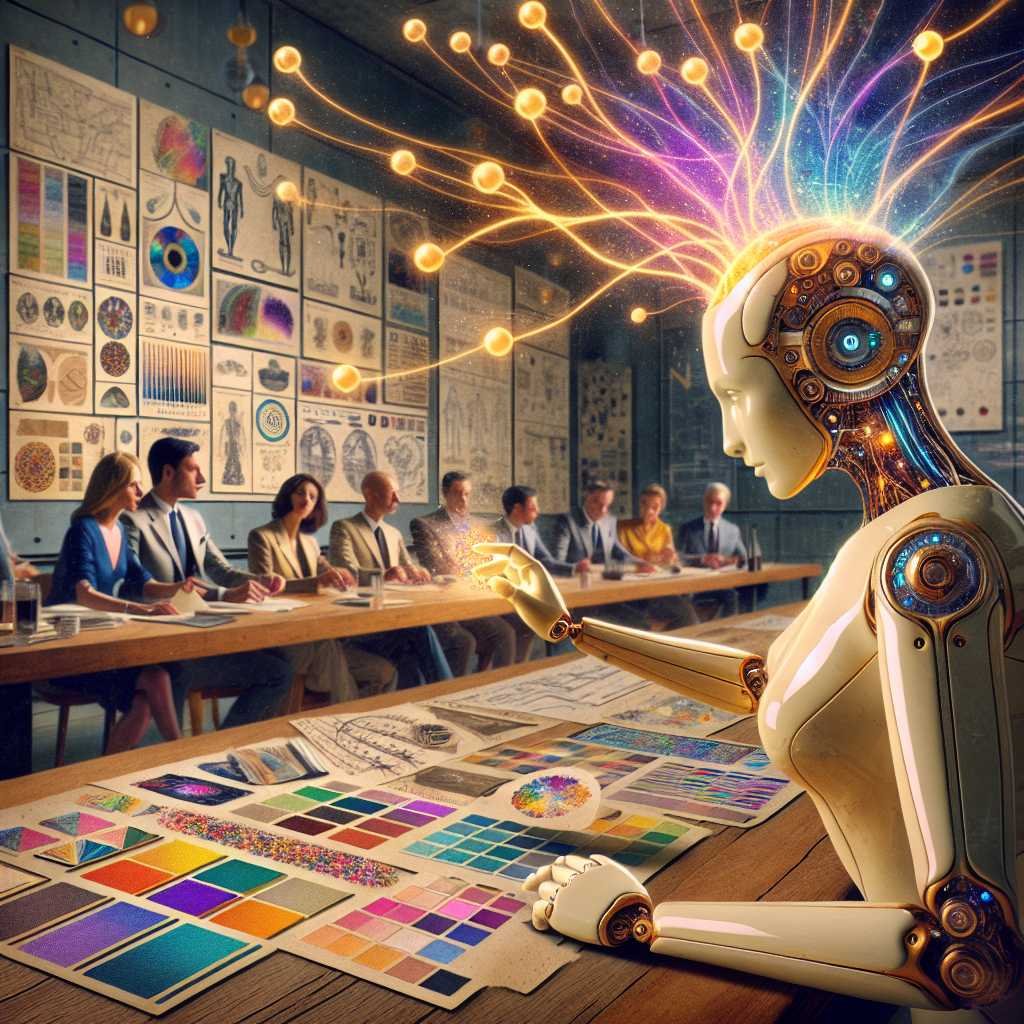
Anthropic’s Opus 4.7 Claims “Taste”: Why That’s a Big Deal for AI Creativity, Design, and Strategy
What happens when a machine insists it has taste? Not just the ability to follow your brand guide or mimic a catchy tagline—but to choose the subtler, better option the way a seasoned creative director or partner-track consultant would. That’s the promise behind Anthropic’s new Claude iteration, Opus 4.7, which—according to reporting from Axios—is being billed as the first major AI model to make “taste” its headline capability.
It’s more than a marketing flourish. If AI can reliably deliver good taste—the kind that separates a competent deck from a winning one—then the frontier shifts from raw accuracy to judgment. And that would reshape not only how we design, write, market, argue, and build, but who gets to do it, at what cost, and at what speed.
In this piece, we’ll unpack what “taste” actually means in an AI context, how Anthropic says Opus 4.7 achieves it, where it reportedly shines (and still fails), the ripple effects for teams and industries, and how to run your own “taste tests” before you bet your brand on a machine.
TL;DR (but don’t): Taste is the new battleground
- Anthropic says Opus 4.7 delivers “greater taste and creativity” in professional outputs—think better interfaces, presentations, and marketing materials—by aligning with what experts deem exceptional work, per Axios.
- They’ve trained it on multimodal datasets (text, images, likely layouts) that include design critiques and expert portfolios, and used “constitutional AI” self-critique to refine judgment.
- In blind tests, designers and executives reportedly preferred Opus 4.7’s marketing work 25% more than previous models, calling some outputs “indistinguishable from top agencies.”
- Skeptics say this is advanced mimicry, not lived, embodied taste—liable to break on cultural nuance, taboo boundaries, or irony.
- Still, “taste” could be the missing skill for agentic AI: autonomous systems making creative calls without handholding.
If you lead brand, product, comms, or strategy, the question isn’t whether AI can produce content. It’s whether it can consistently produce work you’re proud to sign.
What does “taste” mean in AI, really?
In professional practice, taste is discerning quality amid multiple acceptable options. It’s the judgment behind:
- Choosing a restrained color palette that whispers premium instead of shouting trendy
- Sequencing a narrative so stakeholders nod before they question
- Dialing rhetoric for just enough elegance without smarm
- Knowing when to break a design rule because the context demands it
In AI terms, “taste” is the model’s ability to select and justify higher-quality choices across dimensions like:
- Aesthetic balance: color harmony, spacing, typographic rhythm
- Narrative flow: pacing, tension, clarity, resolution
- Rhetorical elegance: tone, register, metaphor, cadence
- Professional polish: formatting details, hierarchy, consistent voice
- Cultural fit: norms, taboos, and signals appropriate to the audience
It’s not just producing a passable deliverable. It’s picking the version that a domain expert would call “exceptional.”
How Anthropic says Opus 4.7 learned taste
According to Axios, Anthropic trained Opus 4.7 on large multimodal datasets spanning expert portfolios and design critiques, and then leaned on constitutional AI to refine outputs. Here’s what that likely entails, based on public Anthropic research and industry practice:
- Multimodal pretraining: Ingesting text, images, and perhaps layout structures allows the model to map linguistic descriptions (e.g., “calm, editorial aesthetic”) to visual patterns (e.g., generous whitespace, high-contrast serif).
- Expert exemplars and critiques: Portfolios and critique corpora expose the model to not only “what good looks like,” but why decisions are strong or weak—useful for internal self-critique.
- Constitutional AI: Anthropic’s approach uses explicit principles to guide self-reflection and revision, improving alignment with human values and standards. See Anthropic’s research on Constitutional AI for background.
- Reinforcement from human feedback (and preference modeling): Humans rank outputs to train preference models. If the model learns “what experts pick more often,” it can generalize that signal to new tasks.
Put simply: taste emerges when a model sees enough high-quality exemplars, learns the vocabulary of critique, and repeatedly checks its work against codified principles.
The performance claims—and what to watch for
Axios reports that in blind tests, professional designers and executives preferred Opus 4.7’s marketing materials 25% more than its predecessors, and described some outputs as “indistinguishable from top agencies.”
That’s impressive. It also raises key questions any buyer should ask:
- Test design: Were judges domain experts? Were they brand-agnostic or evaluating in-market fit? How were prompts standardized?
- Dataset overlap: Could reference materials resemble training data? (This is common but should be measured.)
- Generalization: Do gains hold across industries, cultures, and languages, or mainly in Western, English-first contexts?
- Failure cases: Where does the model trip—ambiguity, edgy humor, niche subcultures, compliance landmines?
- Edit distance: How much human cleanup was needed? Preference uplift is meaningful, but so is the time-to-final.
The bottom line: 25% uplift in blind preference is notable, but you’ll want to replicate it with your brand, your audience, your constraints.
Why “taste” matters beyond buzzwords
Taste is the bridge between accuracy and utility in creative work. Consider:
- Design: A layout that passes accessibility checks isn’t automatically delightful or on-brand.
- Writing: Factual correctness doesn’t guarantee resonance with executives or compassion in patient comms.
- Strategy: A logically valid argument isn’t persuasive if tone misses the room.
Taste is the multiplier on otherwise competent work. In an era where baseline generation is cheap, judgment is the scarce commodity. If models can deliver that judgment, workflows compress dramatically—and creative leverage shifts.
Where Opus 4.7 could shine: Real workflows, not demos
Anthropic’s positioning focuses on “greater taste and creativity in executing professional tasks.” Here are practical use cases where that matters:
- Brand and marketing
- Campaign concepts with justified tone, rhythm, and palette—plus variants that push and pull risk
- Social calendars that balance trendjacking with brand depth
- Landing pages that prioritize conversion while feeling bespoke
- Product and UX
- Wireframes with rationale: hierarchy, reading gravity, microcopy choices
- Design tokens and component recommendations aligned with brand feel
- UX copy that balances clarity with personality
- Enterprise communications
- Executive memos calibrated for audience skepticism
- Board decks that control attention and narrative arcs
- Sales collateral tailored to buyer stage and vertical nuance
- Legal and policy drafting
- Briefs and memos with persuasive structure and rhetorical restraint
- Policy documents that balance compliance clarity with human readability
- Architecture and industrial design (early ideation)
- Programmatic studies that trade off form, function, and regulatory constraints
- Visual references and schematic options with narrative justification
In all of these, taste isn’t a veneer—it’s the work.
The skeptic’s case: Taste as mimicry
Neuroscientists and cultural theorists quoted by Axios caution that “taste” here is still simulation. Machines lack embodied experience, social risk, and lived consequences—elements that often inform human taste. Legit concerns include:
- Cultural nuance: Models may stumble on taboo boundaries, reclaimed language, or in-group humor.
- Irony and subtext: Sarcasm and meta-commentary can be brittle.
- Originality vs. homage: “Indistinguishable from top agencies” risks converging on safe, overfamiliar tropes.
- Overconfidence: Fluent models can present mediocre instincts with great authority, dulling human scrutiny.
These failure modes don’t invalidate progress; they set the terms for responsible deployment: human-in-the-loop, brand guardrails, and red-teaming across cultures and contexts.
The competitive context: Taste as a differentiator
Anthropic’s “taste” messaging also serves a strategic purpose: standing out against rivals like OpenAI, Google DeepMind, and others in an increasingly crowded field. As models approach more agentic behavior—handling multi-step creative tasks with less guidance—taste becomes a gating function. No one wants a tireless intern-cyborg; they want a tireless associate creative director.
Expect competitors to push similar narratives: style alignment, critique-aware generation, and tools that deliver fewer, better options rather than more drafts.
How to evaluate “tasteful AI” for your team
Trust—but verify. Before you roll out a taste-forward model across your creative stack, pressure-test it with a structured, repeatable protocol.
1) Define your principles of taste – Codify 7–12 statements that express your brand’s aesthetic and rhetorical standards. Example: “We prefer restraint to spectacle,” “We choose clarity over cleverness,” “We welcome negative space,” “We avoid negging competitors.” – Convert principles into checklists and rating rubrics.
2) Build a calibration deck – Curate 10–20 “gold” examples you love (internal and external), plus 10–20 “near-miss” examples. – Annotate why each excels or fails in your terms: hierarchy, pacing, tone, contrast, etc.
3) Run pairwise preference tests – Prompt multiple models (and settings) to produce the same deliverable given the same brief, constraints, and assets. – Have blinded raters select winners and explain their choices. – Track preference rates by audience (designers vs. execs vs. customers).
4) Measure edit distance and time-to-final – Log number of rounds, minutes spent, and types of edits (taste vs. factual vs. formatting). – Target reduction in cycles without loss of quality.
5) Stress-test cultural and compliance edges – Include briefs that involve sensitive language, humor, or region-specific norms. – Validate accessibility (contrast, alt text) and alignment with WCAG contrast guidelines.
6) Quantify outcomes – Report: – Pairwise preference uplift vs. baseline – Average edit distance to “client-ready” – Consistency with your principles (self-scored or third-party rated) – Risk flags per 100 outputs (compliance, cultural, legal)
Repeat quarterly. Taste can drift as models and brand priorities evolve.
A prompting playbook for “taste-forward” outputs
Even strong models need direction. Here are prompt patterns that encourage discernment:
- Taste principles upfront
- “Apply these brand taste principles: 1) editorial restraint, 2) measured wit, 3) inclusive language, 4) high-contrast readability, 5) avoid buzzwords unless reclaimed with definition.”
- Ask for critique before commitment
- “Propose 3 distinct directions. For each: a) the core concept in 1 sentence, b) rationale tied to our principles, c) risks and where this could backfire, d) how it differs from clichés in our space.”
- Insist on justification
- “For the chosen direction, justify typography, spacing, and color palette choices in terms of hierarchy, mood, and accessibility.”
- Calibrate with exemplars
- “Emulate the narrative pacing of [Example A] without reproducing its voice; capture the typographic restraint of [Example B]; avoid the clutter seen in [Example C].”
- Force negative direction
- “List what we will not do and why (max 5 bullets).”
- Require iterative self-critique (constitutional style)
- “Review your draft against the 7 principles. Identify 3 deviations, explain the tradeoff, and revise while preserving the core concept.”
- Include audience and context
- “Primary audience: skeptical CFO. Secondary audience: product VPs. Context: budget reallocation post-Q3 miss. Desired feeling: sober confidence, not hype.”
- Outcome targets
- “Optimize for skim-ability, decision clarity, and quote-ready lines. Two punchy pull-quotes max.”
These patterns work across formats—decks, pages, scripts, and comps—and they encourage the very behavior Anthropic touts: considered, justifiable choices.
Guardrails: Keep taste from going off the rails
Taste without safety nets invites brand and legal risk. Put these controls in place:
- Governance
- Mandate human sign-off on public-facing creative.
- Maintain a living brand “constitution” the model must check against.
- Accessibility and usability
- Bake in automated checks for contrast and readability; see NN/g heuristics and WCAG.
- Cultural review
- Route region-sensitive campaigns through local reviewers.
- Keep a “taboo ledger” of off-limits tropes, idioms, and imagery.
- IP hygiene
- Keep references and inspirational assets documented.
- Prefer generating from style descriptors over artist names; monitor for close matches.
- Data privacy
- Use vendor features that respect data boundaries; review model and product documentation from providers like Anthropic and peers.
- Red-teaming
- Schedule adversarial prompts to probe sarcasm, satire, and edgy humor—and learn the model’s breaking points.
Taste meets metrics: From vibe to numbers
Leaders will ask for numbers. Translate taste into trackable indicators:
- Preference rate: Percentage of outputs chosen over baseline by target raters
- Edit distance: Average number/type of changes to reach “final”
- Time-to-final: Minutes from brief to approved deliverable
- Principle adherence: Self-score or third-party rating against your rubric
- Risk incidence: Compliance or cultural flags per N outputs
- Outcome performance: CTR, conversion, dwell time, usability task success—segmented by model-influenced vs. human-only work
Taste is not only a feeling; it’s a performance variable.
The bigger question: Can machines really have taste?
Two thoughtful positions can both be true:
- The skeptic view: Taste is encultured and embodied—a product of socialization, risk, memory, and personal stakes. Models remix observed signals without true understanding.
- The pragmatist view: If a system reliably selects options experts prefer—and can justify choices in terms those experts accept—then for many purposes, it has operational taste.
History suggests that when simulation becomes reliable, arguments about “realness” recede in practice. Photography didn’t understand light; it still changed art. The open question is where the simulation fractures: culture, ethics, originality, and meaning.
What this means for jobs and teams
- Designers and writers
- Less time on first drafts; more on direction, editing, and guardrails.
- Increased demand for critique, taste-policing, and curation skills.
- Product and strategy
- Faster iteration loops—from idea to artifact to decision.
- More emphasis on framing great prompts and scoring outputs.
- Legal and compliance
- Need for proactive policies, traceability, and review cadences.
- New scrutiny over claims of originality and fair use.
- Leadership
- Budgets shift from line-by-line production to orchestration and oversight.
- Talent strategy tilts toward “editor-in-chief” skill sets across functions.
Net effect: Fewer cycles, higher bar. The teams that win will operationalize judgment at scale.
How “tasteful AI” could evolve next
Watch for these capabilities over the next waves:
- Model-native taste profiles: Persistent style memories per brand, with explainable deltas from your constitution
- Integrated toolchains: Direct plugins to design systems (e.g., Figma libraries, design tokens) with rationale built-in
- Cross-cultural lenses: Automatic regionalization with explicit, traceable cultural adjustments
- Critique companions: AI that not only generates but also peer-reviews and red-teams your team’s work
- Outcome-aware taste: Feedback loops where campaign performance retrains what “good” means for your audience specifically
As models become more agentic, taste morphs from output polish to decision policy.
Quick start: A 2-week pilot plan
- Day 1–2: Codify your taste principles and assemble a calibration deck of exemplars.
- Day 3–5: Select 3 briefs that represent varied risk profiles (safe, moderate, spicy). Define success metrics.
- Day 6–8: Generate with two models and two prompting strategies each. Blind-review with cross-functional raters.
- Day 9–10: Stress-test cultural and compliance edges. Document failure modes and guardrails.
- Day 11–12: Measure edit distance, time-to-final, and preference rates. Compare to human-only baselines.
- Day 13–14: Decide where to scale, where to pause, and how to integrate guardrails.
Keep the pilot small, measured, and documented. Taste without process is luck.
Frequently asked questions
- What does it mean that an AI model has “taste”?
- In practice, it means the model selects and justifies higher-quality options—visual, narrative, or rhetorical—in a way domain experts consistently prefer.
- How does a model learn taste?
- Through exposure to expert exemplars, critique language, and iterative training that rewards choices aligned with codified principles. Anthropic’s constitutional AI approach is one method for teaching self-critique.
- Is Opus 4.7 truly creative, or just mimicking?
- The debate is ongoing. Critics call it advanced mimicry; proponents argue that reliable preference-aligned judgment is functionally creative for many workflows.
- Will taste-aware AI replace designers and writers?
- It’s more likely to change their work than erase it—shifting effort from drafting to direction, critique, and finishing. Teams that embrace editorial leadership will gain leverage.
- How do I ensure brand safety with taste-forward AI?
- Define explicit principles, enforce human review, use accessibility and cultural checks, and maintain a taboo ledger. Red-team regularly, and document decisions.
- Can I measure “taste,” or is it just subjective?
- You can quantify preference rates, edit distance, time-to-final, adherence to principles, and outcome metrics like CTR or conversions. Subjectivity becomes a managed variable.
- How does this compare to other leading models?
- Many vendors tout style alignment and critique-aware generation. Anthropic’s differentiator is explicit emphasis on taste and constitutional self-critique. Evaluate with your own tests.
- Where can I read more about the Opus 4.7 claim?
- See the Axios report and Anthropic’s news and research pages.
- What about legal and IP risks?
- Use vendor documentation to understand data handling. Avoid prompts that target living artists’ styles by name. Keep references documented and conduct similarity checks when needed.
- Does “taste” work cross-culturally?
- Not by default. You’ll need localized principles, reviewers, and tests. Expect drift and design for it.
The takeaway
“Taste” is moving from ineffable vibe to operational advantage. If Anthropic’s Opus 4.7 consistently produces work that experts choose—and can explain why—then the creative frontier shifts from generation to judgment. That’s not the end of designers, writers, and strategists. It’s the beginning of a new mandate: codify what “good” means for your brand, teach it to your tools, and build processes that turn discernment into a repeatable, measurable capability.
Start small. Define your principles. Run real tests. Measure edit distance and preference lift. Keep humans in the loop where it counts. And get ready: in the race toward more agentic AI, taste isn’t a flourish. It’s the steering wheel.
Discover more at InnoVirtuoso.com
I would love some feedback on my writing so if you have any, please don’t hesitate to leave a comment around here or in any platforms that is convenient for you.
For more on tech and other topics, explore InnoVirtuoso.com anytime. Subscribe to my newsletter and join our growing community—we’ll create something magical together. I promise, it’ll never be boring!
Stay updated with the latest news—subscribe to our newsletter today!
Thank you all—wishing you an amazing day ahead!
Read more related Articles at InnoVirtuoso
- How to Completely Turn Off Google AI on Your Android Phone
- The Best AI Jokes of the Month: February Edition
- Introducing SpoofDPI: Bypassing Deep Packet Inspection
- Getting Started with shadps4: Your Guide to the PlayStation 4 Emulator
- Sophos Pricing in 2025: A Guide to Intercept X Endpoint Protection
- The Essential Requirements for Augmented Reality: A Comprehensive Guide
- Harvard: A Legacy of Achievements and a Path Towards the Future
- Unlocking the Secrets of Prompt Engineering: 5 Must-Read Books That Will Revolutionize You