Trellix Source Code Repository Breach: What It Means for Supply Chain Security and How Defenders Should Respond
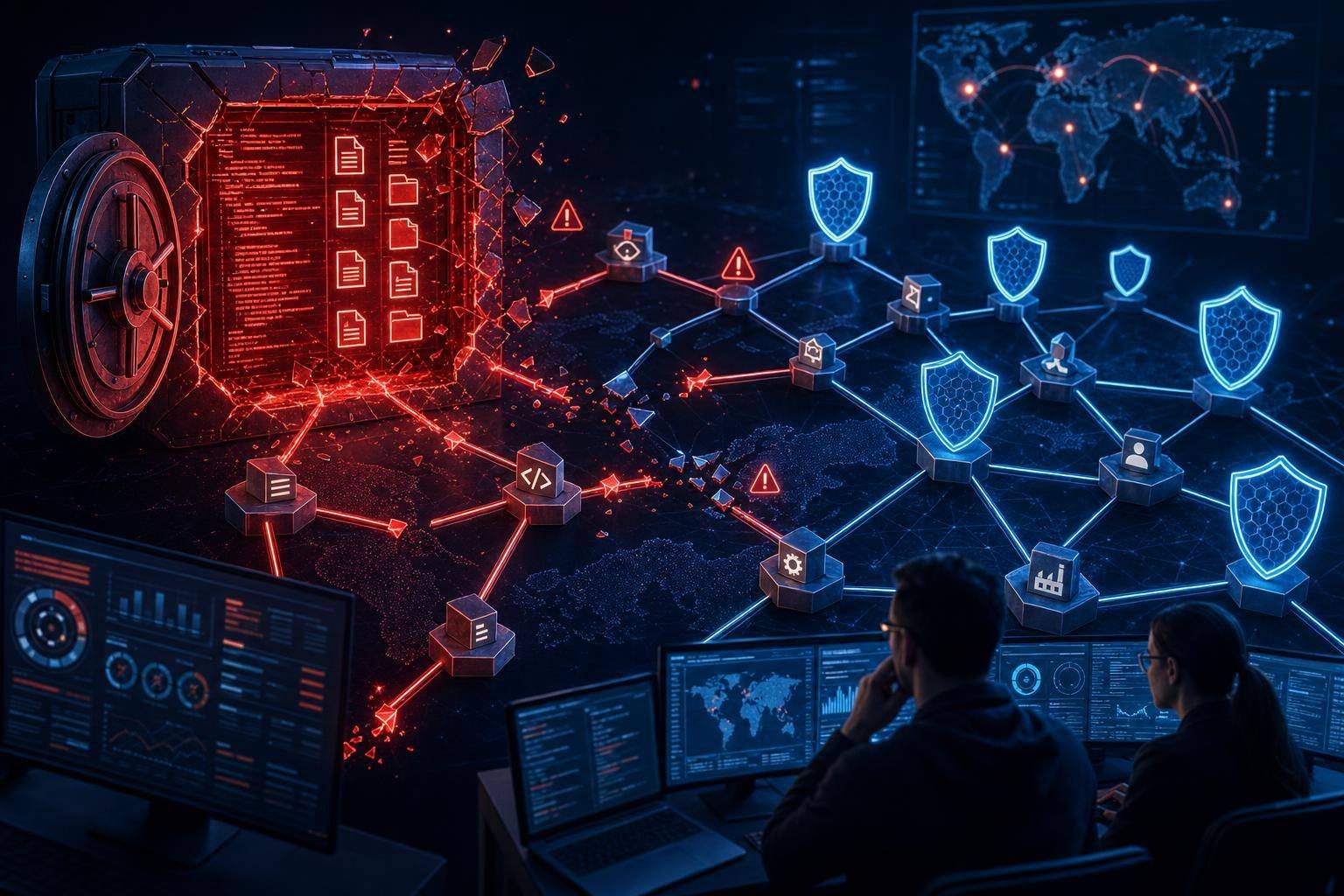
Trellix, a well-known name in threat detection and response, disclosed unauthorized access to part of its source code repository in early May 2026. While the company reports no customer data exposure and says core protections remain intact, a breach of proprietary code at a security vendor is never just a public relations problem—it’s a supply chain and detection-evasion risk with industry-wide implications.
Source code repositories and CI/CD pipelines have become high-value targets. They concentrate credentials, signing keys, build scripts, and the logic defenders use to detect and block threats. When that logic is exposed, adversaries can learn faster, tune around detections, and probe for unpatched weaknesses. This article breaks down what the Trellix source code breach could mean, how similar incidents evolve, and what concrete steps security, engineering, and procurement teams should take now.
What Trellix Disclosed—and Why It Matters
Trellix detected unauthorized access to part of its source code repository around May 3, 2026, moved quickly to investigate with third-party forensics, and notified law enforcement. As of publication, Trellix has not reported any compromise of customer data. The company says core protections remain intact and that it has implemented additional security measures.
That’s the right first move. Rapid detection and transparent coordination with investigators improve containment and support a credible response. Still, source code breaches carry unique risks:
- Detection evasion: Adversaries can study defensive logic and tune malware to avoid triggers.
- Vulnerability discovery: Proprietary code can accelerate bug-hunting, increasing zero-day risk if flaws are found before patches are ready.
- Supply chain exposure: If build systems, signing keys, or release pipelines are affected, attackers can attempt to ship tampered updates or counterfeit components.
We don’t yet know the intrusion vector, the scope of code exposure, or whether any build infrastructure was accessed. Those details matter. But the prudent assumption for defenders is to treat any source code breach at a security vendor as a catalyst for rapid detection engineering, hardening of development environments, and heightened supply chain scrutiny.
Why Source Code Repository Breaches Raise the Stakes
Breaching source code repositories is strategically valuable for adversaries because code tells the truth. It reveals:
- How detection logic works: Signatures, heuristics, unpacking routines, sandbox triggers, and telemetry flows.
- Integration seams: How products interact with OS internals, cloud APIs, drivers, and third-party libraries.
- Hidden assumptions: Implicit trust decisions and edge cases that may be exploitable.
- Secrets exposure: Credentials, tokens, and test certificates that may be accidentally committed or poorly managed.
Attackers don’t need to publish leaked code for it to be useful. Even limited access can enable capability development, especially for advanced groups familiar with EDR evasion, driver abuse, and loader stealth. In practice, defenders should assume that anything an adversary can read, they can model against.
From a threat modeling perspective, repository compromises often begin with valid accounts and abused credentials rather than novel zero-days. The MITRE ATT&CK technique for Valid Accounts describes this reality well: adversaries prefer real keys to the front door over noisy exploitation attempts because it lowers their detection risk and blends with normal developer activity. See the MITRE ATT&CK entry on Valid Accounts (T1078) for technique context and mitigations.
On the supply chain side, software development guidance has matured since several watershed incidents. The U.S. National Institute of Standards and Technology (NIST) Secure Software Development Framework SP 800-218 and CISA’s Secure by Design initiative emphasize measurable controls: strong identity, least privilege, tamper-evident builds, and continuous verification.
How This Compares to Past Supply Chain Incidents
Every incident is different, and drawing straight lines can mislead. However, previous events provide instructive patterns:
- SolarWinds showed how a single compromised build system can cascade into downstream environments at scale. Review CISA’s summary and recommendations in Alert AA20-352A.
- Multiple CI/CD-centric breaches have underscored the importance of secrets hygiene, session token protection, and hardened runners. ENISA’s report on the Threat Landscape for Supply Chain Attacks details common pathways and mitigations.
- Targeted theft of proprietary code—across tech platforms and security firms—has historically enabled both exploit development and tuning of stealth techniques, especially when combined with credential leaks or build pipeline access.
Trellix’s case, as disclosed, involves unauthorized access to part of a code repository with no reported customer data exposure. That narrows the immediate blast radius but doesn’t remove the strategic risk. The most significant question is whether the intrusion was isolated to read-only code access or extended into credentials, pipeline secrets, or signing materials that could elevate to supply chain tampering.
Likely Attack Paths Into Code Repositories (and How to Close Them)
While we don’t know the Trellix vector, defenders benefit from focusing on the common denominators adversaries exploit to reach repos and CI/CD pipelines:
- Stolen developer credentials and tokens – Risks: Password reuse, weak MFA, session hijacking, OAuth app abuse, PAT leakage in logs. – Mitigations: Enforce phishing-resistant MFA (FIDO2/WebAuthn), step-up authentication for privileged Git scopes, rotate tokens proactively, and prefer short-lived credentials. See GitHub’s security hardening for Actions and least-privilege runner guidance.
- Overprivileged personal access tokens (PATs) – Risks: PATs with repo:full or admin scopes used broadly across machines and services. – Mitigations: Fine-grained, time-bounded tokens with minimal scopes; automated revocation on role change; secrets scanning to block commits containing tokens. GitHub’s creating a personal access token docs cover options and constraints.
- Compromised CI/CD runners and build agents – Risks: Shared runners that can exfiltrate secrets or tamper with artifacts; container breakout; poisoned caches. – Mitigations: Isolate runners per repository or trust boundary; ephemeral, hardened runners; signed and verified actions; pinned dependencies; strong egress filtering for build jobs.
- SSH keys and machine identities – Risks: Long-lived SSH keys on developer laptops and build hosts; unmanaged keys copied across systems. – Mitigations: Hardware-backed keys; certificate-based SSH with short lifetimes; just-in-time access brokering; periodic key rotation and inventory.
- Third-party integrations and automations – Risks: Marketplace apps and bots with more Git scopes than needed; outdated webhook secret rotation; dependency on vendors with weak controls. – Mitigations: App allowlists; minimum permission reviews; annual re-authorization; signed apps only; deny-by-default on webhooks unless verified.
- Unprotected secrets and configs in code – Risks: Hardcoded credentials, test keys, internal endpoints, or undocumented toggles. – Mitigations: Mandatory pre-commit and server-side scanning; blocking policies; secure secret stores; environment-based configuration with no secrets in code.
For a reference catalog of CI/CD risks, review the OWASP Top 10 CI/CD Security Risks. It provides threat scenarios and remediation patterns that map neatly to the vectors above.
What Trellix Customers and Security Teams Should Do Now
Whether you run Trellix products or operate a security program that could be affected by detection evasion research, these practical steps improve resilience:
- Increase scrutiny of endpoint and network detections likely to be reverse-engineered. Consider adding overlapping detections from independent sources and telemetry-based analytics that rely on behavior, not just signatures.
- Conduct targeted threat hunting for stealthy persistence, especially on developer endpoints and CI/CD infrastructure. Look for unusual Git activity, anomalous OAuth grants, and suspicious PAT usage.
- Validate the provenance and integrity of Trellix updates you consume (signatures, hashes, update channels). If your change management process allows, enforce a short quarantine-and-verify period for new security product updates while monitoring vendor advisories.
- Build compensating controls for critical detections. For example, if you rely on a single vendor to catch a particular TTP, add a rule or analytic in your SIEM/EDR to detect the underlying behavior.
- Closely monitor for driver-related abuse or abnormal kernel calls if your environment or Trellix deployment involves kernel drivers—these are prime targets for evasion.
- Review egress controls for build and security management systems. Limit where build artifacts and sensitive logs can be sent. Even read-only espionage requires a path out.
- Engage with your Trellix account team for validated IOCs, hardening guidance, and product-specific mitigations. Ask structured questions about build integrity, signing key custody, and any changes in detection content delivery.
A 30-60-90 Day Hardening Plan for Code Repos and CI/CD
Treat the Trellix source code breach as a forcing function to raise your own bar. The plan below aligns with recognized frameworks and is designed to be realistic for mid-to-large engineering organizations.
Days 0–30: Stabilize Identity and Secrets
- Identity and MFA
- Enforce phishing-resistant MFA (FIDO2/WebAuthn) for all engineers, SREs, and CI/CD service accounts.
- Require step-up authentication for administrative Git operations and secret retrieval.
- Token and key hygiene
- Inventory all PATs, SSH keys, and OAuth apps with repo access. Revoke unused; rotate high-privilege tokens.
- Disable classic wide-scope PATs; move to fine-grained, time-limited tokens where possible.
- Repo protections
- Enable branch protections, mandatory code review by code owners, and signed commits for sensitive repositories.
- Turn on server-side secrets scanning with blocking policies.
- CI/CD containment
- Isolate runners per trust boundary; pin actions and dependencies by digest; block untrusted forks from injecting unreviewed code into privileged pipelines.
- Rapid framework alignment
- Map your current practices to NIST’s Secure Software Development Framework (SP 800-218) to identify quick wins.
Days 31–60: Make the Supply Chain Tamper-Evident
- Provenance and artifact signing
- Adopt SLSA level targets for your most critical builds. Start with SLSA 2: provenance generation and verifiable builds. See the SLSA framework.
- Implement artifact signing with Sigstore/Cosign and enforce verification during deployment. Get started with Sigstore docs.
- Software Bills of Materials (SBOMs)
- Generate SBOMs for critical services and security components; integrate SBOM checks into deployment risk gates.
- Review transitive dependencies for high-risk licenses and known vulnerable components.
- Zero trust for engineering
- Move toward deny-by-default network controls within build environments; use identity-aware proxies and short-lived, scoped credentials.
- Align your design patterns with NIST’s Zero Trust Architecture (SP 800-207).
- Detection and monitoring
- Instrument comprehensive audit logging for Git events, CI/CD runs, and package registries; forward to a central analytics platform.
- Write detections for anomalous Git usage (e.g., mass clones, unusual hours, atypical geographies) and unexpected token grants.
Days 61–90: Institutionalize and Test
- Policy and automation
- Codify requirements: mandatory signed commits, two-person review on protected branches, SBOM for production artifacts, and attestation verification gates.
- Automate periodic token rotation and orphaned-access cleanup.
- Third-party risk
- Reassess marketplace apps, bots, and vendor integrations; minimize scopes; require signed apps and annual re-authorization.
- Update supplier questionnaires to include SSDF alignment, SLSA targets, and key custody disclosures.
- Tabletop and red team
- Run a tabletop on “source code leak + build system access.” Include comms, legal, takedowns, and patch prioritization.
- Commission a focused red team on CI/CD and repo compromise paths using real-world TTPs mapped to ATT&CK.
- Continuous improvement
- Benchmark practices against CISA’s Secure by Design guidance and ENISA’s supply chain threat landscape to identify remaining gaps.
Zero Trust for Code: Practical Architecture Patterns
Zero trust is not a slogan; for engineering systems, it means hard, specific guardrails:
- Identity as the new perimeter
- Every repository, runner, and registry request is authenticated and authorized; no implicit trust for internal IP ranges.
- Short-lived, workload identities for CI/CD replace static keys.
- Context-aware access
- Step-up authentication for sensitive Git operations; disallow high-privilege actions from unmanaged devices or untrusted geolocations.
- Least privilege by default
- Fine-grained repo permissions; split administrative duties; use break-glass accounts with just-in-time elevation and session recording.
- Tamper-evident builds
- Reproducible or hermetic builds where possible; signed provenance; enforce verification at deployment and runtime admission.
- Observability built in
- End-to-end audit trails from code commit to production deploy; immutable logs; automated alerting on control-plane changes.
NIST’s SP 800-207 provides architectural guidance, but the crucial step is mapping those principles to Git, CI/CD, registry, and release systems you actually run.
Governance, Communication, and Legal Considerations
Incidents touching source code require a broader governance response:
- Communications
- Keep customers and partners informed with validated facts and concrete mitigations. Over-communicate on integrity measures for updates and content delivery.
- Legal and takedowns
- Prepare for DMCA takedowns if code leaks publicly; coordinate with platforms promptly; ensure evidence preservation for law enforcement.
- Contractual obligations
- Review SLAs and security exhibits; understand disclosure timeframes; be explicit about SBOM, attestation, and signing requirements with vendors.
- Metrics that matter
- Track mean time to revoke compromised credentials, coverage of signed artifacts, percentage of repos with branch protections, and drift in runner hardening baselines.
What to Watch Next in the Trellix Case
Over the coming weeks, look for updates from Trellix on:
- Scope clarification: Which repositories and components were exposed, and whether build systems or signing keys were affected.
- Indicators and detections: IOCs for the initial intrusion and lateral movement; guidance to detect tuning or evasion attempts.
- Integrity assurances: Details on code-signing key custody, key rotations performed, and provenance or attestation mechanisms for future updates.
- Customer mitigations: Recommended hardening steps for on-prem and cloud deployments, any temporary configuration changes, and update validation instructions.
While we avoid speculation, a cautious operating posture is wise until the forensic timeline is complete. Independent validation, layered detections, and provenance checks are your allies.
Frequently Asked Questions
Q: What is a source code repository breach? A: It’s unauthorized access to a system where an organization stores and manages its source code (e.g., GitHub, GitLab, Bitbucket, self-hosted Git). Attackers may read, copy, or modify code and related secrets, potentially leading to vulnerability discovery, detection evasion, or tampered releases.
Q: Does a code leak mean Trellix products are compromised? A: Not necessarily. Read-only access to code is serious but different from compromising build systems or signing keys. Trellix has said core protections remain intact. The risk is that adversaries may accelerate research into evasion or vulnerabilities. Customers should follow vendor guidance, verify update integrity, and use layered detections.
Q: What immediate steps should defenders take in response? A: Increase monitoring for evasion attempts, validate the integrity and provenance of Trellix updates, hunt for anomalous Git and CI activity in your own environment, and review high-privilege credentials and tokens. Build compensating behavioral detections that don’t rely on a single vendor’s content.
Q: How do attackers typically get into code repos? A: Common paths include stolen developer credentials or tokens, overprivileged personal access tokens, compromised CI/CD runners, unmanaged SSH keys, and risky third-party integrations. Enforcing phishing-resistant MFA, rotating tokens, isolating runners, and minimizing scopes reduces risk.
Q: Which frameworks help secure software supply chains? A: NIST’s SSDF (SP 800-218), the SLSA framework, CISA’s Secure by Design guidance, and OWASP’s Top 10 CI/CD Security Risks offer actionable practices. Together they cover identity, least privilege, tamper-evident builds, and continuous verification.
Q: How do attackers monetize stolen source code? A: Methods vary. Advanced actors may use it privately to improve evasion or find exploitable flaws. Criminal groups may sell access or leak samples to build credibility. In some cases, adversaries attempt extortion. Regardless, defenders should assume exposed logic will inform adversary tooling.
The Bottom Line
The Trellix source code breach is a reminder that even security companies are targets—and that code repositories and CI/CD systems are the new crown jewels. While Trellix reports no customer data exposure and maintains that core protections are intact, any exposure of defensive logic can accelerate adversary learning and increase pressure on detection quality and software integrity.
Treat this event as a catalyst to do three things now:
- Reduce blast radius: Lock down developer identity, rotate tokens, harden runners, and minimize access scopes.
- Make tampering obvious: Adopt SLSA-aligned provenance, sign artifacts with Sigstore/Cosign, and enforce verification at deploy time.
- Add depth to detection: Build behavioral analytics and compensating controls that don’t rely on a single vendor’s logic.
Follow progress on the Trellix investigation, validate the integrity of any updates you consume, and align your engineering controls to frameworks like NIST’s SSDF and zero trust principles. The organizations that come out stronger from incidents like the Trellix source code repository breach are the ones that pair fast containment with durable improvements to how they build, sign, and ship software.
Discover more at InnoVirtuoso.com
I would love some feedback on my writing so if you have any, please don’t hesitate to leave a comment around here or in any platforms that is convenient for you.
For more on tech and other topics, explore InnoVirtuoso.com anytime. Subscribe to my newsletter and join our growing community—we’ll create something magical together. I promise, it’ll never be boring!
Stay updated with the latest news—subscribe to our newsletter today!
Thank you all—wishing you an amazing day ahead!
Read more related Articles at InnoVirtuoso
- How to Completely Turn Off Google AI on Your Android Phone
- The Best AI Jokes of the Month: February Edition
- Introducing SpoofDPI: Bypassing Deep Packet Inspection
- Getting Started with shadps4: Your Guide to the PlayStation 4 Emulator
- Sophos Pricing in 2025: A Guide to Intercept X Endpoint Protection
- The Essential Requirements for Augmented Reality: A Comprehensive Guide
- Harvard: A Legacy of Achievements and a Path Towards the Future
- Unlocking the Secrets of Prompt Engineering: 5 Must-Read Books That Will Revolutionize You