OpenClaw Integrates VirusTotal Malware Scanning After “ClawHavoc”: Risks, Lessons, and What Enterprises Must Do
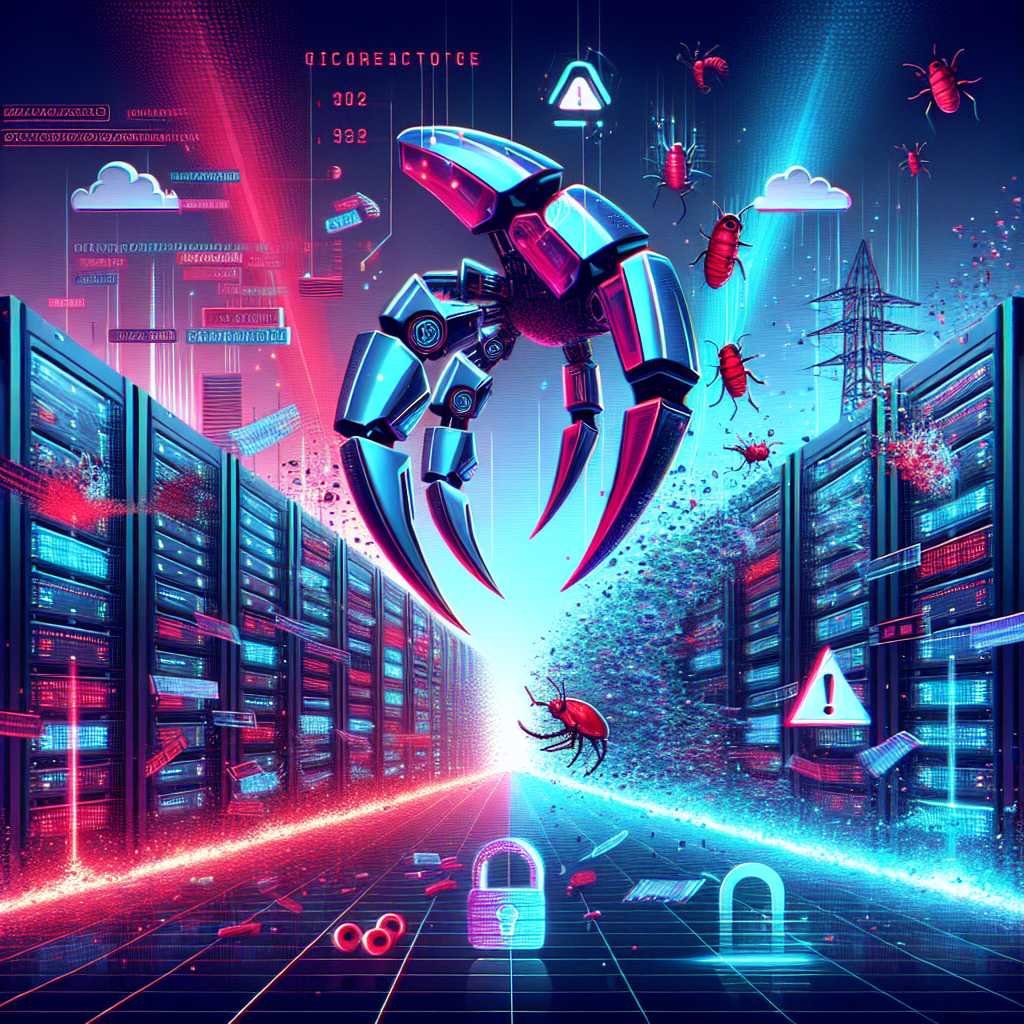
What happens when a wildly popular open-source AI agent platform becomes a distribution channel for malware overnight? If you’ve been watching OpenClaw’s meteoric rise—surpassing 150,000 GitHub stars—you’ve probably felt the tension building. The platform’s success created a thriving marketplace for agent “skills,” and that growth drew attackers like moths to a spotlight.
After weeks of documented incidents, OpenClaw has integrated VirusTotal scanning into ClawHub, its skills marketplace. It’s a strong move in the right direction. But let’s be honest: in decentralized marketplaces where anyone can publish code, no single layer of defense can eliminate risk.
Here’s what went down in the “ClawHavoc” campaign, why VirusTotal helps (and where it doesn’t), and the concrete steps security leaders, developers, and users should take now.
For source reporting and details, see CSO Online’s coverage.
Quick recap: What happened in the “ClawHavoc” campaign
According to CSO Online, Koi Security’s February 1 audit uncovered 341 malicious skills among 2,857 total offerings in ClawHub—more than one in ten submissions. Attackers disguised their malware as legitimate crypto tools and YouTube utilities. The kicker: fake “prerequisites” led users to install stealth payloads, including keyloggers and the Atomic macOS Stealer (AMOS), a notorious infostealer capable of harvesting:
- Cryptocurrency wallets
- Browser data
- System credentials
This wasn’t a trivial nuisance. It was a broad, supply-chain-style campaign exploiting the trust and velocity of an AI agent ecosystem.
Gartner didn’t mince words, characterizing OpenClaw as “an unacceptable cybersecurity liability” for enterprises and recommending immediate blocks on downloads and traffic. Their callout also flagged “shadow deployments”—unsanctioned installs by teams moving fast—as single points of failure that can expose API keys, OAuth tokens, and sensitive conversations.
If you’re thinking, “This looks a lot like an app store gone sideways,” you’re not wrong. AI agent marketplaces behave like plugin ecosystems for your automated coworkers. And just like any extension store, they can become high-throughput malware channels when guardrails fail.
OpenClaw’s response: VirusTotal in the approval loop
OpenClaw’s integration with VirusTotal adds automated scanning into the ClawHub pipeline. Here’s what’s changing, per reporting:
- All submitted skills are scanned before they’re made available.
- Benign verdicts lead to automatic approval.
- Suspicious skills receive visible warnings.
- Malicious skills are blocked immediately.
- Active extensions are re-scanned daily.
This raises the bar considerably. VirusTotal aggregates detections from multiple antivirus and threat-intelligence engines and analyzes files, URLs, and behaviors. In a high-volume marketplace, having a reputable meta-scanner at the gate can neutralize known malware strains quickly and reduce reviewer burden.
Why VirusTotal helps
- Defense in depth via multi-engine verdicts: You’re no longer dependent on any single scanner’s blind spots.
- Lower time-to-detection for known malware: If a payload or delivery URL is already flagged, it’s blocked fast.
- Deterrence effect: Attackers know they’re more likely to get caught; some will move on to softer targets.
- Ongoing scrutiny: Daily re-scans help catch late detections as vendors add signatures.
- Standardization: Creates a baseline control that’s consistent and automatable.
Where it falls short (and what to do about it)
No scanner is perfect—and VirusTotal is no exception. These are the gaps you should plan around:
- Novel and targeted malware: Fresh strains and custom loaders may evade signatures temporarily. Mitigation: dynamic sandboxes, behavioral analysis, and manual triage for high-risk categories (e.g., crypto).
- Dependency trickery: A benign-looking skill may pull malicious code at runtime from a “prerequisite” script or typosquatted package. Mitigation: strict review of install scripts, pinned versions, and checksum validation.
- Time-of-check vs. time-of-use: Clean at publish, compromised later. Mitigation: continuous re-scans (already in place), but also signed provenance and reproducible builds so tampering is detectable.
- Social engineering in the README: Persuading users to “curl | bash” from shady domains can sidestep marketplace checks. Mitigation: content moderation, automated linting for dangerous patterns, warnings on risky install instructions.
- Account compromise: A trusted developer’s account can be hijacked to ship poisoned updates. Mitigation: strong publisher verification, mandatory MFA, and anomalous update detection.
In short: VirusTotal is necessary, not sufficient. Use it as one control inside a secure-by-default pipeline.
The bigger picture: AI agent marketplaces as supply chain targets
“ClawHavoc” is a case study in how quickly AI agent ecosystems can turn into software supply chain attack vectors:
- Agent skills are effectively plugins with network reach, credentials access, and file I/O.
- The platform’s network effects enable attackers to scale distribution fast.
- Shadow deployments bypass corporate software intake and review.
- Credentials and tokens (API keys, OAuth grants) stored by agents become high-value loot.
We’ve seen this movie with browser extensions, Python/NPM typosquatting, and VS Code plugins. AI agent platforms compress the timeline. The same loop that powers innovation—publish, discover, automate—also lets adversaries experiment and iterate at speed.
If you’re mapping this to frameworks, think initial access via malvertising, command execution through scripted prerequisites, credential access and collection, and exfiltration—all familiar phases in MITRE ATT&CK terms.
What OpenClaw should add next (a constructive roadmap)
If OpenClaw wants to set a new security standard for agent marketplaces, here are pragmatic additions that would move the needle:
- Publisher verification and reputation
- Mandatory MFA for maintainers; optional hardware keys
- Verified publisher badges; org-level attestations
- Anomalous update alerts (e.g., sudden surges, permission changes)
- Signed provenance and reproducible builds
- Supply chain levels like SLSA
- Attestations with Sigstore / cosign
- Reproducible build requirements for high-reach skills
- Dependency policy and install-time protections
- Pin versions; disallow wildcard ranges for sensitive categories
- Block or heavily warn against “curl | bash” and off-platform installers
- Mandatory checksums and TLS for all fetches
- Risk-tiered review
- Extra scrutiny for crypto, browser data, credential-handling, and network tooling
- Human review plus dynamic sandbox detonation for top 10% most-installed skills
- Privacy and secrets hygiene
- Guidelines and linting to prevent logging secrets
- Clear key-scoping patterns and rotation guidance
- Transparency reporting
- Monthly stats: submissions, blocks, false positives, re-scan hits
- Public advisories and CVEs for malicious skills
- Community incentives
- Bug bounties for malicious-package discovery
- Trusted reviewer programs and curated allowlists
Pair this with ongoing VirusTotal scanning, and you get layered, measurable control.
Enterprise action plan: What to do now
Gartner’s guidance to block OpenClaw downloads and traffic immediately is a strong stance—and a reasonable default while you assess exposure. If you’re responsible for enterprise security, use this phased plan.
Immediate controls (0–30 days)
- Freeze exposure
- Block OpenClaw and ClawHub domains at egress and secure web gateways, unless you have a vetted exception path.
- Disable unapproved agent runtimes on managed endpoints via MDM/EDR.
- Hunt and contain
- Inventory endpoints and servers for OpenClaw-related installs and skill directories.
- Scan for known indicators related to AMOS and common keyloggers using your EDR and threat intel feeds.
- Review DNS and proxy logs for suspicious download domains linked by skill READMEs.
- Secrets and identity hygiene
- Assume agent-exposed API keys and OAuth tokens may be compromised; revoke/rotate on a prioritized schedule.
- Enforce least-privilege scopes for regenerated tokens; move secrets to a managed vault with short-lived credentials.
- Network and runtime controls
- Restrict outbound egress from agent hosts to known SaaS and API destinations.
- Apply application control policies to prevent execution from temp and user-writeable directories.
- Communications and training
- Notify developers and data scientists about the block, the reasons, and the approved path for requests.
- Share red flags (see below) for detecting malicious skills.
- Monitoring and alerting
- Add SIEM detections for “curl | bash”, Base64-decoded scripts, and unexpected package managers invoked by agent processes.
- Alert on access to browser credential stores, crypto wallet directories, and SSH keys by non-standard processes.
Near-term enhancements (30–90 days)
- Establish a secure intake for agent skills
- Route all agent tooling through an internal mirror/repository with pre-approval.
- Require SBOMs (e.g., CycloneDX) and provenance attestations for approved skills.
- Vendor and marketplace policy
- Add OpenClaw (and similar platforms) to your software procurement and exception processes.
- Require publisher verification and signed releases when available.
- Build guardrails for teams
- Provide a vetted, minimal set of agent skills in a golden image/container.
- Lock agent credentials to per-environment scopes using workload identities (not static keys).
- Strengthen runtime isolation
- Run agents in sandboxes/containers with read-only filesystems where possible.
- Segment network access; forbid lateral movement from agent subnets.
Longer-term (90+ days)
- Governance and risk management
- Map AI agent risk into your NIST SSDF and NIST AI RMF programs.
- Incorporate marketplace risk into third-party and shadow IT assessments.
- Continuous validation
- Periodically re-evaluate allowed skills with dynamic analysis and updated threat intel.
- Track re-scan detection rates and false positives to calibrate your allowlist.
- Incident readiness
- Develop a playbook for agent supply chain incidents: isolation, token rotation, forensics, legal, and comms.
For OpenClaw developers and maintainers: a secure publishing checklist
If you’re building on OpenClaw, you’re part of the solution. Adopt a “trust is earned, not assumed” posture:
- Keep install paths transparent
- No opaque “prerequisites.” Avoid “curl | bash.” If you must fetch, use HTTPS, pinned versions, and checksums.
- Document every external call a skill makes.
- Reduce attack surface
- Minimize permissions and scopes. Don’t request secrets you don’t need.
- Default to least privilege and fail-closed.
- Lock down dependencies
- Pin exact versions. Audit transitive dependencies.
- Use vendoring where feasible; verify signatures.
- Secure the build and release
- Implement reproducible builds for determinism.
- Generate and publish SBOMs (CycloneDX).
- Sign artifacts and attest provenance (Sigstore, cosign).
- Enforce branch protection, code review, and mandatory MFA on publisher accounts.
- Test like an attacker would
- Static and dynamic analysis in CI.
- Spin up a sandbox and observe network/file behaviors.
- Lint for dangerous patterns (obfuscation, base64 shells, evals).
- Be findable and accountable
- Publish a SECURITY.md with contact and disclosure guidelines.
- Respond quickly to takedowns and vulnerability reports.
- Earn trust over time
- Keep a changelog. Explain permission changes. Avoid surprise updates.
Red flags users should watch for in ClawHub skills
Even with scanning, healthy paranoia pays dividends. Be wary of skills that:
- Ask you to run shell one-liners from unknown domains (“curl | bash”).
- Request wallet seed phrases, private keys, or broad system credentials.
- Demand admin/root privileges without a clear, auditable reason.
- Download large binaries or secondary installers during setup.
- Contain obfuscated code, heavy string encoding, or self-unpacking logic.
- Phone home to domains unrelated to the skill’s stated purpose.
- Rapidly change maintainers, scope, or permissions across revisions.
- Offer “too good to be true” crypto yields, airdrops, or monetization hooks.
If you see these, step away—or route the skill through a formal review.
What this means for AI security, broadly
The core lesson isn’t just “scan more.” It’s that AI agent ecosystems are the new extension stores—highly dynamic, cred-rich, and attractive to adversaries. The security model must shift accordingly:
- Secure-by-default marketplaces: scanning plus provenance, verified publishers, and granular permissions.
- Zero trust for agents: treat them like untrusted automation until proven otherwise; isolate, observe, and restrict.
- Transparency and rapid iteration: publish what’s blocked and why, so attackers can’t hide in ambiguity—and so defenders can calibrate.
The organizations that thrive with AI agents will pair velocity with verifiable trust.
Metrics to track post-integration
To move from hope to evidence, track these signals:
- Detection efficacy
- Pre-publish block rate and false positive rate
- Daily re-scan hit rate (late detections)
- Mean time to block after first report
- Ecosystem health
- Percentage of verified publishers
- Share of skills with SBOMs and signed releases
- Download-weighted risk distribution (are top installs low-risk?)
- User safety
- Incident reports per 10,000 installs
- Time-to-remediation for malicious or vulnerable skills
- Credential exposure incidents linked to agents
Publish them as a transparency report. It builds trust—and keeps everyone accountable.
Compliance and governance implications
If you operate in regulated environments, “ClawHavoc” isn’t just a security event—it’s a governance test:
- Data protection and secrets management
- Validate that no PHI/PII, PCI, or regulated data flows through unvetted agents.
- Centralize secrets in a vault; audit access; rotate frequently.
- Control frameworks
- Map controls to ISO 27001 Annex A, SOC 2 CC, and sector-specific obligations.
- Integrate agent risk into vendor and open-source governance.
- AI risk management
- Extend your NIST AI RMF to include tool/skill risks, not just model and prompt risks.
- Document evaluations and exceptions for auditors.
The result: you can say “yes” to AI without leaving audit gaps.
Clear takeaway
OpenClaw’s VirusTotal integration is a meaningful step—and a necessary one. But the “ClawHavoc” campaign shows that AI agent marketplaces are prime targets for supply chain abuse. Scanning lowers risk; it doesn’t erase it. Enterprises should block first, assess quickly, and re-enable through a controlled, measurable intake with isolation, provenance, and continuous monitoring. Developers should lock down dependencies, sign what they ship, and earn trust release by release.
Velocity matters. Verifiable trust matters more.
Frequently asked questions
Q: What is OpenClaw?
A: OpenClaw is an open-source AI agent platform with a fast-growing community and a marketplace (ClawHub) where developers publish “skills” agents can use to perform tasks.
Q: What is “ClawHavoc”?
A: It’s the name given to a malware campaign identified by Koi Security, which found 341 malicious skills out of 2,857 total in ClawHub. Attackers posed as crypto and YouTube utilities, using fake prerequisites to install keyloggers and the Atomic macOS Stealer.
Q: What exactly did OpenClaw change with VirusTotal?
A: All new skills are scanned before availability. Benign results are auto-approved, suspicious ones get warnings, and malicious ones are blocked. Active extensions are re-scanned daily.
Q: Does VirusTotal guarantee safety?
A: No. It greatly improves detection of known threats and some suspicious behaviors, but novel, targeted, or staged attacks can slip through. It should be one control among many.
Q: What is Atomic macOS Stealer (AMOS)?
A: AMOS is a macOS-focused infostealer known for harvesting cryptocurrency wallets, browser data, and system credentials. Security vendors have tracked it for some time; see independent analyses from reputable sources for background.
Q: Should enterprises ban OpenClaw permanently?
A: Not necessarily. Gartner advised immediate blocking as a containment step. Longer-term, organizations can allow OpenClaw through a vetted intake with isolation, provenance checks, allowlists, and monitoring.
Q: How can I safely evaluate a ClawHub skill?
A: Use an isolated sandbox or container, review the source and install scripts, check for pinned dependencies and signatures, run static/dynamic analysis, and verify network behavior before promoting to any production-like environment.
Q: How often are skills re-scanned?
A: According to reporting, active extensions are re-scanned daily. That reduces time-of-check/time-of-use gaps but doesn’t replace runtime controls and provenance.
Q: What are “shadow deployments,” and why are they risky?
A: Shadow deployments are unsanctioned installs outside IT/InfoSec oversight. They can centralize secrets (API keys, OAuth tokens) in poorly governed tools, creating single points of failure and audit blind spots.
Q: What policies should marketplaces adopt to deter similar campaigns?
A: Verified publishers, mandatory MFA, signed provenance, dependency pinning, dynamic sandboxing for high-risk categories, content linting (to flag dangerous install patterns), and public transparency reports.
If you take one action today, make it this: pause unvetted agent skills, rotate exposed tokens, and stand up a secure intake that combines VirusTotal-style scanning with signed provenance, isolation, and continuous monitoring. Fast is good. Trustworthy is non-negotiable.
Sources:
– CSO Online: OpenClaw integrates VirusTotal malware scanning as security firms flag enterprise risks
– VirusTotal: https://www.virustotal.com/
– MITRE ATT&CK: https://attack.mitre.org/
– NIST SSDF: https://csrc.nist.gov/Projects/ssdf
– SLSA Framework: https://slsa.dev/
– Sigstore: https://www.sigstore.dev/
– CycloneDX SBOM: https://cyclonedx.org/
Discover more at InnoVirtuoso.com
I would love some feedback on my writing so if you have any, please don’t hesitate to leave a comment around here or in any platforms that is convenient for you.
For more on tech and other topics, explore InnoVirtuoso.com anytime. Subscribe to my newsletter and join our growing community—we’ll create something magical together. I promise, it’ll never be boring!
Stay updated with the latest news—subscribe to our newsletter today!
Thank you all—wishing you an amazing day ahead!
Read more related Articles at InnoVirtuoso
- How to Completely Turn Off Google AI on Your Android Phone
- The Best AI Jokes of the Month: February Edition
- Introducing SpoofDPI: Bypassing Deep Packet Inspection
- Getting Started with shadps4: Your Guide to the PlayStation 4 Emulator
- Sophos Pricing in 2025: A Guide to Intercept X Endpoint Protection
- The Essential Requirements for Augmented Reality: A Comprehensive Guide
- Harvard: A Legacy of Achievements and a Path Towards the Future
- Unlocking the Secrets of Prompt Engineering: 5 Must-Read Books That Will Revolutionize You