Utah Defies Trump’s Push to Preempt State AI Laws: What It Means for Businesses, Voters, and the Future of AI Regulation
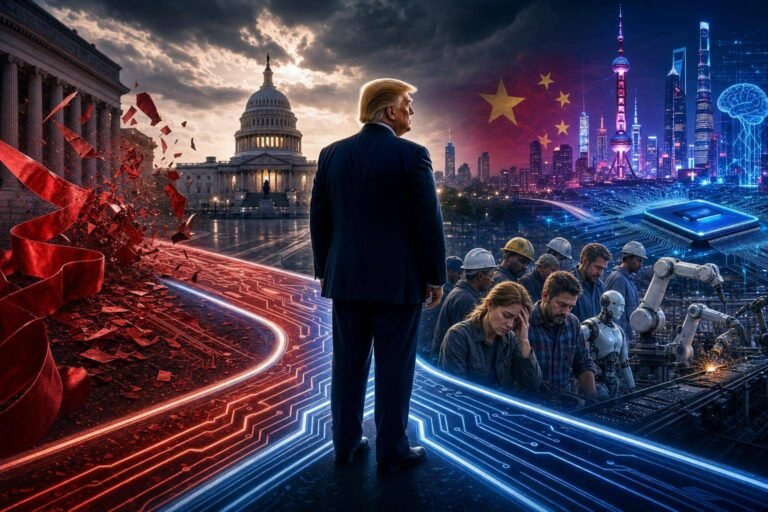
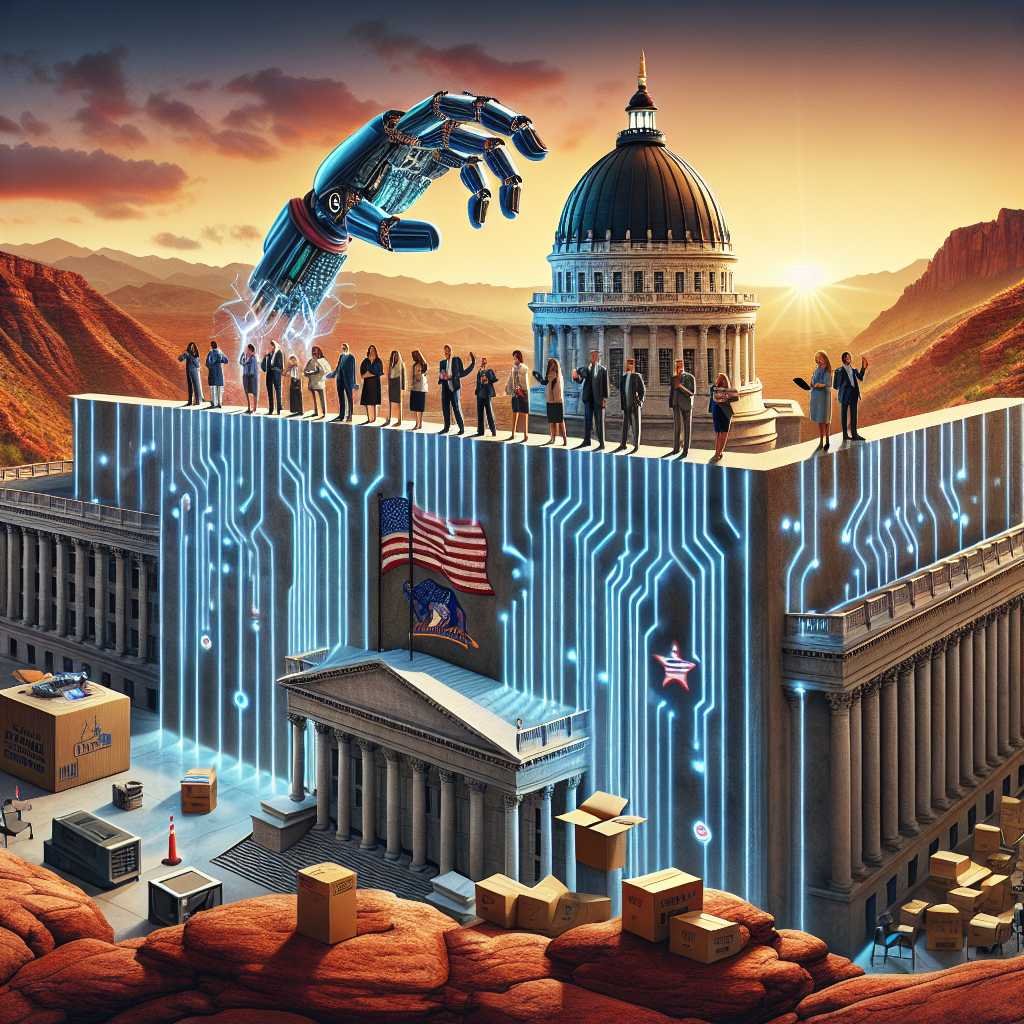
What happens when a deep-red state tells a Republican White House “thanks, but no thanks” on AI policy? That’s exactly the showdown unfolding in 2026. While the Trump administration is pushing for a single national AI standard that would preempt state rules, Republican lawmakers in Utah are advancing their own AI safety bills—focused on threats like deepfakes and algorithmic bias—despite federal pressure.
If you’re a business deploying AI, a policymaker wondering how far preemption can really go, or a voter worried about synthetic media warping your feed, you’re not imagining it: this is one of the most consequential regulatory fault lines of the decade.
According to a National Newswatch report published April 19, 2026, the White House sees a “patchwork” of state AI laws as a drag on innovation. Utah lawmakers disagree—and they’re not alone. The result is a high-stakes tug-of-war that could shape what AI looks like in your newsfeed, workplace, bank, doctor’s office, and ballot box for years to come.
Here’s what’s really at stake—and how to prepare no matter which way Washington goes.
Source: National Newswatch, “Trump Wants to Stop States from Regulating AI. This Utah Republican Isn’t Listening” (Apr 19, 2026)
https://nationalnewswatch.com/2026/04/19/trump-wants-to-stop-states-from-regulating-ai-this-utah-republican-isnt-listening
The Flashpoint: Federal Preemption vs. State Police Powers
At the heart of this fight is preemption—the doctrine that federal law can override conflicting state laws. The legal mechanics are well established, but the policy tradeoffs are thornier than ever in AI.
- Federal preemption 101: Congress can expressly preempt state law, or courts can find implied preemption if federal regulation “occupies the field” or conflicts with state rules. For a primer, see Cornell Law’s overview of preemption.
- The White House’s case: One national standard prevents a costly patchwork that stifles innovation and interstate commerce. AI models and services don’t stop at state borders, the argument goes—so rules shouldn’t either.
- The states’ case: States are the laboratories of democracy; they move faster, tailor protections locally, and often pave the way for pragmatic national rules. They also have traditional police powers to protect residents from fraud, discrimination, and public safety harms.
In short: Preemption promises predictability. State autonomy promises agility. AI makes both needs urgent.
Why Utah’s Move Matters (Even Beyond Utah)
Utah isn’t new to setting tech policy. It was an early mover on privacy with the Utah Consumer Privacy Act (UCPA), and its tech sector—spanning enterprise SaaS, fintech, and healthcare—has a lot at stake in any AI rulebook.
What’s notable now isn’t just the policy substance; it’s the politics. A Republican-led state resisting a Republican White House reframes AI regulation as more than a left-right split. It’s a federalism question, and it’s fast becoming a bipartisan one.
- Signaling effect: When a deep-red state advances AI safety, it normalizes subnational oversight across the map.
- Policy diffusion: Other states will borrow and adapt model language—especially around deepfakes and discrimination.
- National leverage: The more states act, the more pressure Washington faces to adopt a federal “floor” that allows stronger state rules.
The AI Risks Driving State Action: Deepfakes, Bias, and Beyond
The National Newswatch report underscores two of the most politically salient AI risks—deepfakes and bias. States are zeroing in on those because the harms are concrete, urgent, and voter-visible.
- Deepfakes: Synthetic media can defame, extort, and deceive voters. Expect requirements around disclosure watermarks, provenance metadata, and liability for malicious use. For context on state action here, the National Conference of State Legislatures tracks deepfake and synthetic media legislation.
- Algorithmic bias: Hiring, lending, insurance, and housing are red flags. States tend to push risk assessments, bias testing, and documentation so regulators (and courts) can trace accountability.
- Critical infrastructure: Public safety tools, healthcare triage, and energy grid optimization are on the radar for extra scrutiny due to systemic risk.
This is not just abstract governance. It’s about whether your resume is screened fairly, whether a political ad is real, and whether a deepfake crisis can upend an election day.
Patchwork Pain vs. One-Size-Fits-All: The Business View
Let’s be honest: no company wants 50 incompatible compliance regimes. But businesses also fear a weak federal “ceiling” that ties their hands and invites public backlash or litigation.
Why companies might prefer a strong federal floor: – Consistent rules for interstate products and model distribution – Lower compliance overhead and vendor management complexity – Clear federal enforcement (FTC/DOJ) vs. multistate audits and AG actions
Why companies might accept (or even prefer) a state-led model: – States can move faster than Congress – Early state rules often become de facto national standards – Stronger rules can translate into trust, safety, and brand moat
The truth is, most mature AI teams plan for both. They target the strictest credible baseline (often influenced by trailblazing states) and then watch D.C. for harmonization.
What Utah’s Approach Could Include (Even If Details Evolve)
Without getting lost in the weeds, state AI safety frameworks typically converge on a familiar toolkit. Even when bill text varies, the compliance playbook looks consistent:
- Transparency and disclosures for AI-generated content (with exceptions for security and R&D)
- Impact or risk assessments for high-stakes use cases (employment, credit, healthcare, education, housing, critical infrastructure)
- Bias and performance testing, with documented methods and periodic re-evaluation
- Human oversight for consequential decisions, with meaningful appeal/contest mechanisms
- Incident reporting and recordkeeping for material model failures or misuse
- Vendor and model-provider obligations to pass down safety requirements and notify of material risks
- Scope carveouts for national security, pure research, or de minimis risks
If you’ve followed state privacy laws, this will feel familiar: principles first, paperwork next, and enforcement power for AGs.
Preemption Isn’t Binary: Floor vs. Ceiling
A key nuance often lost in headlines: not all preemption is a “ban” on state action. Congress can set:
- A floor: Federal minimums that allow states to go further (think Clean Air Act, many labor protections).
- A ceiling: Federal maximums that forbid stricter state rules (think certain banking or telecom preemptions).
- A hybrid: Federal standards with targeted carveouts for state enforcement or specific harms (e.g., deepfakes in elections).
Why this matters: A floor approach keeps innovation friction low while letting states address local harms quickly—often the compromise that survives political realities.
Lessons From Privacy and Consumer Protection
We’ve seen this movie. Privacy began as a state-led patchwork before gaining national contours.
- California’s CCPA/CPRA set the pace nationwide.
- Utah and Virginia offered business-friendlier variants.
- The absence of a federal privacy law pushed companies to standardize on the strictest common denominator anyway.
AI is tracking similarly. Colorado’s landmark SB24-205 (Colorado AI Act) created a high-risk AI framework centered on impact assessments and risk management. Even if Washington ultimately preempts, state laws like Colorado’s are already shaping corporate AI governance.
The Global Angle (And Why U.S. States Still Matter)
Even before a U.S. federal standard arrives, global rules are exerting force. The EU has moved to operationalize risk-based AI obligations, and multinational companies are aligning their AI governance to pass the toughest audits first. The European Commission’s overview of its AI approach is a useful compass: European approach to AI.
Why bring this up? Because a Utah-sized rule can have outsized impact if it mirrors global expectations. Cross-jurisdictional convergence is how real-world compliance works.
What Businesses Should Do Now (No Matter Who Wins the Turf War)
You don’t need to wait for Congress—or Salt Lake City—to get your AI house in order. Build a portable, regulator-proof program that can map to either a federal floor or state-specific overlays.
Baseline governance: – Inventory and classification: Maintain a live registry of AI systems, use cases, training data sources, and third-party dependencies. – Risk tiering: Define “high-risk” with clear criteria (impact on rights, safety, livelihood, critical services) and document decisions. – Policies and playbooks: Put in writing your model development lifecycle, testing protocols, incident management, and approval gates.
Testing and assurance: – Pre-deployment evaluations: Bias, robustness, privacy leakage, and safety red-teaming appropriate to the risk class. – Post-deployment monitoring: Drift detection, performance KPIs, user complaint channels, recourse tracking, and retraining triggers. – Human oversight: Define when and how humans review or override AI outcomes. Ensure appeal and correction mechanisms.
Transparency and provenance: – Disclosure: Clear, context-appropriate notices when users interact with AI or receive AI-generated content. – Watermarking and content provenance: Adopt standards like C2PA for synthetic media labeling where feasible. – Documentation: Impact assessments for high-risk systems, including intended use, limitations, foreseeable misuse, and mitigation plans.
Vendor management: – Contractual flow-downs: Require suppliers and model providers to share evaluation results, incident notices, and safety updates. – Right to audit: Secure audit rights for high-risk dependencies; verify remediation timelines. – Model cards and system cards: Encourage standardized documentation to reduce bespoke diligence.
Security and privacy: – Data governance: Track lineage and consent; minimize sensitive attributes unless necessary for fairness audits. – Access control: Restrict who can fine-tune, deploy, or prompt with elevated privileges; log everything. – Red-team and chaos drills: Practice misuse scenarios, jailbreak attempts, prompt injection, and data exfiltration.
Standards and guidance: – Align with the NIST AI Risk Management Framework. It’s vendor-neutral and speaks the language of regulators. – Track FTC guidance on AI marketing and claims; see “Keep your AI claims in check” from the FTC Business Blog.
Pro tip: Treat Utah, Colorado, and other active states as signal beacons. If your governance can pass their tests, you’ll be ready for most federal configurations.
The Election-Year Wildcard: Deepfakes Meet Democracy
The risk of AI-driven election deception is not hypothetical. States have responded with a patchwork of rules on political deepfakes—some requiring disclosure labels, others enabling expedited takedowns or legal remedies. Keep an eye on the NCSL tracker for synthetic media legislation.
- Platforms: Expect stricter moderation rules and provenance tags in the run-up to elections.
- Campaigns: Legal risk rises for deceptive synthetic content. Smart campaigns are disclosing, archiving, and watermarking proactively.
- Voters: Media literacy matters. If something seems too outrageous or too perfect, check provenance and credible sources.
A federal preemption gambit that sidelines state deepfake laws would be politically explosive. That’s one reason many expect any national bill to leave room for state-level election protections.
Scenarios for the Next 12 Months
Let’s map plausible outcomes and how they affect your roadmap:
1) Full preemption (ceiling) passes – Expect a single national standard with FTC/DOJ primacy. – States are limited to enforcement of the federal rule or narrow carveouts. – Your play: Align tightly to federal requirements; maintain voluntary provenance and risk practices to manage reputational risk.
2) Federal floor with state wiggle room – A baseline national framework sets minimums for high-risk AI, deepfake disclosure, and accountability. – States can go further on elections, discrimination, or sector-specific risks. – Your play: Implement the federal core plus a “state overlay” matrix. Standardize on the strictest disclosures and risk practices.
3) Stalemate and continued state momentum – Congress stalls; states accelerate. Litigation over dormant Commerce Clause pops up but takes time to resolve. – Your play: Standardize on leading state requirements (e.g., Colorado-style impact assessments), and adopt NIST AI RMF as the lingua franca. Mature your vendor controls.
4) Hybrid compromise – Congress preempts some domains (e.g., cross-border model distribution) while leaving others (like election deepfakes or consumer remedies) to states. – Your play: Separate compliance by domain. For content generation, invest in C2PA and model labeling. For decisioning systems, double down on bias testing and recourse.
Why a Red-State Rebellion Changes the Odds
Utah’s stance breaks the narrative that AI regulation is a purely progressive project. When Republican lawmakers push disclosures, testing, and guardrails, it expands the coalition for a federal floor and narrows support for a rigid ceiling.
- Bipartisan optics: Safety, fairness, and election integrity poll well across parties.
- State AG muscle: Attorneys general—red and blue—are eager to enforce meaningful standards.
- Business pragmatism: Many enterprises prefer clarity and are already building governance programs they can show regulators and customers.
In short: Preemption won’t be a steamroller. Expect negotiation, carveouts, and a path that favors interoperable standards.
A Playbook for Policymakers: How to Balance Speed, Safety, and Scale
If you’re shaping policy in D.C. or a statehouse, here’s a balanced template:
- Set a federal floor that covers:
- Disclosure and provenance for synthetic media in civic processes
- Impact assessments and documentation for high-risk AI
- Meaningful human recourse for consequential decisions
- Incident reporting for material harms or systemic failures
- Leave room for states to:
- Address election-specific deepfakes and urgent local harms
- Pilot sandboxes and sector experiments
- Enforce deceptive trade practices for AI misrepresentations
- Create safe harbors for:
- Adoption of recognized standards (e.g., NIST AI RMF, C2PA)
- Good-faith red-teaming and disclosure of vulnerabilities
- Rapid takedowns and corrections of mislabeled synthetic media
- Clarify roles:
- FTC for commercial claims and unfair/deceptive practices
- DOJ for discrimination and civil rights
- State AGs for local enforcement and consumer redress
- Fund the plumbing:
- Grants for watermarking/provenance infrastructure
- Public-interest testing and benchmarks
- Civic media literacy and election resilience
This hybrid model respects interstate commerce realities without handcuffing states in a fast-moving threat landscape.
Utah’s Tech DNA: Why Its Voice Carries
Utah’s economy blends conservative governance with pragmatic tech growth. The state’s earlier move on privacy (UCPA) showed it can strike business-friendly compromises while setting expectations for data stewardship. That credibility makes its AI push harder to dismiss as “anti-innovation.”
And if Utah’s Republicans can sell AI guardrails as pro-market trust-building—reducing fraud, leveling competition, and preventing catastrophic backlash—they may help write the playbook other red states adopt.
Bottom Line for Teams Shipping AI
You don’t control the politics, but you control your readiness. Between the likely convergence on risk-based rules and the universals of good engineering hygiene, your checklist won’t go to waste:
- Know your models, uses, and risks
- Test for bias, robustness, and misuse before and after launch
- Label synthetic media and prove provenance where it counts
- Keep humans in the loop for consequential calls
- Contractually align your vendors to your standards
- Document like a regulator is going to read it
These are the table stakes in 2026, preemption or not.
FAQs
Q: What does “preempting state AI laws” actually mean?
A: It means a federal law would override conflicting state AI rules. Depending on how Congress writes it, preemption could set a minimum floor (states can go further) or a ceiling (states can’t exceed it). See an overview of preemption.
Q: Why is Utah’s stance significant?
A: Because it shows AI safety isn’t a left-right issue. A Republican-led state pushing AI guardrails signals bipartisan momentum for oversight, shaping negotiations over any federal standard.
Q: What counts as “high-risk” AI?
A: There’s no single definition, but common categories include systems affecting employment, credit, healthcare, education, housing, critical infrastructure, public safety, and civic processes (like elections). These tend to require impact assessments, testing, and recourse.
Q: How can we prepare without knowing final federal rules?
A: Build a portable AI governance program aligned to the NIST AI RMF, adopt content provenance standards like C2PA, conduct high-risk impact assessments, and implement human-in-the-loop for consequential outcomes.
Q: Will a federal standard make compliance easier?
A: Likely, yes. A single baseline reduces complexity. But even with preemption, expect sector regulators, state AGs, and global rules to layer on expectations—so robust, evidence-driven governance still pays off.
Q: What about political deepfakes?
A: States are enacting disclosure and remedy laws, and platforms are adding provenance tags. Even if federal law preempts some areas, expect carveouts or state space for election-specific protections. Track state activity via the NCSL.
Q: Could preemption face legal challenges?
A: Potentially. The scope of preemption, the Commerce Clause, and how a federal law is structured could all end up litigated—especially if states claim traditional police powers are being unduly constrained.
Q: Which state laws should we track closely?
A: Watch Utah’s developments, Colorado’s AI Act (SB24-205), and any state bills covering deepfake disclosures, bias testing, or high-risk AI assessments. Also keep an eye on privacy laws (e.g., Utah’s UCPA) that often integrate AI provisions over time.
The Clear Takeaway
The battle lines are drawn: a White House betting on national uniformity versus a growing coalition of states—now including Utah’s Republicans—insisting on tailored AI protections. Preemption may come, but a rigid ceiling that sidelines states looks less and less likely.
For businesses, the smartest move is not to wait. Stand up a risk-based AI governance program, embrace provenance and disclosures, and document your due diligence. If Utah’s defiance tells us anything, it’s that the future of AI regulation will reward teams that build trust into their products—regardless of who wins the turf war in Washington.
Further reading and sources:
– National Newswatch report: Trump Wants to Stop States from Regulating AI. This Utah Republican Isn’t Listening
– NIST AI Risk Management Framework: NIST AI RMF
– Content provenance and watermarking: C2PA
– Deepfakes and state legislation tracker: NCSL
– Colorado AI Act: SB24-205
– FTC guidance on AI marketing claims: Keep your AI claims in check
– Utah Consumer Privacy Act (UCPA): SB 227 (2022)
Discover more at InnoVirtuoso.com
I would love some feedback on my writing so if you have any, please don’t hesitate to leave a comment around here or in any platforms that is convenient for you.
For more on tech and other topics, explore InnoVirtuoso.com anytime. Subscribe to my newsletter and join our growing community—we’ll create something magical together. I promise, it’ll never be boring!
Stay updated with the latest news—subscribe to our newsletter today!
Thank you all—wishing you an amazing day ahead!
Read more related Articles at InnoVirtuoso
- How to Completely Turn Off Google AI on Your Android Phone
- The Best AI Jokes of the Month: February Edition
- Introducing SpoofDPI: Bypassing Deep Packet Inspection
- Getting Started with shadps4: Your Guide to the PlayStation 4 Emulator
- Sophos Pricing in 2025: A Guide to Intercept X Endpoint Protection
- The Essential Requirements for Augmented Reality: A Comprehensive Guide
- Harvard: A Legacy of Achievements and a Path Towards the Future
- Unlocking the Secrets of Prompt Engineering: 5 Must-Read Books That Will Revolutionize You