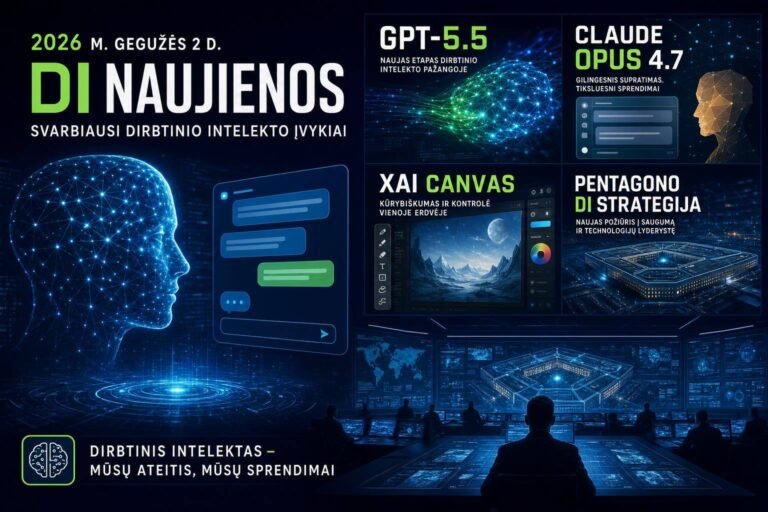

Startup News Today April 28, 2026: Europe’s $1.1B AI Seed Milestone, China Blocks Meta–Manus Deal, and OpenAI’s Enterprise Agents Move Ahead
Europe just posted its largest AI seed round on record. China stepped in to halt a high-profile U.S.–China AI deal on security grounds. And OpenAI is leaning harder into agentic deployments with Fortune 500 partners while racing to tame hallucinations. That’s not noise—it’s the signal.
For founders, CIOs, and policy leaders, Startup News Today April 28, 2026 captures a turning point: capital is flowing into frontier AI even as compute, power, and geopolitics create real execution risk. If you’re building or buying AI, the decisions you make in the next 6–12 months will determine your runway, resilience, and compliance posture for years.
This briefing unpacks what the Ineffable Intelligence mega-seed means for Europe, why China’s veto of Meta’s Manus AI acquisition will echo through global M&A, how to deploy OpenAI-style agents safely in production, and where the energy bottleneck will pinch AI scale. You’ll also get a practical, security-centric playbook you can use immediately.
Europe’s $1.1B Seed for Ineffable Intelligence: Ambition Meets Execution Risk
Europe’s AI ecosystem just crossed a psychological threshold. Ineffable Intelligence closed a continent-record $1.1 billion seed round, backed by a heavyweight syndicate that includes Sequoia Capital Europe and SoftBank Vision Fund. The company’s thesis—next-generation multimodal LLMs aimed at enterprise automation and scientific discovery—aligns with where enterprise buyers are actually spending: complex workflows, regulated data, and measurable productivity gains.
Why it matters: – Capital concentration: This is not spray-and-pray. Mega-seed rounds telegraph a belief that the frontier model layer still has room for differentiated contenders outside the U.S. and China, especially in specialized domains and compliance-first markets. – Modality shift: The center of gravity is moving from pure text to multimodal systems that can reason across documents, images, video, and sensor feeds. That opens higher-value use cases in manufacturing, R&D, clinical ops, and geospatial intelligence—if teams can solve latency, verifiability, and safety at scale. – Europe’s strategic bid: With Gaia-X, data sovereignty rules, and maturing research pipelines, Europe is well-placed to push “trustworthy-by-default” AI while plugging gaps in compute and power supply.
Execution gauntlet to watch: – Compute and power: Training next-gen multimodal models requires massive, sustained compute—and dependable electricity. The International Energy Agency has already flagged mounting pressure on grid capacity for data centers through 2027, with demand rising faster than supply in several regions. See the IEA’s analysis on data center energy trends for a sobering baseline IEA: Data centres and data transmission networks. – Data licensing and provenance: Scientific and enterprise-grade models depend on clean, licensed corpora with documented lineage. Teams that treat data governance as an afterthought pay it back with compounding technical debt, legal risk, and model drift. – Evaluations and safety: As models expand modalities, failure modes multiply. The U.S. National Institute of Standards and Technology’s AI Risk Management Framework provides a shared language for mapping risks across the AI lifecycle, from harm identification to measurement and mitigation NIST AI Risk Management Framework.
Practical signpost: Watch how Ineffable structures its training runs (cloud vs. sovereign GPU suppliers), how it approaches alignment and red-teaming for multimodal outputs, and which enterprise verticals it chooses first. The early customer mix will reveal whether this is a moonshot foundation model bet or a pragmatic, workflow-anchored entry that leverages Europe’s regulatory strengths.
Regulatory Shock: China Halts Meta’s Manus AI Acquisition
Beijing’s State Administration for Market Regulation (SAMR) stopped Meta’s planned $4.2 billion acquisition of Manus AI, a Shanghai-based generative video and real-time content company. The stated reasons—national security, data sovereignty, and risk of model “backdoors” trained on domestic datasets—are consistent with China’s broader posture on strategic technologies and cross-border data flows. Learn more about SAMR’s role and remit at its official portal SAMR (State Administration for Market Regulation).
What’s different this time: – Generative core: The target wasn’t a peripheral app or a niche data vendor—it was a generative model company specialized in video synthesis. China signaled that core model assets, especially those trained on domestic data, are strategic and non-exportable via M&A. – Model governance as national security: Concerns about hidden behaviors or covert fine-tuning reflect a growing trend to treat model weights and training data like dual-use assets. Expect stricter inbound/outbound review of not just chips but also checkpoints, evaluation artifacts, and safety tooling.
Why this ripples beyond one deal: – M&A friction: U.S. and European acquirers should assume heightened scrutiny for any target with model IP trained on Chinese data or interoperable with Chinese compute stacks. – Vendor bifurcation: Procurement teams will increasingly see “stack sovereignty” questions—what chips, toolchains, and hosting jurisdictions underpin your AI vendor? That matters for performance and for export-control compliance. The U.S. Bureau of Industry and Security continues to refine export rules on advanced computing and semiconductor manufacturing bound for China and Macau U.S. BIS export controls update.
The Next Phase of U.S.–China AI Decoupling
The Manus block underscores a structural split: – Compute divergence: NVIDIA-centric ecosystems vs. domestic Chinese accelerators (e.g., Huawei’s Ascend). For context on Ascend’s positioning and software stack, see Huawei’s overview Huawei Ascend Computing. – Model availability: As state-linked buyers nudge toward local models, interoperability will hinge on open standards for tokenization, formats, and safety tooling—or lack thereof. Expect more “walled gardens” with constrained model portability. – Data borders: Cross-border training and evaluation are harder when synthetic and real data are co-mingled under distinct sovereignty regimes. This increases the premium on synthetic data governance, sampling transparency, and audit logs.
If you run corp dev or vendor risk: Expand diligence to verify model training geography, dataset provenance, and compute lineage. Contractualize re-train obligations if geopolitical events restrict updates to core model weights.
OpenAI’s GPT-5.5 Enterprise Agents: Results, Risks, and What Actually Works
OpenAI announced expanded GPT-5.5 integration with 15 Fortune 500 partners, focused on agentic deployments in supply chain optimization. Early claims include up to 40% efficiency gains. The opportunity is clear: agents orchestrate tooling (e.g., ERP APIs, planning solvers, procurement portals) to compress cycle times, reduce stock-outs, and smooth exceptions.
A realistic take: – Where agents shine: repetitive exception handling, long-tail supplier communications, draft analyses for planners, auto-triage of quality issues, and reconciliation of mismatched POs vs. invoices. – Where agents still struggle: multi-objective trade-offs under uncertainty, non-stationary demand shocks without tight guardrails, and silently wrong outputs in edge cases.
Mitigations OpenAI and enterprise users are converging on: – Strong tool grounding: Agents that call deterministic back-ends (linear optimizers, demand forecasters) reduce hallucination surface. The model delegates math; it doesn’t improvise it. – Structured interfaces: A narrow set of functions with strongly typed arguments and schema-validated outputs. Review OpenAI’s API concepts on function calling and structured output for baseline patterns OpenAI API documentation. – Continuous evals: Integrating automated evals into CI/CD so every prompt/tool change is tested against known failure modes. OpenAI’s open-source Evals framework is one reference implementation to jump-start this discipline OpenAI Evals on GitHub.
Safety and transparency: OpenAI also teased new safety evaluations for the next release. The right move—agents in complex operational loops demand proactive testing for jailbreaks, tool abuse, data leakage, and biased decision paths.
Cutting Hallucinations and Operational Risk: What Actually Works
Ground your approach in standards and concrete patterns: – Adopt a risk framework: Use the NIST AI Risk Management Framework to map harms, controls, and metrics per use case. Treat it like SOC 2 for AI workflows—continuous, evidence-based, and auditable. – Secure the agent surface: The OWASP Top 10 for LLM Applications flags common vulnerabilities (prompt injection, data exfiltration via tools, insecure output handling). Turn these into guardrail tests you run before every release. – Constrain generation: Prefer retrieval-augmented generation + chain-of-verification for factual tasks; fine-tune reward models for tool preference and refusal behavior; use tight temperature bounds and schema enforcement. – Add human-on-the-loop where errors are expensive: In supply chain planning and finance, even a 1% error rate is intolerable at scale. Route uncertain cases to review queues. – Log everything: Keep immutable logs for prompts, tools, outputs, user overrides, and downstream actions. You need them for audits, RCA, and retraining.
Anthropic, DeepSeek, and the Government-Grade AI Moment
Anthropic expanded access to Claude Opus 4.7 for government users, responding to demand in defense, public safety, and critical infrastructure. The value proposition is clear: high-capability models with better refusal behavior and safer reasoning paths. In parallel, DeepSeek V4’s compatibility with Huawei hardware drew praise in Chinese state media as a path to AI self-reliance on domestic accelerators.
What to watch: – Security assurance: Government buyers will push for attestations on training data handling, content filters, and exploit resistance. ENISA’s guidance on securing ML systems is a good blueprint for requirements you should expect in RFPs and audits ENISA: Securing machine learning algorithms. – Interoperability under constraints: As hardware ecosystems fragment, model developers must maintain performance across heterogeneous accelerators without sacrificing safety properties. – Procurement math: Agencies and defense primes will favor vendors who can prove mission impact under budget and power constraints, not just benchmark wins.
Bottom line: “Secure-by-default” is becoming table stakes for government and critical-infrastructure AI deals. Commercial buyers should adopt the same bar—because their regulators and insurers will.
The Funding Boom Meets the Power Wall
PitchBook reports global AI funding hit $12.4 billion in April, up 150% year-over-year. The Ineffable Intelligence round fits this surge. Still, a macro constraint is coming into focus: energy. The IEA projects that data center power demand will continue to climb steeply through the decade, risking capacity shortfalls in select regions by 2027 if build-outs lag IEA: Data centres and data transmission networks. For insight into private markets and AI deal flow, PitchBook’s research portal offers up-to-date reports and datasets PitchBook industry research.
Implications for startups and enterprises: – Model choice isn’t just accuracy—it’s power density, cooling, and PUE: The “cheapest tokens” might live where grid capacity and cooling are available. That changes region selection and colo strategy. – Efficiency is a first-class feature: Quantization, sparsity, distillation, speculative decoding, and KV-cache optimizations materially cut inference cost and latency. – Intelligent scheduling: Not all inference is created equal—batch non-urgent workloads for off-peak windows, reserve on-demand capacity for interactive flows, and use SLAs to prioritize customer-facing over internal jobs. – Siting strategy: Pair data centers with renewables and long-duration storage where possible; explore demand response and microgrids for resilience.
If you’re a buyer: Start asking vendors for an “energy SLO”—not just uptime and latency. If you’re a builder: Treat energy efficiency as a core product KPI and publish it.
Practical Playbook: How to Act on Startup News Today April 28, 2026
Here’s a field-tested checklist for CTOs, CISOs, data leaders, and founders responding to this week’s developments.
Strategy and governance – Tie agents to business KPIs: Define target metrics (cycle time, exception rate, cash conversion) before model selection. Without KPIs, you’ll chase benchmarks, not value. – Build a model portfolio: Mix frontier models for complex reasoning with smaller fine-tuned or domain-specific models for routine tasks. Keep a plan to swap models as pricing, latency, or compliance needs shift. – Localize your data posture: Segment data by residency and sensitivity. Pre-commit to where training, fine-tuning, and inference happen; contract for in-region failover.
Security and risk – Adopt standards: Implement the NIST AI RMF across the lifecycle—mapping risks, measuring, and managing through governance. Bake requirements into design docs and PRDs. – Red-team like you mean it: Operationalize the OWASP LLM Top 10 with adversarial prompts, tool-abuse scenarios, and data-exfiltration drills. Treat agents as web apps with superpowers—and super risks. – Segment and sandbox: Run agents in least-privilege sandboxes. Use scoped API keys, read-only defaults, and allow-lists for tools and data sources. Block untrusted callbacks. – Auditability: Maintain immutable logs for prompts, tool invocations, outputs, and human overrides. Implement tamper-evident storage to support investigations and compliance.
Implementation steps for production-grade agents 1. Define tasks and guardrails: Write task specs, success criteria, and refusal policies. Map failure modes to tests. 2. Select the toolchain: Choose a model, retrieval layer, and tools (planners, solvers, ERPs) with strong typing and schema validation. 3. Build offline evals: Use public evals plus your domain-specific test sets. Integrate evals into CI so any prompt or tool change runs a test suite automatically. 4. Launch progressive pilots: Start with read-only or shadow-mode agents. Move to narrow-write scope with human-in-the-loop approvals. Expand privileges only after stable performance. 5. Monitor in real time: Track precision/recall on tasks, escalation rates, latency, cost per action, and safety incidents. Alert on drift. 6. Close the loop: Feed human-corrected outputs and incidents back into fine-tunes or preference optimization. Retrain on a cadence tied to data non-stationarity.
Vendor selection and M&A diligence in a bifurcating world – Trace model lineage: Demand documentation on training data geography, licenses, and synthetic augmentation. Verify fine-tuning pipelines and red-teaming results. – Know the compute stack: Identify GPUs/NPUs and toolchains. Ask for alternatives if export rules or supply shocks hit. Confirm that safety behavior generalizes across accelerators. – Contract for change: Include clauses for re-train and re-platform obligations if geopolitics or regulations restrict the vendor’s model weights or hosting regions. – Energy and sustainability SLOs: Require disclosures on energy per inference, PUE by region, and carbon intensity. Tie parts of the contract to efficiency improvements over time.
Power-aware architecture – Optimize before you scale: Use compression, quantization (e.g., 4–8 bit), and distillation for every deployment. Make it a gate before provisioning more GPUs. – Tiered inference: Route tasks based on complexity and latency sensitivity to the smallest capable model. Cache frequent responses where acceptable. – Site selection: Prefer data centers with renewable PPAs, district cooling, or waste-heat recovery. Explore liquid-cooling readiness and grid interconnect timelines.
Compliance and trust – Align with sector rules: Finance, health, and public-sector buyers expect provenance, bias monitoring, and explainability where feasible. Build explainability layers for critical decisions. – Human accountability: Keep humans accountable for outcomes when the agent can cause financial, legal, or physical harm. Don’t outsource responsibility to a model.
Mistakes to avoid – Treating “agent” as a feature, not a system: Without tooling, governance, and observability, you’ll ship an expensive demo. – Overfitting to benchmarks: Real work differs from leaderboard tasks. Evaluate on your data, with your constraints. – Ignoring energy costs until the bill arrives: Efficiency and siting decisions made early will compound; retrofit costs are painful.
Geopolitics and the Compute Stack: Navigating Fragmentation
The Manus decision will not be an isolated case. You should expect: – More regulatory gating: Deals for AI core tech, compute IP, and data-rich assets will encounter direct national security review worldwide. – Divergent compliance obligations: Model weight sharing, eval artifacts, and safety tooling may be restricted in some jurisdictions. Plan for parallel pipelines. – Stack hedging: Multi-cloud, multi-accelerator strategies will become normal for sophisticated buyers. But don’t spread too thin—standardize interfaces to keep ops sane.
A practical approach: Design your AI systems with clear abstraction layers—API contracts, data schemas, and eval suites that allow you to swap models and tooling while preserving behavior and safety guarantees.
Market Reality Check: Opportunity vs. Constraint
The signal within today’s headlines is a duality: – Opportunity: Massive capital, credible enterprise traction with agentic systems, and growing public-sector demand for secure AI. – Constraint: Tightening geopolitics, stricter reviews on cross-border assets, and energy limits that squeeze both cost and capacity.
Leaders who are honest about both can out-execute. That means pulling forward your governance, security, and energy strategies rather than bolting them on after you scale.
FAQ: Startup News Today April 28, 2026
What is the significance of Europe’s $1.1B seed round for Ineffable Intelligence? – It signals investor conviction that Europe can field frontier multimodal models tailored to enterprise and scientific use—while leveraging regional strengths in data governance and safety. Execution risk remains around compute, energy, and evaluations.
Why did China halt Meta’s acquisition of Manus AI? – China’s regulator cited national security and data sovereignty concerns tied to model weights and datasets trained on domestic data. It reflects a broader trend to treat core AI assets as strategic and subject to rigorous cross-border controls.
Do OpenAI’s enterprise agents really deliver 40% efficiency gains? – Results will vary by process complexity and guardrails. Gains are plausible in exception-heavy workflows with strong tool grounding and structured interfaces. Continuous evaluations and human-on-the-loop checkpoints are essential to sustain value.
How should enterprises mitigate hallucinations in production agents? – Use retrieval-augmented generation, schema-validated outputs, and deterministic tools for calculations. Adopt NIST’s AI RMF for lifecycle risk management and test against the OWASP LLM Top 10 with red-team exercises and CI-integrated evals.
Is a compute and energy crunch a real risk for AI scale-ups? – Yes. Data center power demand is growing quickly and can outpace grid capacity in some regions. Energy efficiency, workload scheduling, and strategic siting are becoming core elements of AI product strategy.
How will US–China tensions affect AI procurement? – Expect more questions about model provenance, training geography, and compute stacks. Enterprises may need parallel deployments for different regions and stronger contractual protections against regulatory shocks.
Conclusion: Build Ambitiously, Engineer for Constraint
Startup News Today April 28, 2026 crystallizes the shape of the next AI inning: outsized funding for ambitious model builders, accelerating enterprise adoption of agentic systems, and hard limits introduced by geopolitics and energy. The winners will treat safety, governance, and power efficiency as compilers for speed—not brakes.
Your next steps: – Anchor deployments to measurable business KPIs and adopt a portfolio of models sized to each task. – Institutionalize risk management with NIST-aligned processes and OWASP-driven security testing; automate evals in CI/CD. – Hedge across compute and jurisdictions with clear abstraction layers, audit trails, and contractual levers. – Make energy efficiency a product requirement and a vendor selection criterion.
Ambition without discipline is a demo. Ambition with disciplined guardrails—technical, regulatory, and power-aware—is a durable advantage.
Discover more at InnoVirtuoso.com
I would love some feedback on my writing so if you have any, please don’t hesitate to leave a comment around here or in any platforms that is convenient for you.
For more on tech and other topics, explore InnoVirtuoso.com anytime. Subscribe to my newsletter and join our growing community—we’ll create something magical together. I promise, it’ll never be boring!
Stay updated with the latest news—subscribe to our newsletter today!
Thank you all—wishing you an amazing day ahead!
Read more related Articles at InnoVirtuoso
- How to Completely Turn Off Google AI on Your Android Phone
- The Best AI Jokes of the Month: February Edition
- Introducing SpoofDPI: Bypassing Deep Packet Inspection
- Getting Started with shadps4: Your Guide to the PlayStation 4 Emulator
- Sophos Pricing in 2025: A Guide to Intercept X Endpoint Protection
- The Essential Requirements for Augmented Reality: A Comprehensive Guide
- Harvard: A Legacy of Achievements and a Path Towards the Future
- Unlocking the Secrets of Prompt Engineering: 5 Must-Read Books That Will Revolutionize You