
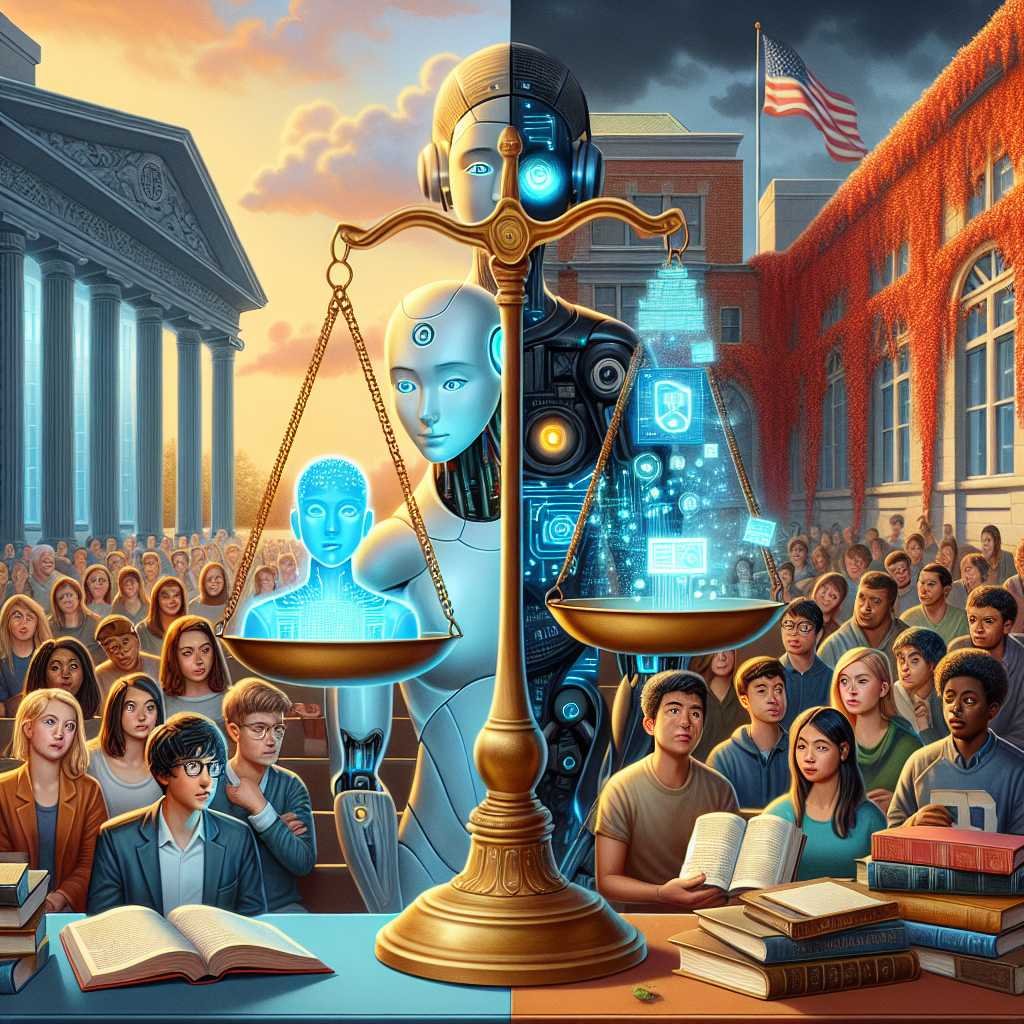
Americans Want AI on Campus—but Don’t Trust Colleges to Get It Right
Can two things be true at once? According to a new national survey, most Americans say colleges should teach artificial intelligence—and at the same time, most don’t believe higher ed can do it without weakening academic quality. That tension sits at the heart of a timely Quinnipiac University poll highlighted by Inside Higher Ed. And it raises an urgent question for every campus leader, professor, parent, and student: How do we embrace AI for learning and careers without compromising rigor, equity, and integrity?
If you’re feeling both excited about AI’s potential and uneasy about its pitfalls, you’re not alone. Let’s unpack what the public is really saying, why the ambivalence makes sense, and how colleges can respond—practically and credibly—right now.
The Short Version: Enthusiasm Meets Skepticism
The Quinnipiac survey captures a paradox that’s increasingly familiar on campus:
- Strong support for integrating AI in the curriculum to prepare students for an AI-driven workforce, including data analysis, ethical use, and real-world applications.
- Nearly 70% favor making AI literacy a requirement.
- Over 60% doubt colleges can incorporate AI without diluting academic rigor, citing risks like overdependence, weaker writing and critical thinking, and loss of originality.
- 55% believe AI will worsen plagiarism and cheating.
- Equity worries loom large: under-resourced institutions risk falling behind.
- Respondents prefer human-led instruction in nuanced subjects (especially in the humanities).
- Younger adults (18–34) are more optimistic and view AI as a potential leveler; older adults are more concerned about job losses for educators.
- Politically, independents mirror national ambivalence, while partisans split along familiar lines over tech regulation.
In short: Americans want students to learn AI—but they don’t yet trust the playbook for doing it well.
You can read the Inside Higher Ed summary of the poll here: Survey: Americans Skeptical but View AI Use on Campus as Important. For context on national polling, see the Quinnipiac University Poll.
Why This Ambivalence Makes Sense
The AI promise is tangible—and immediate
Generative AI tools are already changing entry-level work and knowledge jobs. Employers expect new graduates to:
- Use AI for research, analysis, and prototyping
- Judge output quality and bias
- Communicate with and through AI responsibly
- Protect sensitive data and IP
- Collaborate across disciplines with AI as a co-pilot
No wonder the public sees AI literacy as essential for employability. Students who don’t learn AI risk being outpaced by peers who do.
But so are the risks
Skepticism isn’t Luddism—it’s rational concern. Generative AI can:
- Shortcut learning if assessments aren’t redesigned
- Flatten voice and originality
- Smuggle in bias and hallucinated facts
- Amplify inequities if only some students or campuses have access
- Create new vectors for academic integrity violations
These issues are real. So is the public’s worry that colleges, under pressure to “adopt AI,” could do it hastily and hurt what matters most: human mentorship, rigorous thinking, and authentic learning.
The trust gap is about implementation, not intent
The headline from the survey isn’t “people fear AI.” It’s “people fear sloppy AI.” Americans are telling colleges: teach AI, but show us a plan—one that:
- Preserves rigor and originality
- Defines ethical boundaries
- Invests in equity and access
- Trains faculty, not just students
- Measures outcomes and adjusts
In other words: proceed, but with governance, guardrails, and transparency.
What the Survey Tells Colleges to Do Next
Let’s turn sentiment into a step-by-step blueprint. If you lead academic affairs, faculty development, IT, student success, or accreditation, you can act on these moves immediately.
1) Clarify your institutional stance on AI
- Publish an AI mission statement: how AI supports your academic mission, where it belongs (and doesn’t), and what values guide decisions.
- Establish cross-functional governance: faculty, students, IT, accessibility, IRB, legal, librarians, DEI, career services. Meet monthly.
- Map a one-year roadmap: pilots, policy updates, training, data/privacy steps, assessment redesign, reporting.
Useful frameworks: – U.S. Department of Education’s “AI and the Future of Teaching and Learning” recommendations: https://tech.ed.gov/ai/ – NIST AI Risk Management Framework: https://www.nist.gov/itl/ai-risk-management-framework
2) Make AI literacy universal—and meaningful
Nearly 70% of respondents support required AI literacy. Deliver it without bloat:
- Offer a 1–2 credit AI literacy course or embed a required module across first-year seminars, writing, and quantitative reasoning.
- Cover:
- Foundations: how generative models work, capabilities/limits
- Ethical use: bias, attribution, privacy, copyright
- Prompting and verification: fact-checking, citing sources, adversarial testing
- Domain-specific practice: business analytics, STEM coding assistance, design ideation, humanities research
- Accessibility and inclusion: using AI for assistive tech and UDL
- Assess with authentic tasks: students critique AI outputs, compare drafts with/without AI, and reflect on process.
Tip: Treat AI as a literacy like information fluency or data literacy. Partner with librarians and writing centers to co-design instruction.
3) Help faculty lead—not just cope
Public confidence depends on faculty confidence. Invest in people:
- Micro-credentials for instructors: short, stackable badges on genAI pedagogy, discipline-specific tools, assessment redesign, and privacy.
- Release time and stipends for course redesign—don’t ask faculty to do this “off the side of the desk.”
- Communities of practice: cross-department cohorts that test assignments and share artifacts.
- Sample policy language and assignment templates ready to adapt.
Resource hubs: – EDUCAUSE’s AI in teaching and learning resources: https://www.educause.edu/focus-areas-and-initiatives/teaching-and-learning/ai – UNESCO’s Guidance for Generative AI in Education and Research: https://unesdoc.unesco.org/ark:/48223/pf0000386165
4) Redesign assessment before AI redesigns it for you
This is where rigor lives. If AI can do the assignment, your assessment may be testing the wrong thing.
- Use process evidence: drafts, outlines, commentary on sources, research logs, code commits, and design iterations.
- Add oral defenses and studio critiques: brief, low-stakes check-ins to verify understanding.
- Weight reasoning over results: grading criteria that prioritize method, decision-making, and reflection.
- Require transparency: students disclose when/how AI was used; penalize undisclosed use, not declared assistance within set bounds.
- Anchor in local and lived data: projects tied to fieldwork, campus datasets, or client partners reduce generic AI solutions.
5) Update academic integrity for the AI era
Americans are rightly concerned about cheating and plagiarism (55% say AI makes it worse). Address it head-on.
- Publish a clear AI usage policy, course-level norms, and an AI syllabus statement for every class.
- Default to permitted-with-conditions: define allowed tasks (e.g., brainstorming, debugging) vs. restricted tasks (e.g., writing final drafts).
- Require artifacts: prompt history, version control, annotations of AI-produced segments.
- Teach ethical citation of AI outputs and prompt-crafting as an academic skill.
- Be cautious with AI detectors. False positives can harm students, and models evolve quickly. If you use them, adopt a “detect-and-discuss” approach, not “detect-and-punish.”
Further reading: – Turnitin on AI writing detection limitations and guidance: https://www.turnitin.com/blog/ai-writing-detection-frequently-asked-questions
6) Close the equity gap before it widens
The survey flags equity as a top concern—especially for under-resourced campuses.
- Provide institutionally supported AI tools (with privacy safeguards) free to all students and faculty. Avoid “bring-your-own-AI” inequity.
- Expand device lending, lab access, and bandwidth support.
- Embed accessibility: ensure screen-reader compatibility, captions, and multilingual support in AI-enabled platforms.
- Offer targeted support for first-gen and English-language learners who may benefit disproportionately from feedback and tutoring features.
7) Protect privacy, IP, and student data
Public trust evaporates if institutions leak data or let vendors train on student work.
- Adopt vendor standards: data residency, no training on institutional data by default, SOC 2/ISO 27001 compliance, accessible model cards, and opt-out options.
- Prohibit entry of PII, PHI, HR, or FERPA-protected data into public models.
- Use secure, institution-managed AI environments where feasible.
- Clarify content ownership: who owns AI-assisted student work? Spell it out.
Reference: – NIST AI Risk Management Framework: https://www.nist.gov/itl/ai-risk-management-framework
8) Pilot AI tutors—carefully and transparently
The survey notes early AI tutor pilots show promise for personalized learning, with debate about scaling. Keep pilots small, measured, and ethical:
- Start in high-DWF courses (high drop/withdraw/fail rates) where timely feedback matters.
- Blend human oversight: tutors supplement, not replace, office hours and SI.
- Monitor bias, hallucinations, and accessibility; set boundaries on what tutors can answer.
- Evaluate learning outcomes, not just satisfaction: concept mastery, persistence, and equity impacts.
- Publish results—good and bad—and share artifacts for peer review.
Background reading on AI in education policy: – U.S. Dept. of Education AI guidance: https://tech.ed.gov/ai/
9) Communicate early, often, and with receipts
Skeptics become supporters when they see rigor.
- Post an AI hub: policies, FAQs, training schedules, approved tools, how-to guides, and pilot dashboards.
- Share exemplars: syllabi statements, assignment designs, and case studies across disciplines.
- Report progress every term: participation, learning outcomes, integrity cases, and next steps.
What “Rigor With AI” Looks Like in the Classroom
The public’s biggest fear is diluted rigor. Here are concrete ways to raise the bar.
Humanities: from analysis to argument
- Assignment: Students use AI to gather multiple interpretations of a poem, then critique those interpretations against scholarly sources, highlighting omissions, anachronisms, and biases. Deliverables: annotated AI output, literature review, and an oral defense.
- Rigor gained: Evaluative judgment, source synthesis, voice, and rhetorical control.
Social sciences: data literacy without data shortcuts
- Assignment: Provide a messy, real dataset. Students must plan their analysis, request limited AI help for code_snippets only, and justify each modeling choice. They submit a method log and replicate findings manually on a smaller subsample.
- Rigor gained: Methodological transparency, replication discipline, and statistical reasoning.
STEM: debugging as explanation, not magic
- Assignment: Students prompt an AI assistant to debug code but must explain each fix line-by-line, test edge cases, and document an error taxonomy to prevent regressions.
- Rigor gained: Systems thinking, testing strategy, and failure analysis.
Business and design: client constraints and originality
- Assignment: Students use AI to generate concepts, but must translate one into a grounded proposal constrained by a real client’s budget, brand, legal risks, and sustainability goals. They produce a “diff report” showing how they transformed AI output into an original, feasible plan.
- Rigor gained: Practical trade-offs, originality under constraints, and ethical reasoning.
Writing across the curriculum: style, sourcing, and synthesis
- Assignment: Students draft with AI, then rewrite without it; compare versions to identify clichés, gaps in evidence, and voice flattening. Final deliverable combines the strongest elements with full citations and an authorship statement.
- Rigor gained: Metacognition about writing, source transparency, and craft.
Across disciplines, the pattern is consistent: require visibility into process, demand student judgment, and tie deliverables to human reasoning and local context.
Addressing the Hot-Button Issues Directly
“Will AI destroy originality?”
Only if we let it. Teach students to use AI as a sparring partner, not a ghostwriter. Strategies:
- Require unique inputs (data you gathered, field notes, interviews).
- Grade novelty and synthesis explicitly.
- Make students annotate what is theirs and what is machine-generated—and why.
“Can we trust AI detectors?”
Treat detectors as fallible signals, not verdict machines. Always pair any detection output with conversation and due process. Better yet, design assignments where process artifacts and oral checks make authorship clear without overreliance on detection.
“Are we replacing professors?”
The survey shows strong preference for human-led instruction, especially in nuanced subjects. Keep human mentorship front and center. Use AI to free time for high-impact teaching: feedback, coaching, project-based learning, and research apprenticeships.
“What about under-resourced campuses?”
Equity requires investment: provide licensed tools institutionally, support devices and bandwidth, and build shared services (libraries, writing centers, tutoring) that integrate AI responsibly. Public funding and consortia can help ensure access without predatory vendor lock-in.
Policy Implications: What Leaders and Policymakers Should Do
- Encourage transparent campus AI strategies tied to learning outcomes, not technology for technology’s sake.
- Fund shared infrastructure and open educational resources so access isn’t paywalled by institutional wealth.
- Update accreditation expectations to emphasize assessment redesign, academic integrity in the AI era, and faculty development.
- Incentivize research on learning outcomes and equity impacts of AI tutors and tools.
- Align with international guidance and safety frameworks (e.g., UNESCO, NIST) to reduce fragmentation and risk.
How to Talk About AI on Campus: Messages That Build Trust
- To students: “We’ll teach you to use AI like a professional—ethically, transparently, and with the judgment employers expect.”
- To faculty: “We’ll provide time, training, and autonomy. You set the pedagogical terms; we supply resources and guardrails.”
- To parents: “We’re strengthening—not lowering—standards by redesigning assessment and emphasizing human mentorship.”
- To trustees and donors: “Our plan protects academic integrity, advances equity, and aligns with workforce needs—measured and reported every term.”
Common Pitfalls To Avoid
- Announcing “AI across the curriculum” without faculty development or assessment redesign.
- Forcing a single platform on all disciplines without pilots or opt-outs.
- Ignoring accessibility and language equity.
- Overpromising AI detection accuracy.
- Confusing tool adoption with learning transformation.
- Treating privacy and data governance as an afterthought.
What Success Looks Like in Year One
You don’t have to solve everything at once. Aim for credible wins:
- A published, living AI policy and syllabus statement template
- 60–70% of faculty completing foundational training, with incentives
- 3–5 pilots in high-impact courses with measurable outcomes
- Institutionally provided AI access for all students and instructors
- A baseline integrity report showing cases handled with due process and redesigned assessments reducing incidents
- A public dashboard summarizing progress and next steps
The Bottom Line: Americans Will Reward Rigor, Not Hype
The Quinnipiac survey leaves little doubt: Americans want AI skills in every graduate’s toolkit. But they’re right to worry that without care, AI could shortcut the very learning colleges exist to cultivate. The solution isn’t to slow-walk AI or to “move fast and break things.” It’s to move deliberately and build things that last: strong pedagogy, fair access, clear ethics, and trustworthy results.
Do that, and the public will follow. More importantly, students will graduate not just AI-literate, but future-proof—able to wield intelligent tools with human judgment, integrity, and creativity.
For the original coverage of the survey, see Inside Higher Ed. For AI-in-education policy guidance, visit the U.S. Department of Education’s AI page: https://tech.ed.gov/ai/.
FAQs: AI in Higher Education, Answered
Q: Should colleges ban tools like ChatGPT?
A: Blanket bans are blunt instruments that typically drive usage underground and disadvantage students who could benefit from structured practice. A better approach is “permission with boundaries”: define allowed and disallowed uses, require disclosure, and design assessments that verify understanding.
Q: Are AI detectors reliable enough to use for discipline?
A: Use with caution. Detection tools can generate false positives and are sensitive to model changes. If you use them, treat results as one signal among many, ensure due process, and pair them with assignment designs that surface student process and understanding.
Q: What belongs in an AI syllabus statement?
A: Clarify: 1) permitted and prohibited uses with examples, 2) disclosure expectations, 3) how to cite AI assistance, 4) what artifacts you’ll require (drafts, prompts, logs), and 5) consequences for undisclosed or prohibited use. Provide discipline-specific guidance.
Q: How can we protect privacy and intellectual property?
A: Adopt institution-approved tools that don’t train on your data by default, prohibit entry of sensitive data into public models, negotiate strong vendor terms (security certifications, data residency, model transparency), and train users on safe practices.
Q: Will AI replace professors?
A: No. The public supports human-led instruction, especially for complex and values-laden learning. AI can augment faculty by reducing administrative load, accelerating feedback, and supporting practice—but mentorship, critique, and community are irreplaceably human.
Q: How do we prevent AI from widening inequities?
A: Provide institutionally licensed access to AI tools, expand device and bandwidth support, integrate accessibility features, and offer targeted coaching. Measure equity impacts of pilots and adjust.
Q: What metrics should we track to know AI is helping learning?
A: Track learning outcomes (concept mastery, writing quality, project performance), course success (drop/withdraw/fail rates), student and faculty satisfaction, integrity cases, and equity gaps. Publish findings for accountability.
Q: How should students cite AI?
A: Require disclosure of AI use in a dedicated authorship or methodology section and, when appropriate, inline citations for specific outputs. Include prompts and model names/versions. Provide discipline-specific norms (e.g., APA guidance on software/AI citations).
Q: Where can I find policy guidance to get started?
A: Explore the U.S. Department of Education’s AI guidance: https://tech.ed.gov/ai/, UNESCO’s generative AI guidance: https://unesdoc.unesco.org/ark:/48223/pf0000386165, and the NIST AI Risk Management Framework: https://www.nist.gov/itl/ai-risk-management-framework.
Final Takeaway
Americans are sending a clear message: Teach AI—and prove you can do it without cutting corners. The path forward is practical and achievable. Define your values, upgrade assessments, invest in faculty, ensure equitable access, protect data, pilot transparently, and report results. Do that consistently, and you’ll earn the trust to innovate boldly—while safeguarding the human heart of higher education.
Discover more at InnoVirtuoso.com
I would love some feedback on my writing so if you have any, please don’t hesitate to leave a comment around here or in any platforms that is convenient for you.
For more on tech and other topics, explore InnoVirtuoso.com anytime. Subscribe to my newsletter and join our growing community—we’ll create something magical together. I promise, it’ll never be boring!
Stay updated with the latest news—subscribe to our newsletter today!
Thank you all—wishing you an amazing day ahead!
Read more related Articles at InnoVirtuoso
- How to Completely Turn Off Google AI on Your Android Phone
- The Best AI Jokes of the Month: February Edition
- Introducing SpoofDPI: Bypassing Deep Packet Inspection
- Getting Started with shadps4: Your Guide to the PlayStation 4 Emulator
- Sophos Pricing in 2025: A Guide to Intercept X Endpoint Protection
- The Essential Requirements for Augmented Reality: A Comprehensive Guide
- Harvard: A Legacy of Achievements and a Path Towards the Future
- Unlocking the Secrets of Prompt Engineering: 5 Must-Read Books That Will Revolutionize You